Political cartoon of a column with the United States, Chile, and China; United Kingdom falling.

The Rise and Fall of the Great Powers Redux

The author of the 20th century’s most influential history book anticipates the coming world order.
Richard Nixon, 1968.

Richard Nixon’s Last Crusade

America’s 37th president tried to save America’s Russia policy in the 1990s.
Smoke pours from La Moneda, the Chilean presidential palace, during the military coup.

50 Years After “the Other 9/11”: Remembering the Chilean Coup

Some personal reflections on history, memory, and the survival of democracies.
Friedrich Hayek listens to the president of the Centro de Estudios Públicos in Chile, Jorge Cauas, speak in April 1981.

Neoliberal Economists Like Milton Friedman Cheered on Augusto Pinochet’s Dictatorship

Friedrich von Hayek and Milton Friedman helped devise Pinochet's economic agenda and endorsed the brutal repression that was needed to force it through.
Austin West, a Choctaw student, visits Kindred Spirits, a monument to the Choctaw in County Cork.

The Unlikely, Enduring Friendship Between Ireland and the Choctaw Nation

One act of generosity during the Great Famine forged a bond that transcends generations.
Helen Mirren as Golda Meir.

The Strange Feminism of “Golda”

The biopic starring Helen Mirren shies away from the moral implications of Golda Meir’s decisions.
Museum display of Nixon and Kissinger on the phone, a telephone, and the transcript of their call.

Chile: The Secrets the US Government Continues to Hide

Fifty years after the military coup that brought down Salvador Allende and installed Pinochet as dicator, top secret US documents still need to be declassified.
Sea Captains drinking alcohol

Ships Going Out

In "American Slavers," Sean M. Kelley surveys the relatively unknown history of Americans who traded in slaves in the eighteenth and nineteenth centuries.
Moe Berg in his baseball uniform holding a catchers glove

The Baseball Player-Turned-Spy Who Went Undercover to Assassinate the Nazis' Top Nuclear Scientist

During World War II, the OSS sent Moe Berg to Europe, where he gathered intel on Germany's efforts to build an atomic bomb.
A miner carries a sack of ore at the Shabara mine near Kolwezi.

First They Mined for the Atomic Bomb. Now They’re Mining for E.V.s.

Miners in the Democratic Republic of Congo face few protections in the global rush for metals in energy transition—a toxic legacy from mining nuclear weapons.
Salvador Allende campaigning before Chile’s parliamentary elections, Santiago, February 1973.

Defending Allende

On September 4, 1973, an enormous multitude of Chileans poured into the streets of Santiago to back the besieged government of Salvador Allende.
A worker in the Shinkolobwe mine.

The Dark History ‘Oppenheimer’ Didn't Show

Coming from the Congo, I knew where an essential ingredient for atomic bombs was mined, even if everyone else seemed to ignore it.
An illustration imagining Maura, an indigenous Filipino woman.

Searching for Maura

A Filipino woman died after coming to the U.S. to be put on display at the 1904 World's Fair. A Smithsonian anthropologist likely took part of her brain.
A woman touches a Vietnamese name on a memorial.

The Biggest Vietnam War Story that Americans Don’t Talk About

South Korea is finally being held to account for the carnage its mercenary troops inflicted on Vietnamese civilians. No one seems to be reckoning with our complicity.
George Kennan sitting at his desk.

George Kennan, Loser

The American foreign policy sage was driven as much by pessimism about the US as antipathy to the Soviet Union.
Oppenheimer and other scientists at the site of the Trinity Test.

What “Oppenheimer” Misses About The Decision to Drop the Bomb

The Truman administration launched a PR campaign to inflate casualty numbers to justify the atomic bombings of Hiroshima and Nagasaki.
The nuclear bombing of Nagasaki, Japan, August 9, 1945.

The Atomic Bombings of Japan Were Based on Lies

On the 78th anniversary of the atomic bombings of Japan, we should remember that deploying the bomb wasn’t necessary to win the war.
Nagaski after the atomic bomb.

Did We Really Need to Drop the Bomb?

American leaders called the bombings of Hiroshima and Nagasaki our 'least abhorrent choice,' but there were alternatives to the nuclear attacks.

Africa, the Center of History

A new book works to counteract the “symphony of erasure” that has obscured and denied Africa’s contributions to the contemporary world.
Political cartoon featuring Theodore Roosevelt carrying a club labeled "The New Diplomacy."

Visiting a Forgotten Chapter in American History

Sean Mirski terms the Monroe Doctrine “revolutionary” in his impressively erudite "We May Dominate the World."
English representative Lord Winterton delivers a speech at the Evian Conference, 1938.

Inside America’s Failed, Forgotten Conference to Save Jews from Hitler

Franklin D. Roosevelt called the Evian Conference in France in 1938, as the Holocaust loomed. It remains “an indelible stain on American and world history.”
Cards reading "visa" and "permanent resident".

Impossible Systems: On Carly Goodman’s “Dreamland”

The visa lottery reveals the inherent myths and contradictions at play in the US immigration system.
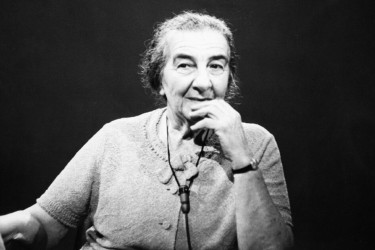
Golda Meir.

One of Those Extremists

A feminist perspective on the first and only female prime minister of Israel.
IMPERATOR Steam ship.

The Students Who Went to Sea

"The Floating University: Experience, Empire, and the Politics of Knowledge"
Ronald Reagan and Mikhail Gorbachev signing the Intermediate Nuclear Forces Reduction Treaty in Washington, D.C., in December 1987.

The Myth of Reagan’s Cold War Toughness Haunts American Foreign Policy

Hawks may claim that uncompromising defense policies won the Cold War. But his pursuit of peace was more important.

Solving the Mystery of Arne Pettersen, the Last to Leave Ellis Island

All told, Arne overstayed his welcome at least four times — 1940, 1944, 1953 and 1954. It’s hard to say why.
Political cartoon showing Uncle Sam reaching out to pull a child representing Cuba into a carriage with children representing American colonies.
partner

Annexation Nation

Since 1823, when the Monroe Doctrine was first introduced to the world, the US has regarded Cuba as key to its designs for Latin America.
Police and bystanders at night.

Do Cartels Exist?

A revisionist view of the drug wars.
Drawing of slave auction

Why Did Governments Compensate Slaveholders for Abolition?

Across the Americas, emancipation moved slowly, and profited those who had benefited from slavery most.
Arab American man holding child with American flag.
partner

How Arab-Americans Stopped Being White

With the emergence of the US as a global superpower in the twentieth-century, anti-Palestinian stereotypes in the media bled over to stigmatize Arab Americans.