Here’s a puzzle: Must revolution always mean change? Does it require innovation, or can it bring back what is old? If it does not bring novelty but simply restores the past, is it truly a revolution at all?
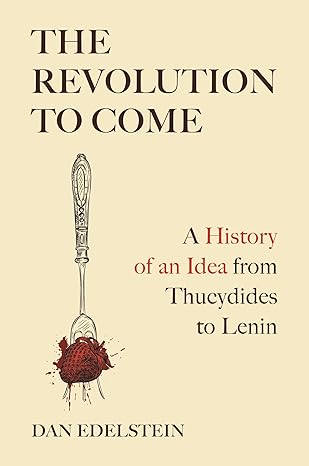
In his insightful new book, The Revolution to Come, Dan Edelstein offers some surprising answers to these questions and explores how the idea of revolution has changed over time. What was once called a revolution, he argues, did not signify a break with the past; it meant something more like a return to political origins. This older meaning, commonplace in Greek and Roman thought, would survive into the 18th century and would only recede when the Enlightenment’s idea of revolution as progress swept away the classical idea of cyclical time.
Edelstein, an accomplished professor of history at Stanford, is best known for his writings on the French Revolution. His 2009 book The Terror of Natural Right plunged into the most turbulent controversies about the revolutionary terror. It argued that the idea of natural right nourished an attitude of extreme political hostility: The Jacobins saw their political opponents not simply as rivals but as “enemies of the people” or hostis humani generis. By grounding their politics in nature, the French revolutionaries spawned an intolerant and ultimately lethal species of thinking—Edelstein called it “natural republicanism”—that would reshape politics well into the modern era. In the book’s conclusion, he argued that we can detect the themes of natural republicanism in the worst excesses of our time: It helped to justify Leninism, Stalinism, and Nazism, and it also furnished George W. Bush with the warrant he needed for the War on Terror.
In his new book, Edelstein pursues a similar argument, though he no longer places the blame on anything as specific as natural republicanism. His new thesis is considerably more ambitious and expansive in scope. Ostensibly an exercise in intellectual history, The Revolution to Come traces “the idea of revolution” as it developed and changed over the course of nearly 2,000 years. And yet this is hardly history in the conventional sense: It is argumentative and idiosyncratic, and readers will be confounded if they try to place it on the conventional map of left-to-right political opinion.