The first publicly sensational criminal trial under the new federal constitution manifests both the contemporary significance and subsequent historical obscurity of such cases. In early May 1793, Revolutionary War veteran Gideon Henfield sailed into Philadelphia aboard the British merchantman William, a captured prize of his French-commissioned privateer Citoyen Genêt. Henfield understood himself to be a French officer. He anticipated the local French consul promptly condemning the ship as a lawful and lucrative prize. Instead, federal officials seized it, arrested Henfield, and charged him with violating American neutrality. International law gave jurisdiction in prize cases to the admiralty courts of the capturing vessel’s nation. Furthermore, the 1778 Franco-American treaty of amity seemed at least implicitly to bind the United States to a broad and partial assistance of French warships. The firebrand Girondist ambassador Edmond-Charles Genêt acted on that understanding when, arriving in Charleston in early April, he began issuing letters of marque to American shipowners. Within weeks, however, President George Washington proclaimed US neutrality and signaled intent to prosecute violators. Chief Justice John Jay told the grand jury convened to indict Henfield in late May that the young nation’s “peace, prosperity and reputation” depended upon “fidelity” to its diplomatic commitments, and that “every citizen is party to them.” Yet Congress took until mid-1794 to pass a Neutrality Act, forcing the federal government to charge men like Henfield with common law offenses—something it lacked clear constitutional authority to do. Perhaps unsurprisingly, then, twelve of Henfield’s peers acquitted him in July. Similar verdicts in other trials threatened to break Washington’s neutrality policy on the rocks of pro-French, anti-British popular sentiment.
Though now largely forgotten, maritime law generally and prize cases in particular were anything but small or obscure jurisprudential fields. The twenty-one privateering cases the Supreme Court heard in 1796 and 1797, for example, comprised “nearly three-quarters of its entire docket in those years.” Such cases directly addressed questions of existential significance to a fragile infant nation navigating between the Scylla and Charybdis of the world’s two great powers at war.
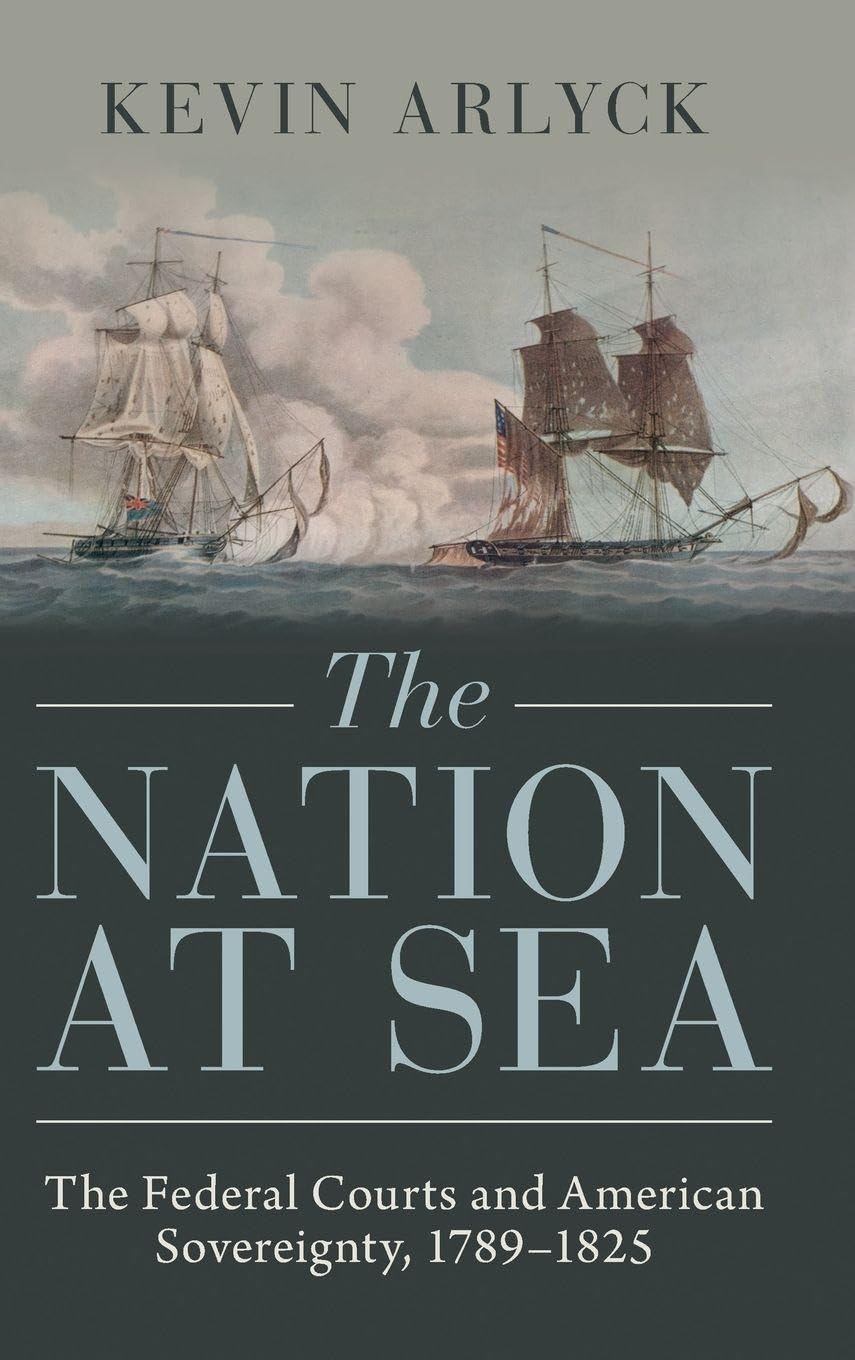
The Nation at Sea reassesses the historical legacy of this early national jurisprudence in three parts. Part one examines the initially reluctant role of federal courts in adjudicating neutrality cases during the 1790s. Part two jumps ahead to the War of 1812 era, outlining the development of a more pro-belligerent prize jurisprudence in that more assertively nationalistic period. Part three recounts a partial turn away from deference to captors in postwar prize cases relating to the warfare between Spain, Portugal, and their rebellious colonies in the Americas. The consistent theme is US sovereignty, national security, and prosperity. Though American admiralty jurisprudence evolved with shifting circumstances and national imperatives, federal courts’ indispensability in defining, asserting, and protecting the sovereign rights and obligations of the new nation persisted.