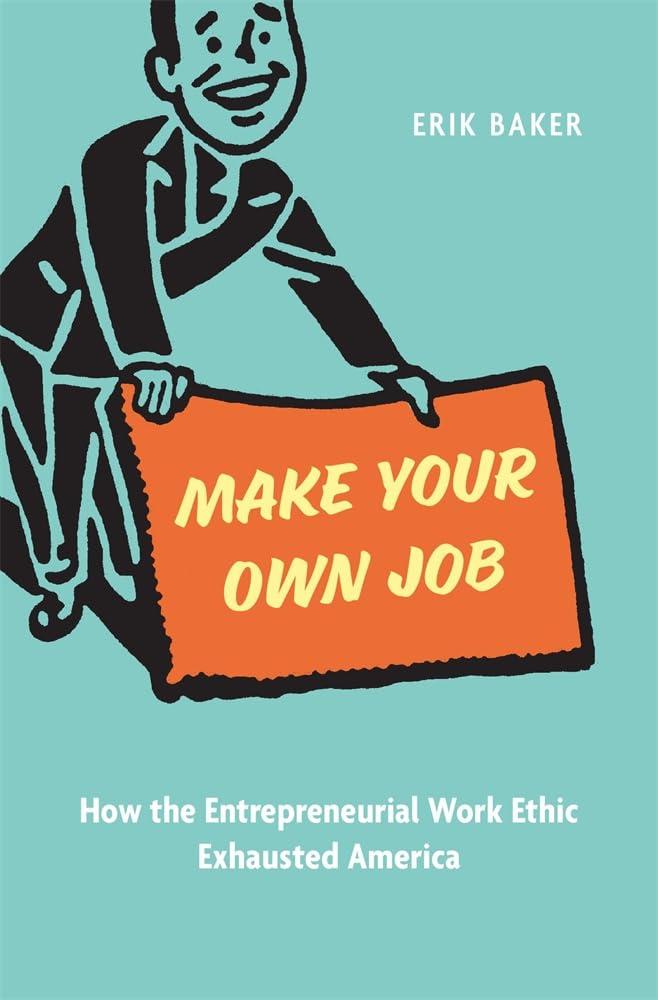
Baker begins his book with the observation that something significant changed in the American economy at the end of the 19th century. As industrial productivity increased “faster than capitalists were investing—and faster than the ranks of manufacturing workers were expanding,” he writes, working people across the nation found themselves faced with “an economic landscape in which full-time jobs with regular pay were not merely toilsome but persistently, structurally scarce.” Whereas the growth of industrial productivity had once depended on a growing supply of proletarian labor, now it relied on both capital- and labor-saving innovations, including the scientific-management principles of Frederick Winslow Taylor and the widespread electrification of factories, which idled workers while rewarding the creators of new technologies and work processes. Entrepreneurialism was both an explanation of what was happening and one solution to the crisis—or so it seemed. And as structural unemployment persisted in the US economy, so did this new work ethic.
Baker is clear that entrepreneurialism did not usurp the concept of industriousness in one fell swoop. Rather, he writes, “entrepreneurialism has always thrived most in the United States amid precarity and economic turbulence.” What this idea had, powerfully, was a counter-cyclical appeal, both to out-of-work Americans and to a ruling class eager to sell them an individualist way out of collective misery during recessions. “Each new normal,” Baker observes, “eventually proved ephemeral in its own right, revitalizing the demand for a new entrepreneurial vanguard.” Entrepreneurialism did not, at first, fully take hold during downturns, but it always grew, laying the foundation for its trajectory of dominance from the 1970s right up to the explosion of the “gig economy” after the 2008 recession.
To take hold, though, the idea first had to be sold. Enter the “New Thought” movement, an offshoot of spiritualism and Christian Science whose mishmash of preachers, publishers, and promoters “attracted millions of enthusiasts in the late nineteenth and early twentieth centuries,” Baker writes. New Thought’s leaders, including the delightfully named Ralph Waldo Trine, are no longer household names, but they sold millions of books, pamphlets, and magazines in their era. Moreover, as Baker explains, their promise that “individuals in the right mental state could connect with a reservoir of infinite cosmic energy that would allow them to conjure opportunity out of thin air and to transcend any obstacles, no matter how apparently insurmountable,” proved enticing to a wide swath of Americans whose lives had been destabilized by rapid economic change, whether uprooted from farms and small towns or thrown into unemployment as factories retooled and industries transformed.