Menu
Excerpts
Exhibits
Collections
Originals
Categories
Map
Search
Person
Nathaniel Hawthorne
Book
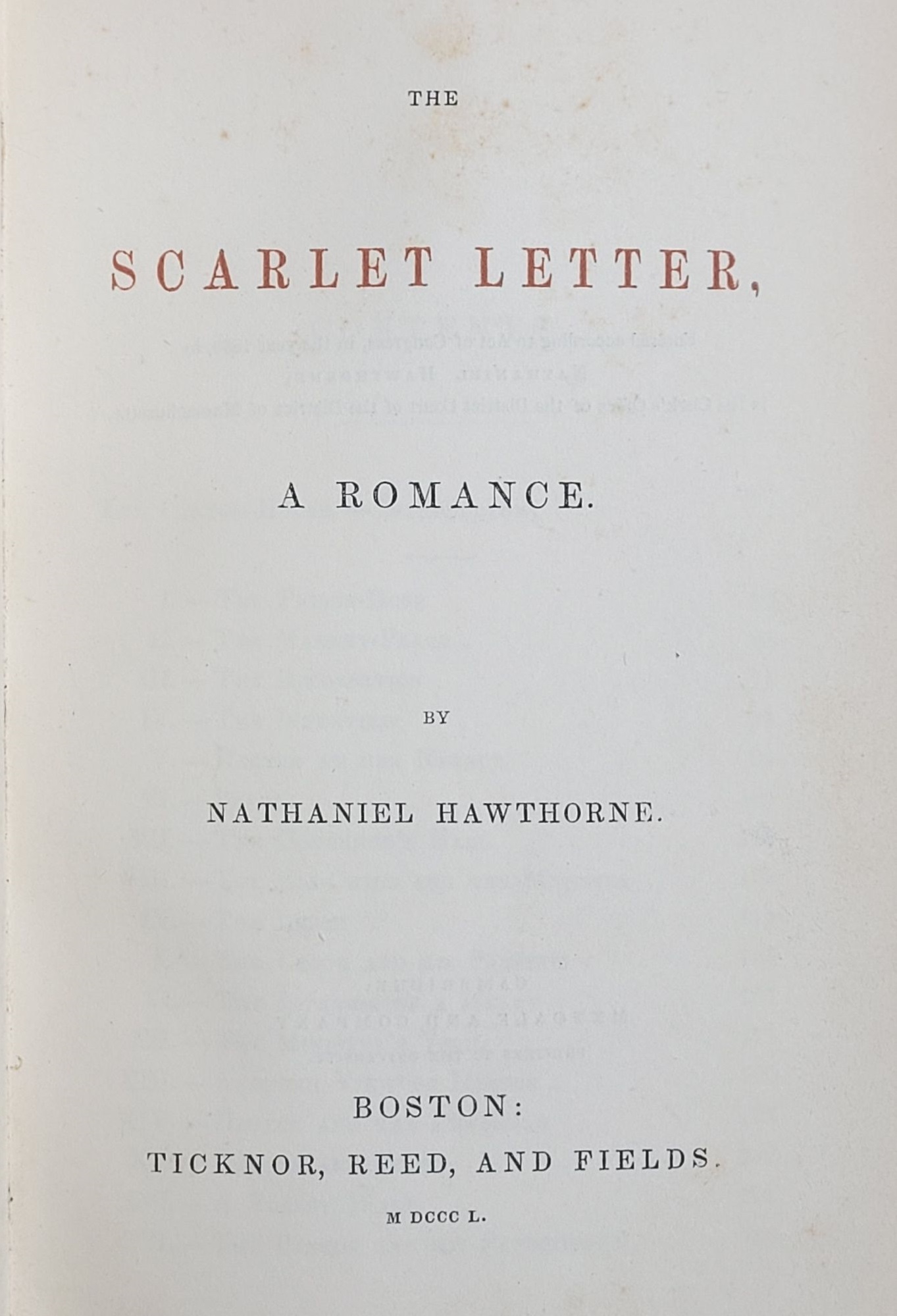
The Scarlet Letter
: A Romance
Nathaniel Hawthorne
1850
View on Map
Related Excerpts
Load More
Viewing 1–20 of 33
‘The Exorcist’ & Catholicism
What explains the traditionalist Catholic infatuation with ‘The Exorcist’?
by
Paul Baumann
via
Commonweal
on
October 31, 2023
original
The Book Read ‘Round the World
Literary history is packed into Concord’s “Old Manse,” but the tiny abode of Walden’s author proves the highlight of our New England trip.
by
Ed Ayers
on
June 23, 2023
A Private Matter
Abortion and "The Scarlet Letter."
by
Dana Medoro
via
Lapham’s Quarterly
on
August 3, 2022
This House Is Still Haunted: An Essay In Seven Gables
A spectre is haunting houses—the spectre of possession.
by
Adam Fales
via
Dilettante Army
on
February 15, 2022
A Brief History of Mostly Terrible Campaign Biographies
“No harm if true; but, in fact, not true.”
by
Jaime Fuller
via
Literary Hub
on
September 12, 2019
A Knapsack’s Worth of Courage
Now, and for some years to come, we will need a lot less Paul Weiss, and a lot more Benjamin Warner.
by
Eliot A. Cohen
via
The Atlantic
on
March 31, 2025
What If the Attention Crisis Is All a Distraction?
From the pianoforte to the smartphone, each wave of tech has sparked fears of brain rot. But the problem isn’t our ability to focus—it’s what we’re focusing on.
by
Daniel Immerwahr
via
The New Yorker
on
January 20, 2025
American Horror Stories
It just might be the great American art form. You can thank the residents of Salem for that.
by
Laura J. Miller
via
Slate
on
October 19, 2024
Siding with Ahab
Can we appreciate Herman Melville’s work without attributing to it schemes for the uplift of modern man?
by
Christopher Benfey
via
New York Review of Books
on
July 25, 2024
"A Fiendish Fascination"
The representation of Jews in antebellum popular culture reveals that many Americans found them both cartoonishly villainous and enticingly exotic.
by
David S. Reynolds
via
New York Review of Books
on
February 1, 2024
On the Trail—to Freedom?
Touring the palimpsests of cities.
by
Charlie Riggs
via
The Hedgehog Review
on
November 1, 2023
How America's First Banned Book Survived and Became an Anti-Authoritarian Icon
The Puritans outlawed Thomas Morton's "New English Canaan" because it was critical of the society they were building in colonial New England.
by
Colleen Connolly
via
Smithsonian Magazine
on
October 2, 2023
Between The Many and The One
Stephanie Mueller´s book sheds light on the percieved death of liberalism and the fear of corporations.
by
Kevin Musgrave
via
The New Rambler
on
September 29, 2023
original
Pieces of the Past
Dispatches from a spine-tingling day of visits to the places where James Fenimore Cooper, Herman Melville, and Thomas Cole created their most famous works.
by
Ed Ayers
on
March 15, 2023
The First Statue Removed From the Capitol
Long before monuments to enslavers were removed, lawmakers decided to relocate a scandalous, half-naked depiction of George Washington in a toga.
by
Ronald G. Shafer
via
Retropolis
on
January 22, 2023
When Coal First Arrived, Americans Said 'No Thanks'
Back in the 19th century, coal was the nation's newfangled fuel source—and it faced the same resistance as wind and solar today.
by
Clive Thompson
via
Smithsonian Magazine
on
July 5, 2022
New England Ecstasies
The transcendentalists thought all human inspiration was divine, all nature a miracle.
by
Brenda Wineapple
via
New York Review of Books
on
February 16, 2022
Transcendentalists Against Slavery
Why have historians overlooked the connections between abolitionism and the famous New England cultural movement?
by
Peter Wirzbicki
,
David Moore
via
Mere Orthodoxy
on
February 9, 2022
Emerson and Thoreau’s Fanatical Freedom
Why do the Transcendentalists still have an outsize influence on American culture?
by
Sarah Blackwood
via
The New Republic
on
January 6, 2022
Emerson Didn’t Practice the Self-Reliance He Preached
How Transcendentalism, the American philosophy that championed the individual, caught on in tight-knit Concord, Massachusetts.
by
Mark Greif
via
The Atlantic
on
November 9, 2021
Previous
Page
1
of 2
Next