W.E.B. Du Bois

When Did Black Voters Shift to Democrats? Earlier Than You Might Think

A look at how and why African Americans first started to abandon the GOP for the Democratic Party.
Horace M. Kallen c. 1929. Courtesy of The Jacob Rader Marcus Center of the American Jewish Archives, Cincinnati, Ohio.

Kultur Klux Klan and Cultural Pluralism at One Hundred

Looking back at Horace M. Kallen's collection of essays entitled "Culture and Democracy in the United States."
"The President's House" (The White House), in the nineteenth century, print by Isidore Laurent Deroy after Augustus Kollner, 1848.

Can the Republic Survive Corrupt Presidents?

The Founders knew that executive power was vital but dangerous in any republic.
Sections of the US Constitution torn to be used as pennants.

Is the United States Too Devoted to the Constitution?

A new book argues that worship of the Constitution has distorted our politics.
Anti-KKK demonstrators at the 1924 Democratic National Conventions.

The Craziest Convention in American History

Think this year’s Democratic convention is going to be nuts? One hundred years ago, Democrats took 103 ballots—and more than two weeks—to choose a candidate.
1924 Democratic convention at Madison Square Garden.

Why the 1924 Democratic National Convention Was the Longest and Most Chaotic of Its Kind

A century ago, the party took a record 103 ballots and 16 days of intense, violent debate to choose a presidential nominee.
Donald Trump wearing 2000 "America First Pat Buchanan" sticker.

The Crack-Up

John Ganz’s “When the Clock Broke” renders the signal political battles of the present in an entirely new light.
A rally and march in New York City demanding that every vote be counted in the general election, despite Trump’s premature claim of victory, on November 4, 2020.

Defend Liberalism? Let’s Fight for Democracy First

America never really was liberal, and that’s not the right fight anyway. The fight now is for democracy.
David Duke, a former Klansman and neo-Nazi, lost the race for governorship in Louisiana but won a majority of the white vote.

The American Election That Set the Stage for Trump

In the early nineties, the country turned against the establishment and right-wing populists thrived. A new history reassesses their impact.
Broken hammer and sickle illustration.

The Cause That Turned Idealists Into Authoritarian Zealots

The history of American Communism shows that dogma and fervor are no substitute for popular support.
A drawing of a bust of Abraham Lincoln sitting on philosophy books.

From Königsberg to Gettysburg

How German Enlightenment thought influenced Abraham Lincoln.

40 Acres and a Lie

We compiled Reconstruction-era documents to identify 1,250 formerly enslaved Black Americans given land—only to have it returned to their enslavers.
Ross Perot laughing, surrounded by reporters.

Donald Trump Didn’t Spark Our Current Political Chaos. The ’90s Did.

In ‘When the Clock Broke,’ John Ganz revisits the era of Pat Buchanan and Ross Perot to find the roots of our populist moment.
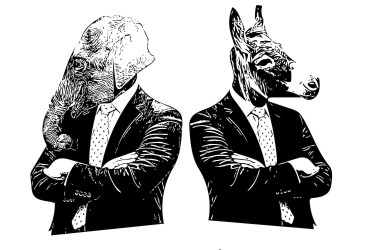
Republican elephant and Democratic donkey with crossed arms turned away from each other.

Party People

Many recoil at the thought of stronger political parties. But revitalized parties could be exactly what our ailing democracy needs.
Then-Democratic presidential candidate Al Sharpton speaks at the Human Rights Campaign forum in Washington, July 15, 2003.

Remembrance of Ratf**ks Past

As Cornel West is receiving ballot access help from Republicans, 20 years ago Al Sharpton’s campaign for president was largely orchestrated by Roger Stone.
An 1863 illustration from “Le Monde illustré” of formerly enslaved people celebrating the Emancipation Proclamation.

What If Reconstruction Didn’t End Till 1920?

Historian Manisha Sinha argues that the Second Republic lasted decades longer than most histories state and achieved wider gains.
Hubert Humphrey.

Votes for Humphrey [Biden]

On (not) voting.
James Madison by Gilbert Stewart, 1821.

How the Constitution Unifies the Country

Yuval Levin urges us to take America’s greatest constitutional thinker, James Madison, as our lodestar.
A mob burning effigies at the Stamp Act Riots.

Illiberal Liberations

Nathan Perl-Rosenthal’s book can guide us through turbulent conversations about revolution, social change, and the founding of America.
Poster for the WPA theatrical production of "It Can't Happen Here" by Sinclair Lewis

Stealing the Show

Why conservatives killed America’s federally funded theater.
National Guard members deploy near the White House as peaceful protests are scheduled against police brutality and the death of George Floyd, on June 6, 2020 in Washington, D.C.

The Most Dangerous Law in America

The Insurrection Act is a nuclear bomb hidden in the United States code, giving presidents unimaginable emergency power. No President has abused it. Yet.
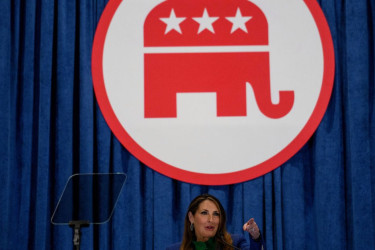
Ronna McDaniel, chairwoman of the Republican National Committee, beneath a red GOP elephant logo.
partner

How Conservatives Changed the Whole Point of American Political Parties

The rise of the right remade the GOP—and fundamentally changed how parties operated in American politics.
Montage of 1980s Yuppies and a Trump rally.

How 1980s Yuppies Gave Us Donald Trump

If it weren’t for the young urban professionals of the 1980s, we’d never have MAGA.
A collage of the Eugene V. Debbs museum and advertisements for his presidential campaign from prison inside the museums collection.

‘Unless Jesus Christ Was Running’: In MAGA Country, Post-Verdict Trump is Still the Answer

Eugene Debs ran for president from prison. His former bellwether county — and museum — both hold lessons for Trump’s campaign.
Rudy Giuliani in front of American flag

Rhyme, Not Repetition

All that’s past isn’t necessarily present.
Paso del Norte International Bridge.

On the Edges of Fascism and Other Unsettling Possibilities

The legacy of the Immigration Act of 1924 and the launching of the Border Patrol, which inaugurated the most restrictive era of US immigration until our own.
Aziz Rana.

Aziz Rana Wants Us to Stop Worshipping the Constitution

A conversation with the legal scholar on why it is unusual that the Constitution is core to American national identity.
President Ronald Reagan is applauded by Beverly LaHaye, President of Concerned Women for America, right, shortly before he addressed a group in Arlington, Va., Sept. 25, 1987.
partner

The Woman Who Helped Build the Christian Right

How one activist helped turn evangelical women into the backbone of right-wing conservatism.
A rally for the 1970 Revolutionary People’s Constitutional Convention hosted by the Black Panthers.

Democracy Was a Decolonial Project

For generations of American radicals, the path to liberation required a new constitution, not forced removal.
An advertisement for the sale of Indian land by the US Department of the Interior, 1911.

A Legacy of Plunder

In its reexamination of narratives about the expropriation of Native land, Michael Witgen’s work changes how Native people are in the arc of American history.