Such is the dynamic of politics in the time of Trump. The politics of outrage is fast becoming a political norm, each flare-up lowering the bar of acceptable rhetoric and producing an upswing in belligerent posturing.
But Trump didn’t invent this emotion-laden mode of political warfare. He’s certainly promoting it to an extreme degree, but it has a long and storied history that predates even that notorious poisoner of the political realm, Newt Gingrich. As tempting as it may be to assume that American politics has been an oasis of civility until the semi-recent past, at moments of intense polarization and strife throughout our nation’s checkered history, politicians have appealed to our lowest common denominator, using the power of anger and intimidation to spread their message and get their way.
We often link such outrage with protest, but in truth, political power holders have long used anger, fear, and intimidation to preserve the status quo, bullying their opponents into compliance or silence, and frightening the public into surrendering rights for the sake of security—though with mixed results.
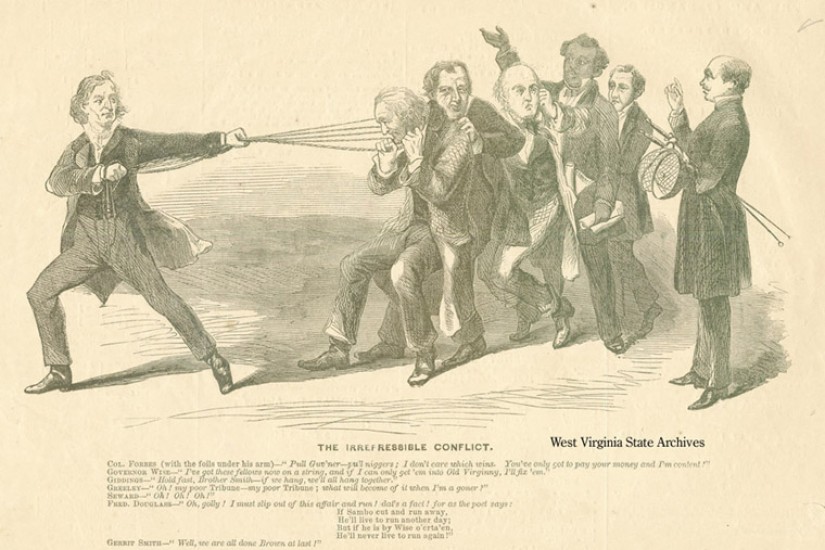
Southern congressmen made masterly use of strategic outrage and intimidation in the 1830s, 1840s, and 1850s, depicting themselves as victims of a campaign of Northern degradation and protecting their interests with the power of their rage.
In some ways, these decades were a heyday of the politics of anger. The rise of organized party politics in the so-called Age of Jackson brought with it an aggressive anger-spiked style of political warfare. The notoriously combative Andrew Jackson led the way in this new kind of politics. The Democratic Party rose to power by celebrating his warlike instincts, battlefield exploits, and epic temper tantrums (his favorite swear words—“by the Eternal”—became a popular catchphrase). It is no coincidence that the rise of this rough-and-tumble politics saw the partial sidelining of women in party politics, allegedly for their own good.
Those same decades saw the intensification of the slavery debate as westward expansion forced the nation to confront slavery’s spread with each new state’s entry to the Union. Thanks to the three-fifths compromise, which gave the South outsize power in Congress by granting representation for three-fifths of its enslaved population, Southerners had long protected their slaveholding regime by dominating national politics—and they felt entitled to that power. And, of course, that regime was itself grounded on anger and entitlement.