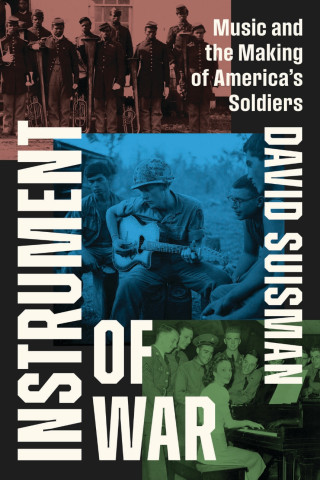
In Suisman’s survey of armed service from the Civil War to the present, all the expected elements of military music are represented. We hear brass bands playing Sousa marches. We hear army privates singing cadence chants as they train. We hear rock and roll cutting through the swarm of helicopter blades and country music cranked for its patriotic paeans and declarations of white Americanism.
But one of Suisman’s most generative insights is the way he integrates the story of another kind of balancing act: the public-private partnerships that have ensured US service members remain entertained through an inundation of popular music. Scholars of political history will recognize these military-civilian relations as a function of the associational state. This form of governance filters federal action and authority through volunteer groups, private businesses, and trade organizations.
Suisman fills his book with examples of the associational state and its public-private partnerships. Take his analysis of the military’s reliance on the civilian music business during World War I. As the US Army mobilized, the Quartermaster Corps made the largest purchase of sheet music in the history of the business up to that point. Twenty-seven music publishers benefited from this mass purchase, delivering what was certainly a welcome payday to Tin Pan Alley. One can imagine stacks of song sheets alongside toiletries, socks, and field rations. The army understood it needed to supply US soldiers with the necessities of nourishment, hygiene, and entertainment. Music counted as one of the essentials for military morale. American fighting men needed popular melodies as desperately as they needed bullets.
Meanwhile, voluntary associations like the YMCA distributed musical instruments and planned concerts to buoy the spirits of the men in uniform. Here is the associational state in action. The US Army used its budget to benefit the profit-driven music business, while relying on the labor of volunteers to fulfill its mission of entertainment.
We see the associational state again through Suisman’s analysis of World War II and the Vietnam War, when the military enlisted the help of civilian musicians. Through outlets like the United Service Organizations or the Department of Defense’s Armed Forces Radio and Television Service, troops on the frontlines heard music and attended concerts that brought the home front a little closer to the battlefront, even as it tied the government a little closer to the entertainment business. This music, its creators, and the service members who consumed it wove a “web of relationships, both social and sonic.” And this web, in turn, not only boosted the morale of American warriors, but also built the associational state by enlisting the culture industries.