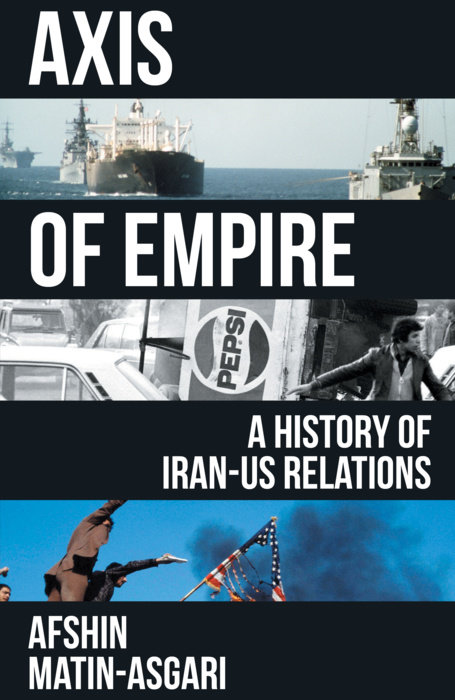
Two new histories of US-Iran relations ask why these nations — once strategically linked by Cold War imperatives — have been hostile to one another for almost half a century. Afshin Matin-Asgari’s Axis of Resistance: A History of Iran–US Relations engages this question through the lens of imperialism, while Dalia Dassa Kaye’s Enduring Hostility: The Making of America’s Iran Policy offers an account of US-Iran relations in the language of the foreign policy establishment. While the former sheds light on the US role in undermining the Islamic Republic since the 1979 revolution, the latter refuses to interrogate the reasons for this hawkishness.
The Revolution and Its Aftermath
For Afshin Matin-Asgari, a US academic from the Iranian diaspora, the poor relations are a product of US refusal to accept Iranian autonomy. Before the Iranian Revolution in 1979, Iran was a client state whose primary purpose, from the US perspective, was as a market for arms and as a bulwark against the Soviets in the Persian Gulf.
Matin-Asgari’s focus on US imperialism frees him from idealizing US-Iran relations prior to the revolution. His focus on the revolution itself is perhaps unsurprising given that he was among the leftist students studying in the United States who returned to participate in the events of 1978–79.
After the shah fled Iran in January 1979, he moved westward. As the months went by, his hopes of regaining his throne diminished and his lymphatic cancer spread; he wearily drifted from Cairo to Rabat to Paradise Island in the Bahamas, and finally to Cuernavaca. With few friends left, the shah still had his banker, David Rockefeller, who pulled the requisite strings to land him in Mexico.
The shah also had Richard Nixon and Henry Kissinger on his side. The latter lobbied the Carter administration to admit him into the United States for medical treatment. Kissinger even played hardball with Carter, linking his support for the new iteration of arms control talks with the Soviets, which he had started, to the admission of his dying friend.
The CIA, the State Department and its US Embassy in Tehran advised Carter that such a policy would antagonize Iran. The United States knew the popular revolution was concerned — and, with hindsight, paranoid — that the Americans plotted to reimpose their client king. After all, in 1953 they had done just that: the shah had fled to Baghdad and Rome while the CIA manufactured a coup to oust his democratizing prime minister, Mohammad Mosaddegh, who threatened US control over Iranian oil.