What do you hope readers will take from your book?
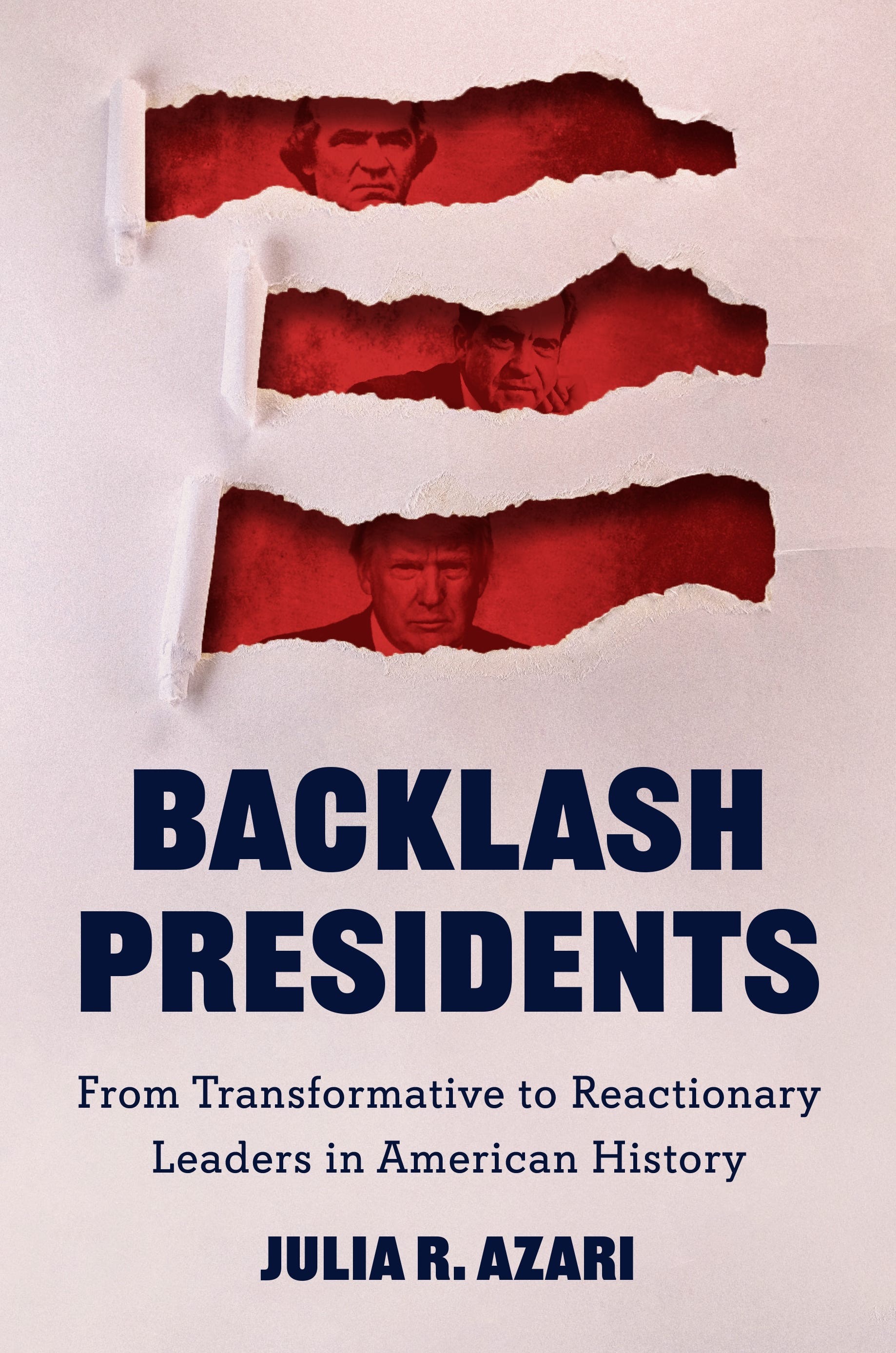
JRA: In addition to the messages in the previous answer about confronting the realities of race and politics in America, I hope that we understand presidential impeachment a bit differently. I especially wanted to offer a new perspective on Watergate. Past scholars have connected it to the tumultuous politics of the time, but the way that Nixon engaged in election interference, denial of legitimate opposition, and use of the government to pursue political opponents are all connected to racial politics. And it was Black legislators who were among the earliest to question Nixon’s execution of the office and to suggest impeachment. What connects this case to the other impeachment cases is that during backlash politics, the country winds up with presidents who have trouble being the leader for the entire country and carrying out the law.
How have the politics of racial backlash and the presidency changed over time?
JRA: There have been two big changes, and they are related. First, people who are outside the traditional groups have gained political power. We have a way to go, but we have a much more diverse set of officeholders in 2025 than in most of the points covered in the book. Women, people of color, and members of the LGBTQ+ community hold positions of power in law, business, and education. That changes the dynamics that I describe.
The second major change is what most political observers call “polarization” – the parties have grown apart on a lot of issues, and they have “sorted” around attitudes of race, with Republicans and Democrats being pretty distinct from each other on a variety of race attitude measures. This hasn’t been the historical norm, and it actually presents an opportunity for the kind of (peaceful, verbal) confrontation I think is necessary. But it’s not necessarily clear that the politics of 2025 are going to bring that, either.
Which president’s racial legacy is most misunderstood?
JRA: This is a pretty crowded category, but the contemporary story that deserves more attention is George H.W. Bush’s back-and-forth with Congress over the 1991 civil rights bill, which made it easier to sue your employer for discrimination. Conservative populists - including Pat Buchanan, who challenged Bush in the 1992 presidential primary – called it a “quota bill,” employing the language of affirmative action that is still potent in our politics today. Bush was not enthusiastic about the bill but also did not want to be seen as obstructing civil rights. It shows how difficult it is for presidents to navigate race politics in the post-civil rights era. In a weird way, this foreshadowed the backlash against Obama when he dared to talk about race and how it affects American life: when presidents in this era violated a norm of colorblindness, the political response could be very volatile.