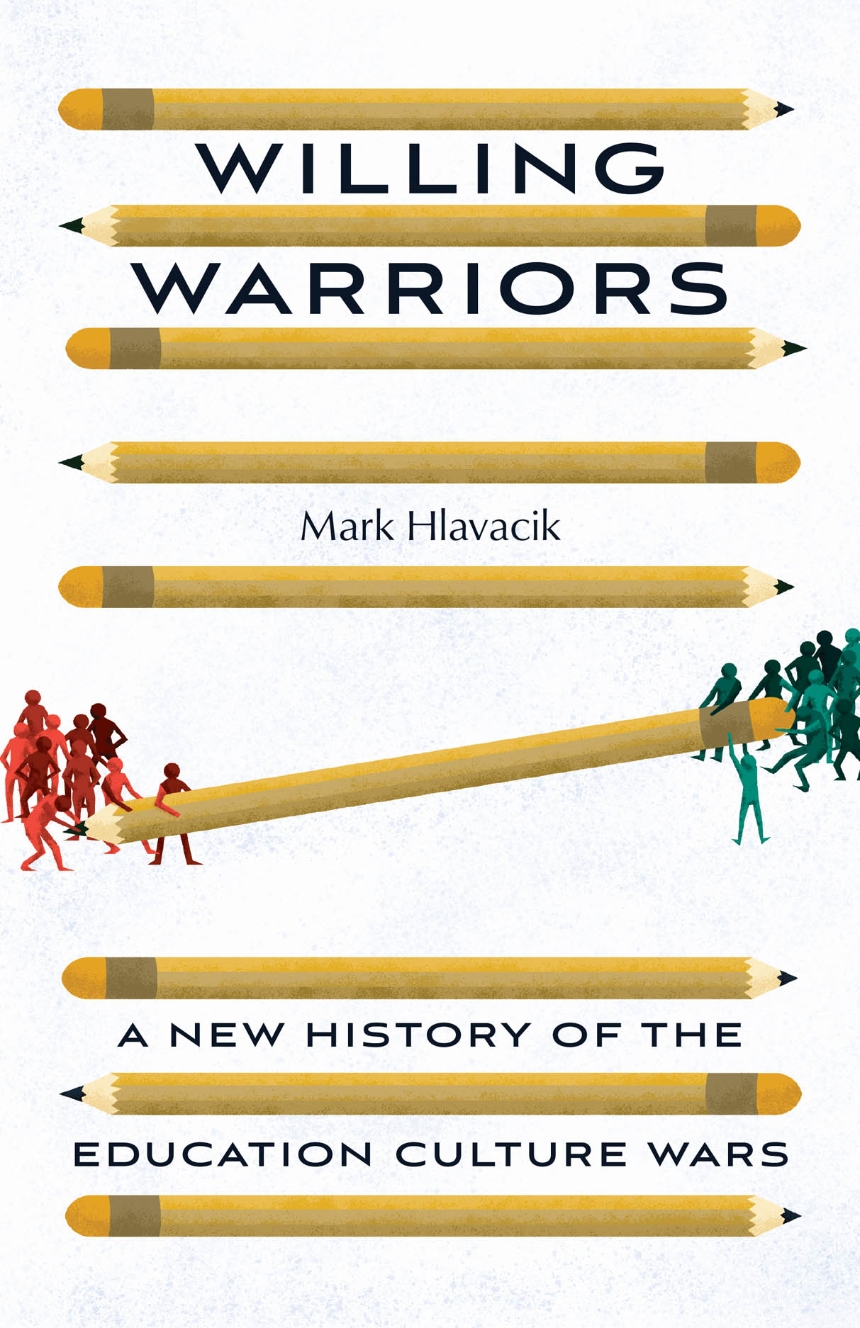
Mark Hlavacik’s new book, Willing Warriors: A New History of the Education Culture Wars, begins with a forerunner of the CRT debate: a controversy over an anthropology-based curriculum developed at Harvard in the 1960s. The designers of Man: A Course of Study (MACOS) hoped that an innovative approach to elementary-school social studies—teaching children about non-Western cultures—would make them tolerant observers and skillful navigators of racial and cultural differences. Renowned psychologist Jerome Bruner wrote the program’s essential questions: What is human about human beings? How did they get that way? Ten-year-olds in 1,700 schools across forty-seven states learned about the behaviors of salmon, herring gulls, and baboons, and watched documentaries about the traditional hunting practices of the Netsilik, an Inuit nation in the Canadian Arctic.
Conservatives balked at the content, which included graphic depictions of seal and reindeer hunting, and readings of Netsilik cultural myths, some of which featured polygamy, senicide, and child abandonment. Parents and pastors lambasted MACOS in right-wing magazines and newspapers, portraying the curriculum as an insidious conspiracy among academics to indoctrinate children into anti-American, anti-Christian values. They took these grievances to school boards, and in 1976, the National Science Foundation defunded MACOS.
Hlavacik argues that the MACOS controversy set a right-wing rhetorical template for the next fifty years. It was built on three interlocking assertions: that the curriculum “was the product of a conspiracy, that its content threatened students’ innocence, and that [it] was so outrageous that it warranted a hyperbolic rhetoric that included the demonization of educators and the belittling of children.” Hlavacik notes that, like most of the subsequent culture wars over education, the MACOS controversy became “a contest for control of the social studies curriculum more than a serious effort to improve it.”
Why start the story with MACOS rather than Scopes? In an endnote, Hlavacik claims that while the controversy “followed existing rhetorical patterns for panics over school curricula going all the way back to the Scopes trial, [it] managed to connect those rhetorical patterns with large-scale, federal policy change.” Perhaps. It’s true that the conflicts over education that crystallized in the Scopes trial were taking place within states rather than across them. Compulsory schooling was relatively new in many states in 1925, and a national education system that would promote policies, administer tests, measure student progress, and hold states and districts accountable had not yet emerged. But because the trial got significant media attention nationwide, it established several of the political tools and patterns common to each iteration of education’s culture wars: for example, market-driven competition among textbook and curricula companies. It also introduced a legal novelty that got little traction in 1925 but would emerge later as a powerful rhetorical weapon: parents’ rights.