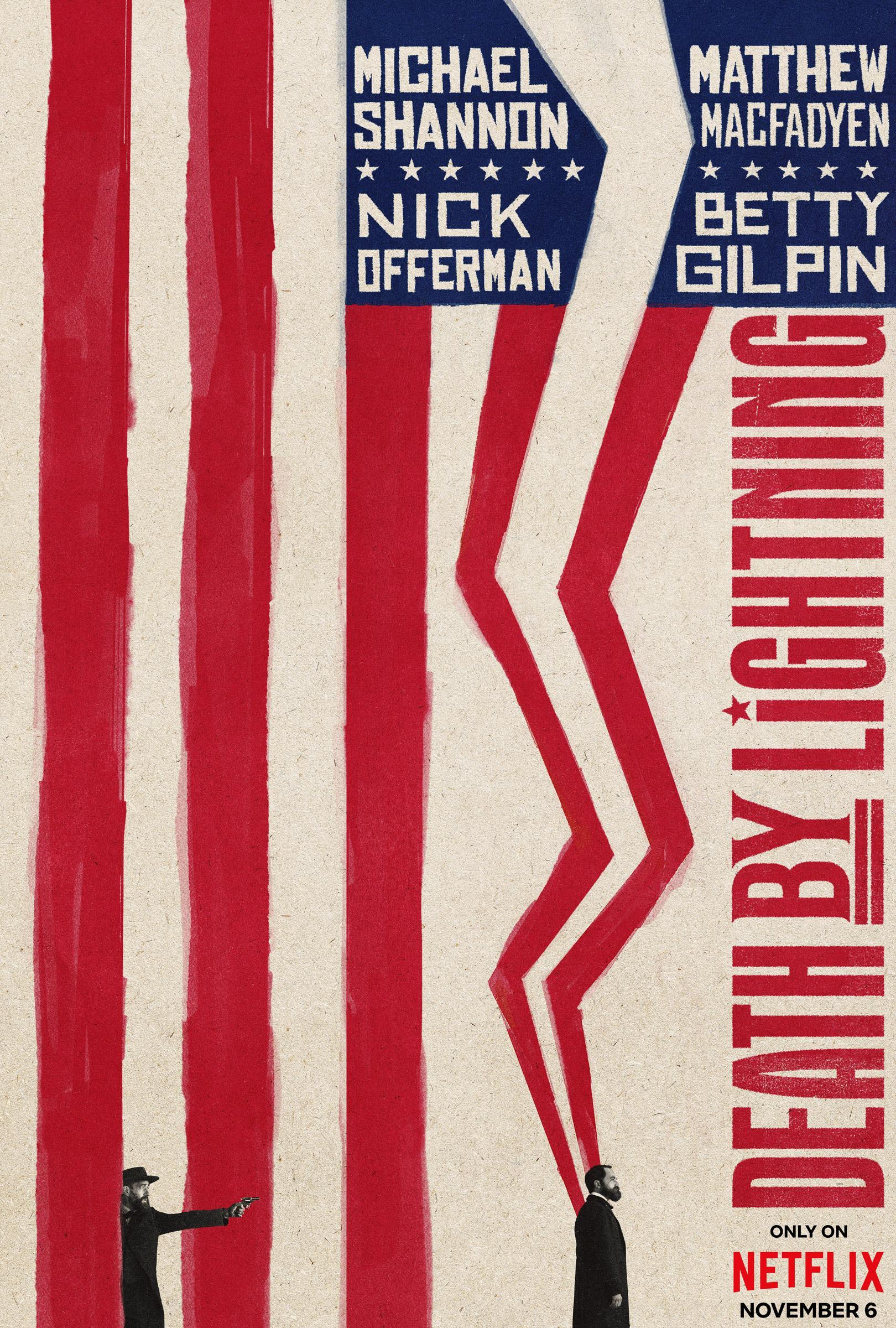
“Death by Lightning,” a four-part limited series now streaming on Netflix, styles itself as “a true story about two men the world forgot”: Garfield, who would become the twentieth President of the United States, and Charles Guiteau (Matthew Macfadyen), his eventual assassin. The show’s creator and writer, Mike Makowsky, sets the action firmly in the post-Reconstruction era: the Civil War casts a long shadow, and Garfield’s chief obstacle in the election is not his Democratic opponent but a cynical operator within his own party whose influence stems from the spoils system. Yet Makowsky’s irony- and anachronism-laced retelling makes the story modern. Characters curse freely (“fuck it”), and Guiteau’s first scene—a parole hearing in which he’s called “a liar and a fraud”—alludes to his stint at the “free-love colony” in Oneida, New York. Guiteau’s disgusted brother-in-law later calls it what it is: “a sex cult.”
Both Garfield and Guiteau hunger for glory, though Garfield is better at hiding it. At the Convention, he makes a show of dissuading his supporters; afterward, he campaigns from the porch of his farmhouse. Guiteau, by contrast, announces his desire for fame. Were he born a century later, he might’ve tried to get on TV or launched a YouTube channel. Instead, consigned to the eighteen-hundreds, he pitches anyone who’ll listen on his grand plans to start a newspaper. Scrabbling for purchase in society, he accosts senators he knows by sight—such as the New York power broker Roscoe Conkling (Shea Whigham), who pulled the strings for Garfield’s predecessor, Ulysses S. Grant, and the Maine lawmaker James Blaine (Bradley Whitford), who loathes all that Conkling represents. But Blaine is a pragmatic operator in his own right, so it’s he who chooses Garfield’s running mate: Conkling’s charming but dim-witted enforcer, Chester A. Arthur (Nick Offerman).
Perhaps fittingly for a show about a bunch of forgotten names, “Death by Lightning” is a delightful showcase for undersung character actors. Makowsky has a sure hand in dramatizing the legislators’ schemes and counterschemes to wrest control of the Party, and thus determine the future of the country. The most satisfying period dramas evoke a bygone era even as they speak to the current moment, and “Death by Lightning” is no exception, recalling another epoch when hollowed-out political parties could be co-opted, for good or for ill, by canny outsiders. A government of the people, by the people, for the people is a noble enterprise, but, as Garfield himself declares, “No great wisdom hasn’t been without a touch of madness.”