Witness, which I recall as being quite good, has other points besides the hair freedom/Amish hotness one; if I watched the whole thing again I would probably have some Jacobin-article type things to say about secularism and community in the Reagan era. But as a nine-year-old girl, the key lesson was clear: if you want to be the person who gets to make out with Han Solo in a field, hair freedom is what you need.
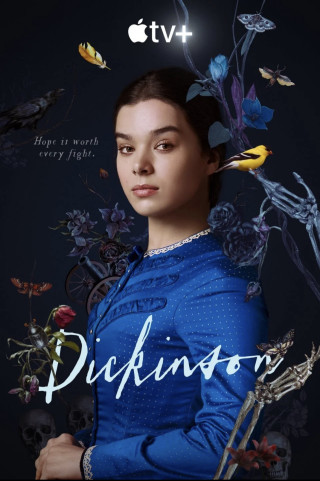
In other words, Witness, like Dickinson and many other popular fictions, offers a frisson-y encounter between the present and a 19th-century past, a way of transporting the viewer’s contemporary values to an imagined historical scene. And there’s a reason why so many stories tap into the electricity of this encounter, why so many romance novels take place in the 19th-century past or among the Amish, which in case you didn’t know is totally a thing. The reason has to do with a desire to feel free. In a forthcoming book I will shamelessly plug, Arielle Zibrak argues about romance novels: “If the 19th century is the imagined primal scene of gendered oppression for modern women — conjuring images of corsets and confinement — it’s no surprise that books where the corsets are ripped off and the sex that was previously only a vague fantasy is made real are cathartic to so many readers.” The more obvious the confinement the more gratifying the rebellion — the possibility for which turns confinement into its own tumescent-feeling source of pleasure.
Speaking personally as someone who basically refuses to read novels set in the present moment, I like fantasies of the past because they make a different frame to consider choices, particularly choices about self-determination. Self-determination right now feels so exhausting; I’d rather hang out in a situation where the seeming obstacle to self-determination is just a bonnet than can, with great panache, be tossed aside.
But careful scholars of Hair Studies, such as the Dickinson production team, know that Hair Freedom is a more complicated matter than it first may appear. If you read your way through an archive of 19th century imagery about bonnets, bonnet removal, social freedom, and Hair Narrative (which, here is a whole syllabus for you!) you’ll come to see that many narratives of hair freedom (Witness, I’m going to say, is one) work similarly to what Foucualt called the repressive hypothesis, or rather, reveal something that Foucault might have come up with about pleasure, identity, and repression if he had ever in his life thought about what it was like to be a girl (and had not been bald). Just think what he might have written about “bodies and pleasures” if he had ever been presented with the opportunity to buy “maximum body” shampoo.