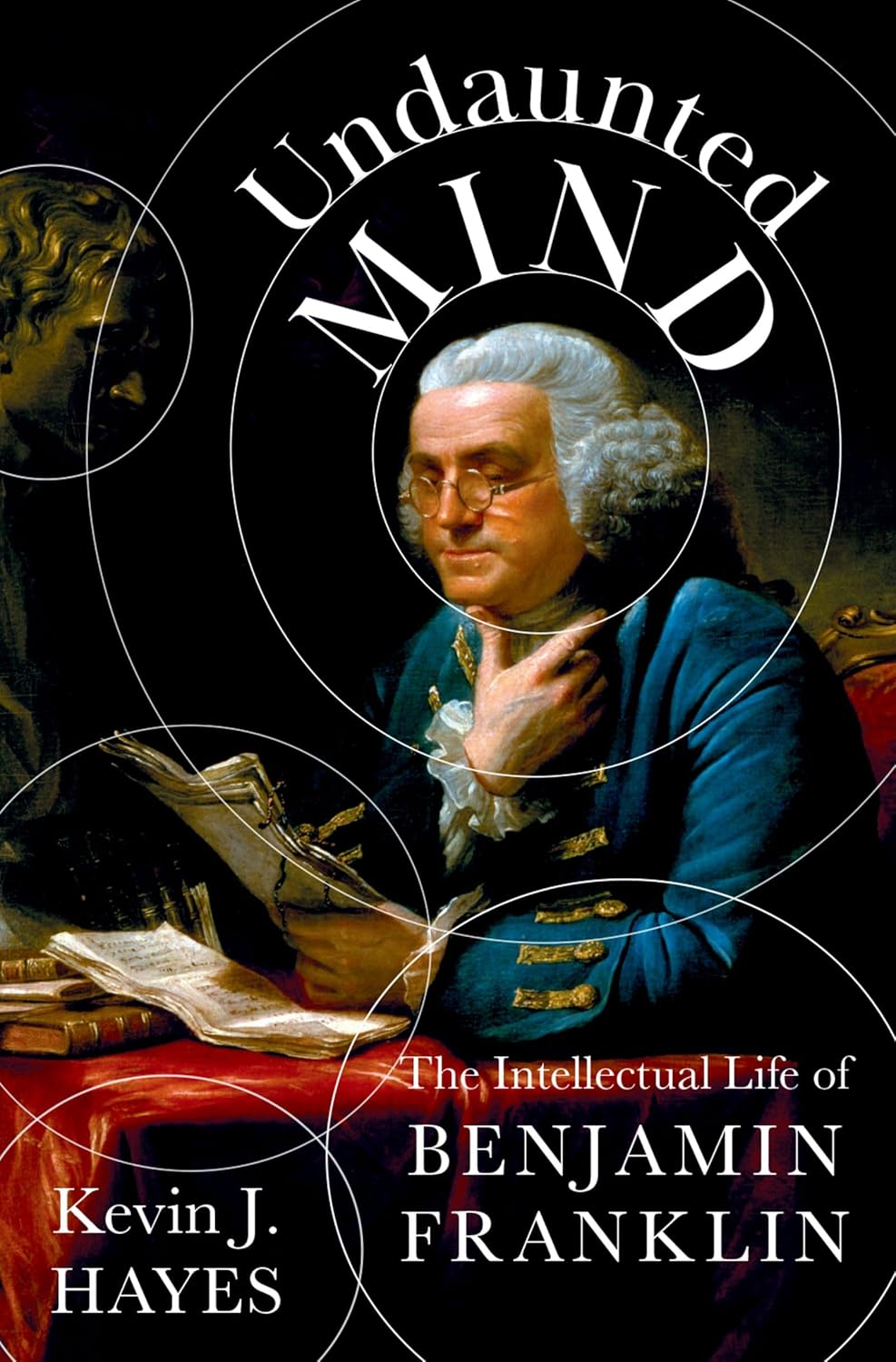
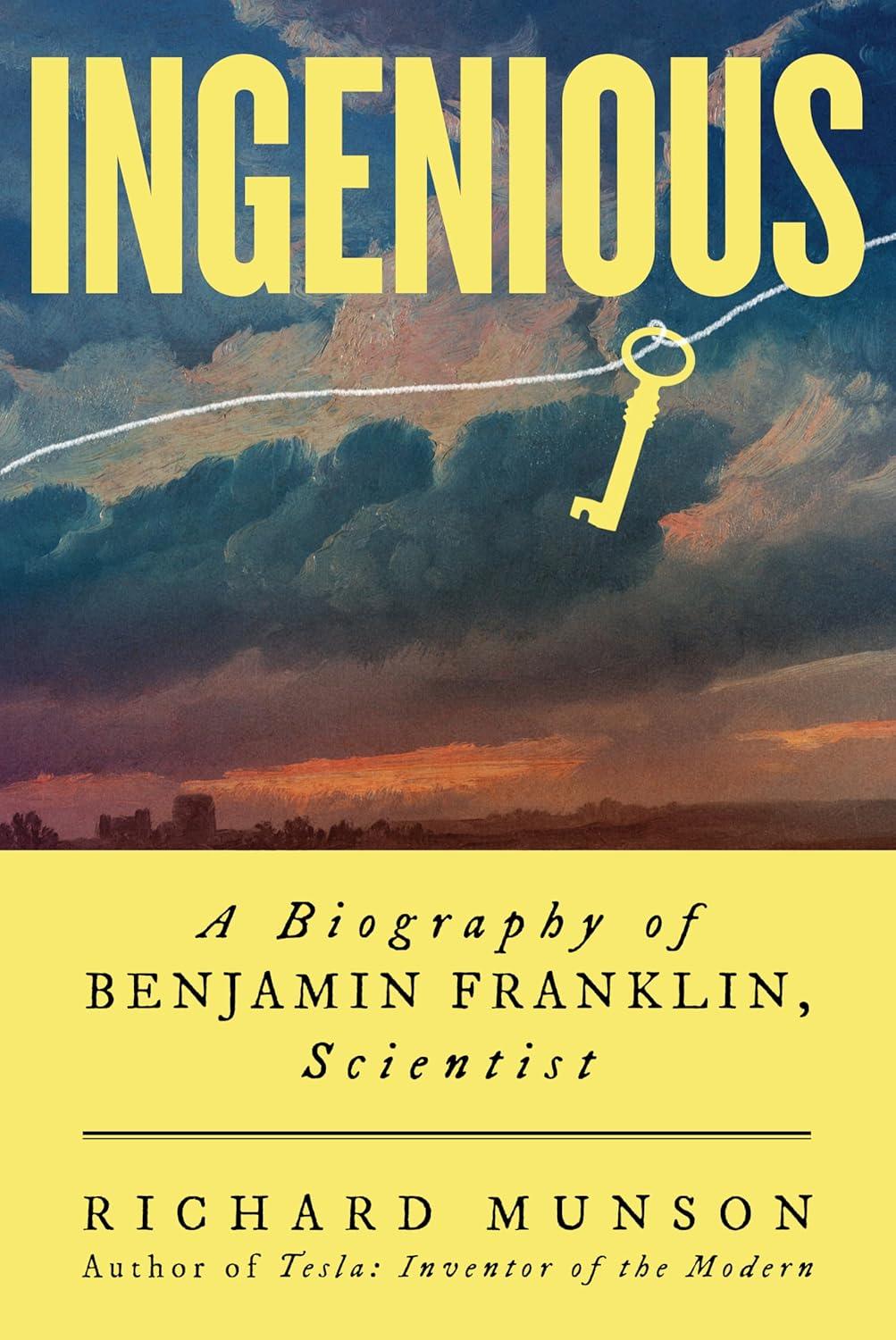
It is Richard Munson’s mission to explode these delusions, and he does so with ease and some elegance in his exemplary short Life, which concentrates on Franklin’s scientific endeavours. He is supported by Hayes’s more extended treatment, which, despite underplaying the science, gives a fascinating account of Franklin’s travels and of the piles of books he squirrelled away wherever he went. Between them, they present a portrait of an intellect not to be underestimated, even when Franklin is at his most frolicsome and whimsical. For the ins and outs of his public career, you need also to consult the more political biographies. Hayes has himself published a shorter Life of Franklin for the Reaktion Critical Lives series (2022), where he records the political career in vivid detail, together with a mass of fresh anecdotes and Franklin’s coarser jokes, usually about turds and farts. But these two books do, I think, convey the essential truth. Franklin himself made it clear that he preferred talking science with his ‘philosophical friends’ to discussing politics with ‘all the grandees of the earth’. Munson points out the ways in which the great scientists of Franklin’s time (and ours) have paid tribute to his originality. Joseph Priestley in his History and Present State of Electricity (1767) declared Franklin’s discoveries ‘the greatest, perhaps, that have been made in the whole compass of philosophy since the time of Sir Isaac Newton’. Priestley’s essay is largely a hymn to Franklin, not only for his discoveries but for the honesty and diffidence of his methods. Franklin encouraged others to build on what he called his ‘short hints and imperfect experiments’. Part of practising science was to construct ‘many pretty systems’ that we ‘soon find ourselves obliged to destroy’. Karl Popper or Thomas Kuhn could not have put it better. In fact, Kuhn begins The Structure of Scientific Revolutions by echoing Priestley and identifying Franklin’s Experiments and Observations on Electricity as an example of a new and instantly convincing ‘paradigm’, which ‘was sufficiently unprecedented to attract an enduring group of adherents away from other competing modes of scientific activity’. Franklin created a new vocabulary to describe the way electricity works: conductor and insulator, condenser and battery, plus and minus charges. It’s not simply that he taught the world how to rig up a lightning conductor (he installed one on his own house and another on St Paul’s Cathedral). He was master of the theory too. Kant called him ‘the Prometheus of recent times’. It was because he was already an international superstar of science that this provincial printer was invited into the political counsels of great men.
We need to straighten the record, not only for reasons of accuracy but because it may help us to understand better Franklin’s years of public service. For the characteristics of his political career – immersion in detail, alertness to the evidence, readiness to be corrected or converted, perseverance, intense practicality and extraordinary energy – are the same as those which mark his scientific investigations. All his life, he remained as open to experience as his bare bottom was to the chilly winds of Craven Street.