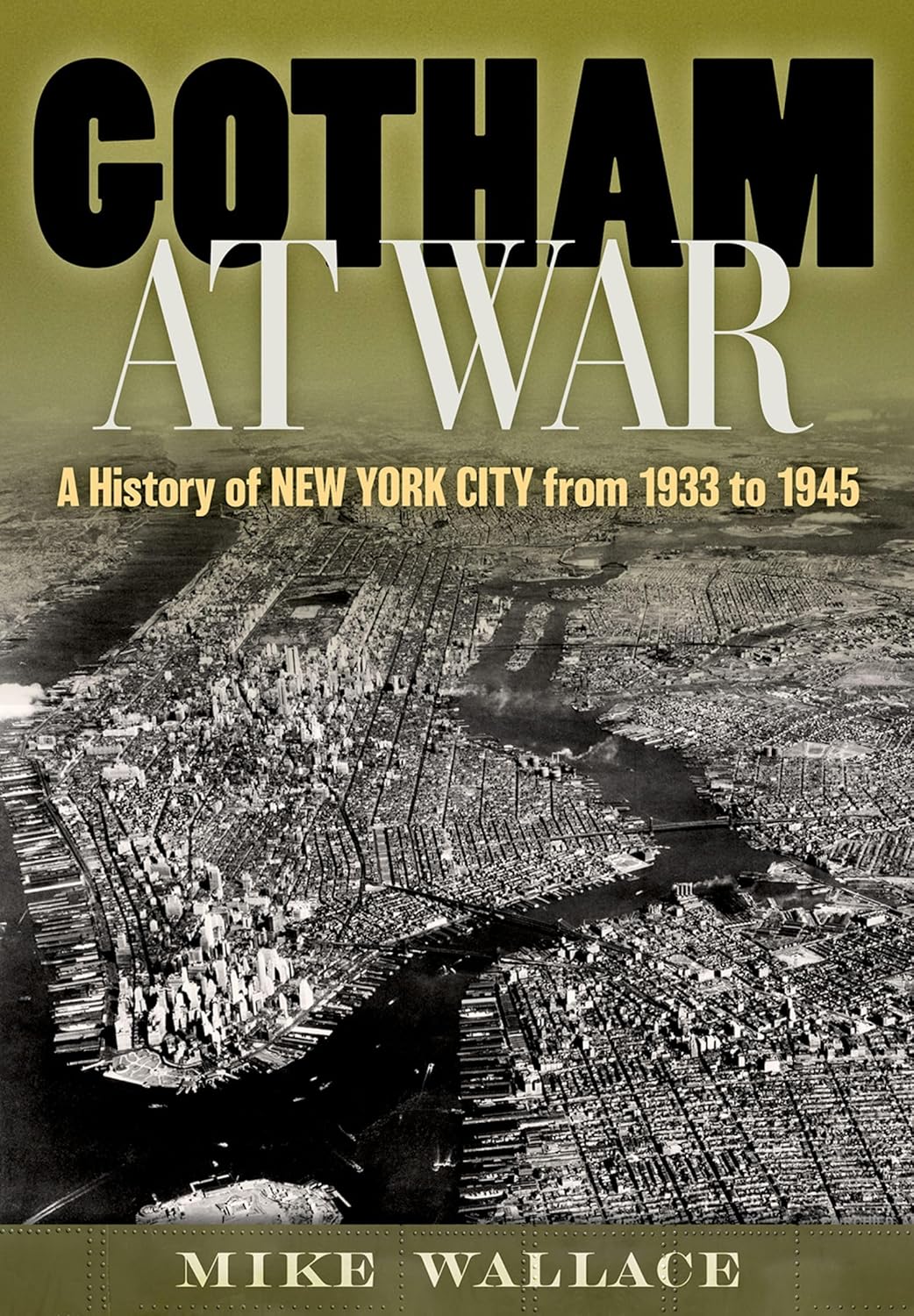
The new volume offers a compelling look at the way a big city’s economy functioned in an age of global war. Wallace describes how women broke through numerous glass ceilings: wielding tools in shipyards and munitions plants, driving taxis, and clerking on the floor of the New York Stock Exchange. He notes the subterfuge required to create a new weapon of mass destruction that would transform war forever: an office on lower Broadway served as the first headquarters of the top-secret program to build an atomic bomb. The enterprise was soon moved to other spots on the map, but it remained known as the Manhattan Project, “a false front” to confuse the enemy.
He makes room, too, for sketches of how New Yorkers managed to have a damn good time despite, or even because of, the momentous conflict that none could ever truly escape. The hit musical Oklahoma!, Wallace points out, was the work of two “fighting liberals” raised in New York, Richard Rodgers and Oscar Hammerstein, who presented “a prelapsarian vision of a time when social tensions had (supposedly) been subsumed in the name of patriotic comity.” Bebop jazz, Afro-Cuban dance music, and cheap paperbacks also proliferated, as did the frantic eroticism of an old Times Square where hordes of young people, in and out of uniform, came looking for hookups and usually found them.
With his omnibus method, Wallace sometimes strains to make a New York connection to every national development that took place in the era. But he does document a wealth of fine ones—from the New York roots of the Popular Front to the story of those Gothamites who led the long and successful battle to tear down the color line in professional baseball. He introduces Lester Rodney, sports editor of The Daily Worker, who ran countless pieces advocating the integration of baseball, and describes how Mayor Fiorello La Guardia and two leftists, US Representative Vito Marcantonio and City Councilman Benjamin Davis, demanded investigations into the persistence of Jim Crow on professional diamonds. Finally, the same month that Japan surrendered in 1945, the Brooklyn Dodgers signed Jackie Robinson to a minor-league contract.