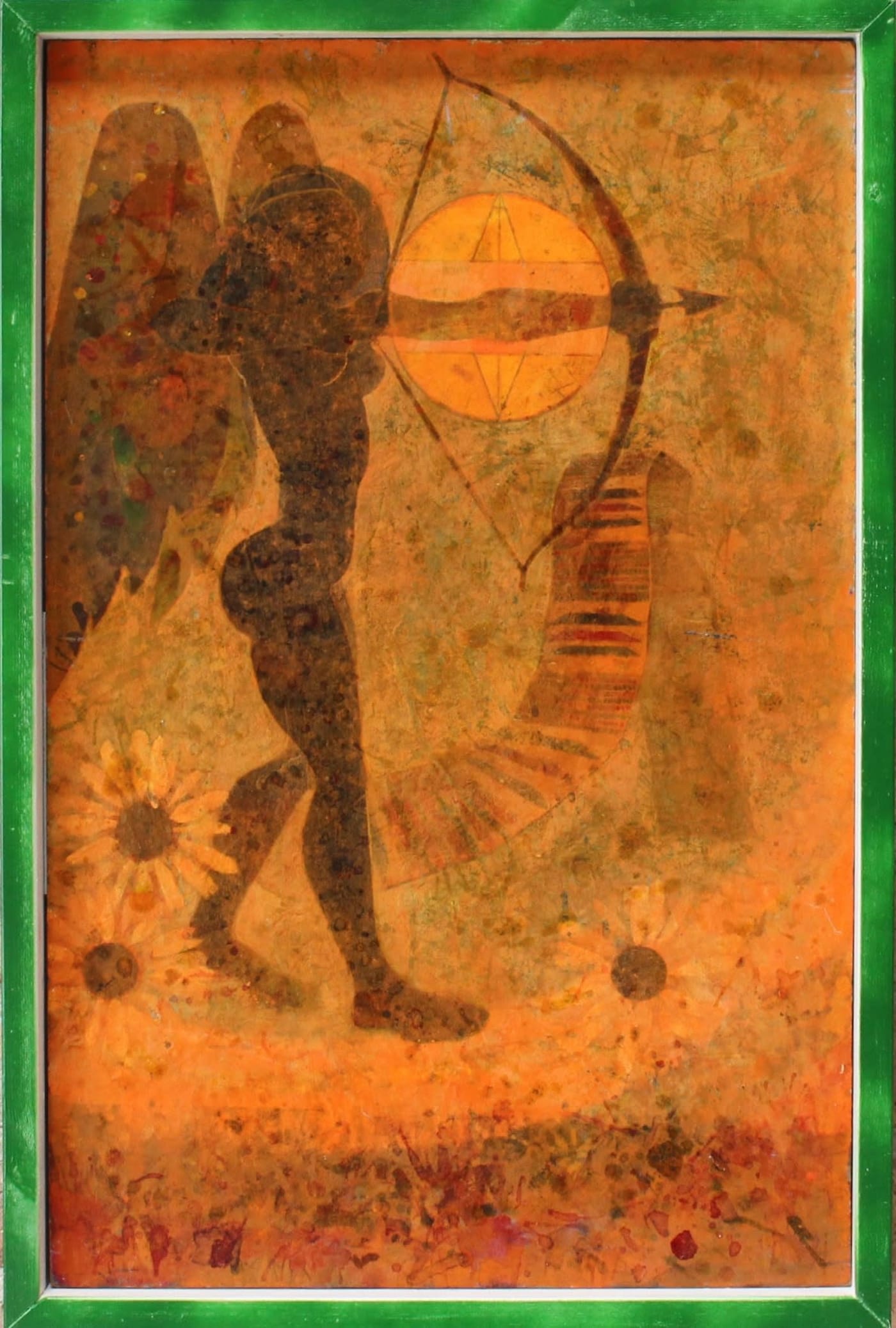
In 1958, Neal, along with Charles McGee, Henri Umbaji King, LeRoy Foster, and Ernest Hardman, started Contemporary Studio — a collective of Black artists who created their own opportunities when Black art was not being shown in the city’s major institutions. The formation of Contemporary Studio, following fellow Black-led organization Arts Extended, marks the unofficial beginning of Detroit’s own Black arts movement. The movement’s journey from responding to historical disenfranchisement to representing the complexity of the Black experience paved the way for Detroit to become the mecca of Black art that it is today.
Arts Extended and Contemporary Studio are counted as two of the earliest Black-owned and operated galleries in the Midwest. Arts Extended was birthed in 1952 by arts educators like sculptor Cledie Taylor, and at over 70 years old, may be the longest continuously running Black arts organization in the country. Contemporary Studio came six years later, first meeting in Charles McGee’s home and holding exhibitions at venues like the Detroit Urban League, according to Julia Myers in her book Harold Neal and Detroit African American Artists. Many of the artists of both Arts Extended and Contemporary Studio got their start at the Pen and Palette Club, which the Detroit Urban League started in 1925 to provide classes and studio space to emerging Black artists.
By 1960, the Contemporary Studio crew opened a walk-up gallery on Detroit’s Westside off the Lodge Freeway. Not many photographs or records of this gallery exist, but Myers notes in her book how it was frequented by the likes of Langston Hughes, with McGee describing it as a place where artists came to paint, draw, and learn almost daily. Detroit Free Press writer Morley Driver described it in 1960 as “the sort of place found in Rome or Paris.”
The history of Contemporary Studio’s gallery after that is a little hazy. In 1962, the group came back “by popular demand,” opening a new location on Linwood, according to a Michigan Chronicle article. In 1963 they were fundraising to open a permanent gallery, but by 1964 it appears the group no longer had a physical location, though Charles McGee has said Contemporary Studio continued on until at least 1967.
“When you look at movements like the Black Arts Movement and what that entailed, most of the cats were involved with each other for 10, 20 years beforehand, and they always had a collective mindset … to keep their ecosystem going,” says multidisciplinary Detroit artist James Charles Morris. Morris, who is the grandson of gallerist Dell Pryor, is working on an archival project to preserve Detroit’s Black art history called The Detroit Exhibit. “They knew the importance of coming together and having a place to show the work that they wanted to show.”