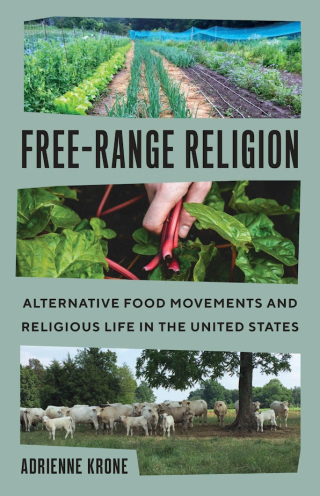
Each of the four case studies in the book offers a window into the ways that religious people are participating in and shaping the alternative food movement. The four case studies include the Adamah Farm Fellowship, a Jewish farming programs for young adults located at the Isabella Freedman Jewish Retreat Center in northwest Connecticut, the Hallelujah Diet, a raw and plant-based diet program with headquarters in Gastonia, North Carolina, Baldwin Beef, a grass-fed cattle farm in Yanceyville, North Carolina, and Pearlstone Center, a non-profit Jewish retreat center in Reisterstown, Maryland. The case studies also provide insight into the complicated reality of contemporary religion because in these spaces, religious people are coming together across a variety of religious and non-religious differences to change the food system, which is why I call both this form of religion and the book about it Free-Range Religion.
At the Adamah Farm Fellowship and Pearlstone Center, their concerns are about detachment from the food system and climate change, so their work focuses on reconnecting Jews to the earth and their food as they learn more about the contemporary food system alongside the agrarian texts and traditions of Judaism. At Adamah, this meant that their farm fellows spent most of their day on the farm planting, weeding, and harvesting produce, caring for animals, and taking classes on agriculture, social justice, and Judaism. At Pearlstone, this meant pausing their Community Supported Agriculture (CSA) and fellowship programs for the year and cover-cropping their fields as they observed shmita, the biblical agricultural sabbatical year. A Pearlstone staff member told me “farmers don’t rest,” so they spent the year doing restorative work around the farm like removing invasive species and adding permaculture tree guilds. The food reform work at these two sites involved engagements with research in agricultural science, collaboration with local farmers and extension agencies, and interfaith work with religious communities that share their concerns.