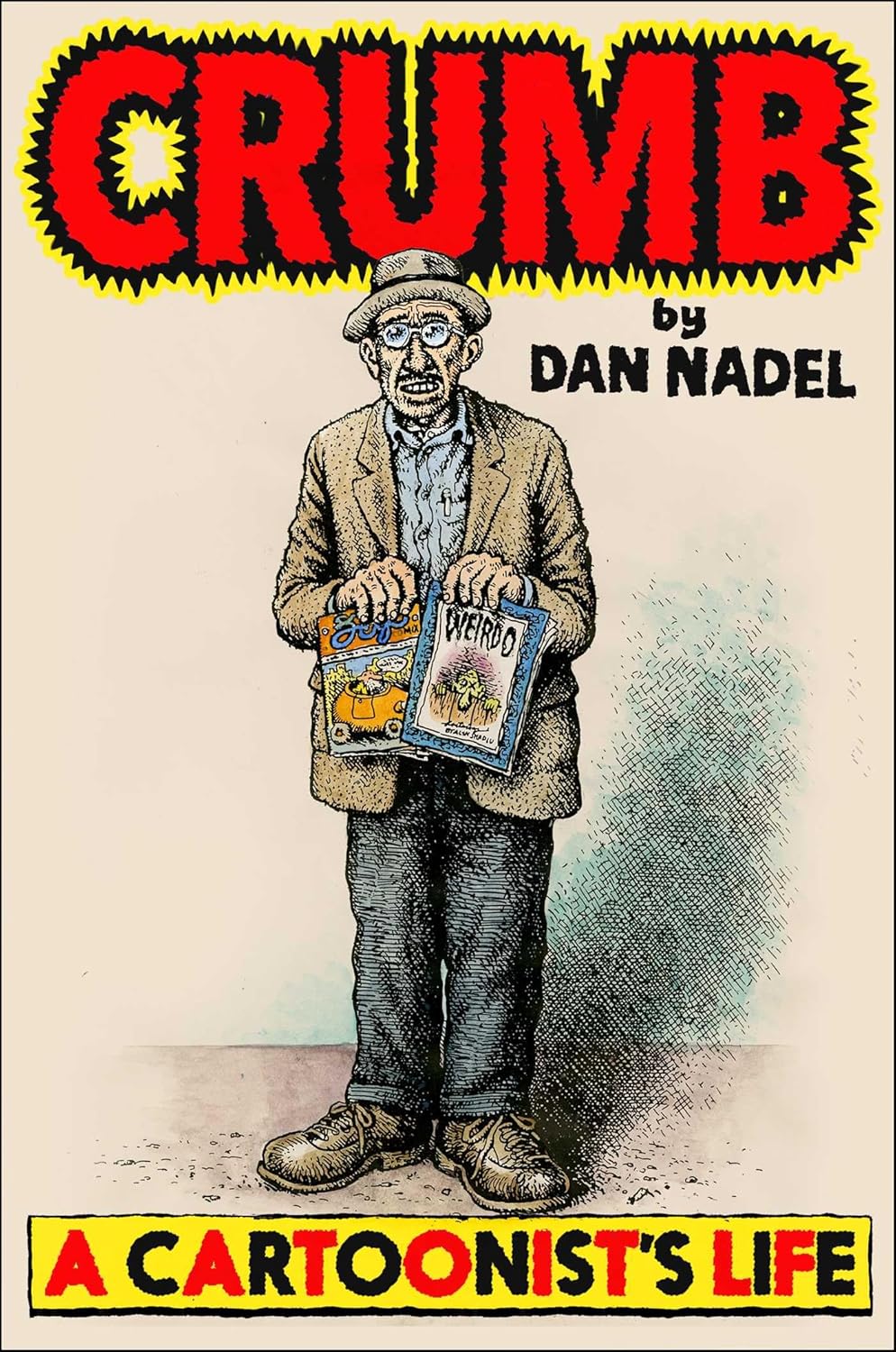
After high school graduation, Robert moved to Cleveland where he applied for work at American Greetings. To their credit, the managers there recognized his budding talent. He took their professional skills and techniques training program; when he emerged, he was still an alienated and awkward young man, but he was one who could produce quality art with popular appeal.
In the mid-'60s, even a declining industrial center like Cleveland had an emerging counterculture. There, Robert met Dana, his soon-to-be wife. Both were barely out of high school, and what was probably puppy love turned into an awkward marriage of naifs who clung to each other, trying to make decisions about a future they could barely imagine.
After a few years of grinding out greeting cards and ingesting LSD and marijuana, Robert and Dana relocated to San Francisco in early 1967. That year, droves of would-be flower children arrived for the legendary but ill-fated "Summer of Love." Robert made contact with local hip printers and artists while continuing to do cards for American Greetings and Fritz the Cat strips for Cavalier, a men's magazine out of New York. His readership grew considerably.
As the underground papers declined, the locus of counter-cultural cartooning shifted to underground comic books, such as Crumb's Zap Comix. Free artistic expression and looser pornography laws meant comix could make fun of everything, including the pretensions of the counterculture and the left, sometimes in taboo-breaking and X-rated fashion. Soon the new comix were in head shops, indie record outlets, and bookstores. Crumb stayed financially afloat with a steady flow of hits, including Big Ass Comics, Motor City Comics, XYZ Comics, and Despair.
To his everlasting chagrin, Crumb's celebrity would attract many sleazy operators and rip-off artists. On the upside, he and Dana worked out an open-marriage arrangement, allowing both to have other lovers. But the tensions between Robert and Dana increased over time, and once he met Aline Kominsky, a cartoonist in her own right and a more suitable match, his first marriage unraveled and Robert married Aline. There followed decades of their self-satirizing comix chronicling their eccentric life together.
Of all the taboo-breaking cartoonists active in the underground comix movement, why did Crumb prove the most popular? The foremost reason, I think, is that he's an extremely gifted draftsman. He shifted between several drawing styles, from old-timey to more realistic, depending on the story he was telling, but all of them were instantly identifiable as Crumb's work.