
Enshittification represents the fulfillment of a vision laid out by Andreessen in a famous 2011 Wall Street Journal essay, still featured on his company website. “Software is eating the world,” he declared proudly. By then he was a major investor in Facebook, Twitter, LinkedIn, Skype, and many others. What he meant by “eating the world” was that Amazon had destroyed Borders, Netflix had destroyed Blockbuster, music-streaming giants were destroying record labels, and Google was “using software to eat the retail marketing industry.” He considered this to be good news.
But software doesn’t eat anything. Tech companies do, when they gain the power to use the levers of the information economy to consolidate and dominate.
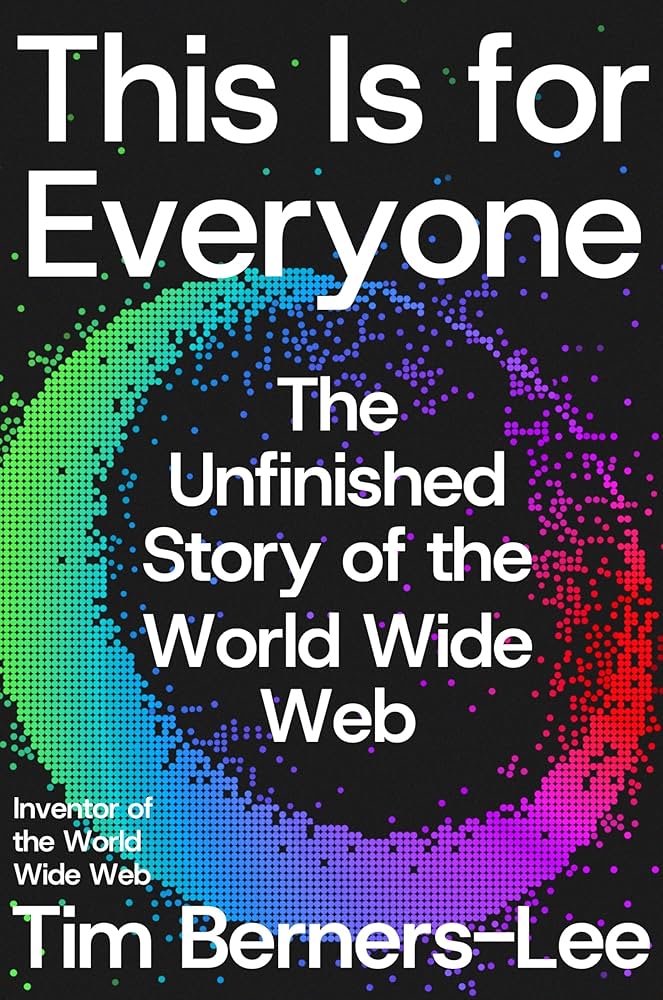
Nothing could be further from the early hopes of Tim Berners-Lee; yet he remains an optimist by nature. “The difference between the enjoyable open web and more predatory social media aspects is largely a design issue,” he writes.
In the early days of the web, delight and surprise were everywhere, but today online life is as likely to induce anxiety as joy. By steering people away from algorithmic addiction, I hope we can reclaim that delight.
He urges us to walk away from Facebook and X in exchange for “something pro-human”—decentralized platforms like Mastodon, a user-controlled, open-source alternative in the so-called Fediverse. One virtue of the Fediverse, as Doctorow also emphasizes, is that users can move freely from one server or community to another without losing their friends and followers. Berners-Lee suggests that new software protocols can return the power of personal information to users. He also imagines, somewhat naively, that the much-touted advances in AI are “signs of spring.”
So far, the rush to AI seems to be embracing the same pathologies: deprecation of workers and creators; secretive closed standards; overheated marketing; and consolidation of power.4 The users are not in control; the strings are held by Google, Andreessen, Elon Musk, Larry Ellison, and Sam Altman.
In spite of everything Doctorow, too, believes there is a path to a “cure,” a way to resist the rise of technofeudalism and bring back the best of “the old, good internet.” Users need to become aware of the tricks that lock them into platforms, and they need to break free. The government needs to use antitrust law to break the monopolies and regulation to prevent fraud and protect privacy.