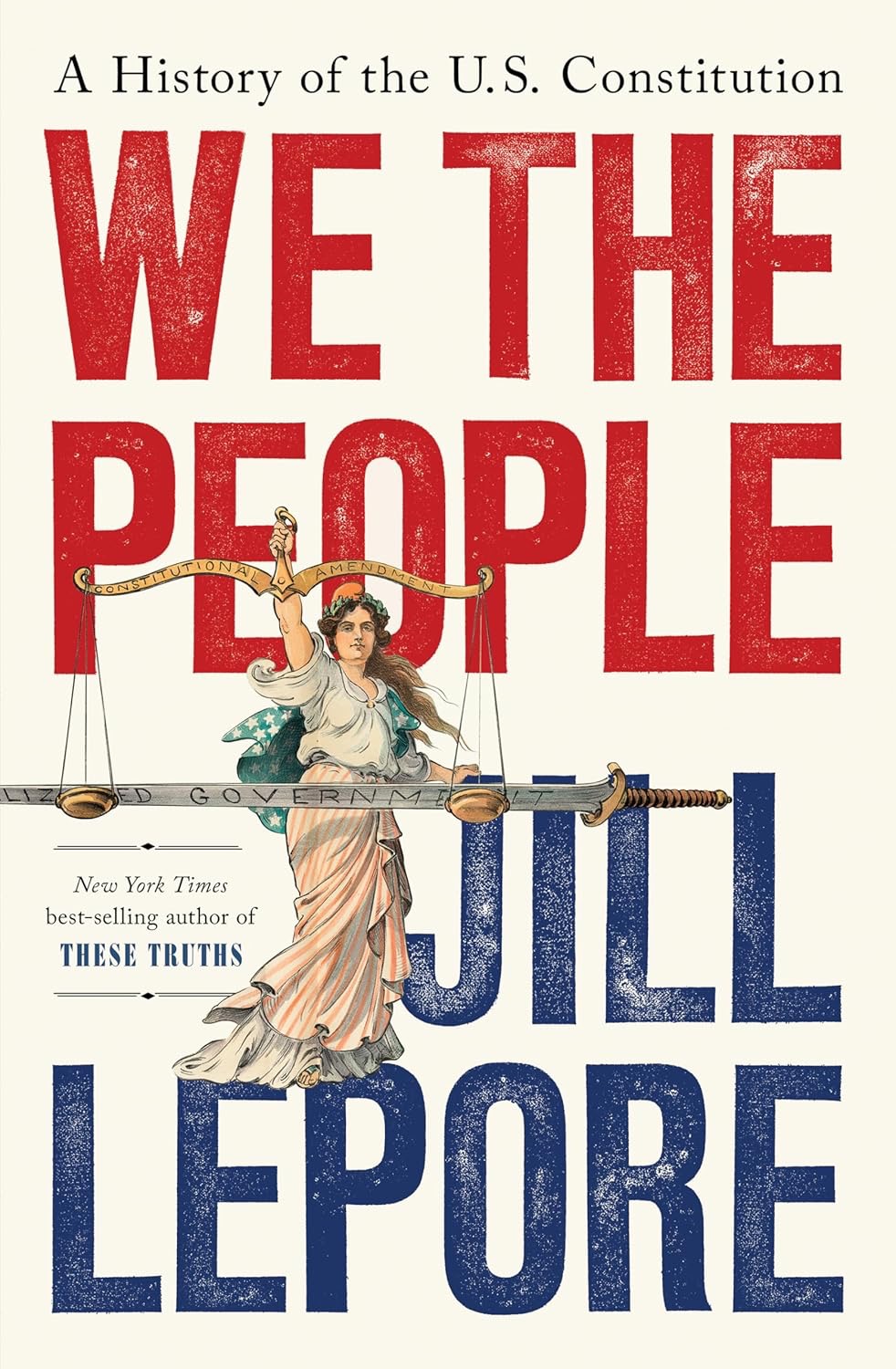
Lepore’s gloomy verdict on the supposedly “essential contribution” of Article V’s provision for revising the text as needed—a provision that, approvingly citing another scholar’s evaluation, she deems “the keystone in the arch of the Constitution”—appears both at the start of her book and at the end: the “framers did not succeed.” Her argument is that they sought and failed to design a “constitutional road” that would find the “sweet spot…a method of amendment” that would guard against what James Madison called “that extreme facility, which would render the Constitution too mutable,” and “that extreme difficulty, which might perpetuate its discovered faults.” In her words, “Not too easy, not too hard.” I don’t know anyone who would describe Article V, which bears many of the ugly compromises that mar the rest of the original Constitution, as anything like “perfect,” though Lepore reminds us that Madison chose to describe it that way in 1788 in what was basically a puff piece supporting the Constitution’s ratification. But Article V’s limits cannot justly be described as fatal weaknesses. I can only conclude that the failure is not the framers’ or, more to the point, the Constitution’s, but Lepore’s.
Among the shortcomings of Lepore’s thesis is that she depicts the contents and operation of Article V as far more pivotal to the entire constitutional project than they in fact were. To do so, she artificially truncates her inquiry into the Constitution’s adaptability, making it a numerical assessment of the accumulated attempts to change its written text and noting how many more of those attempts failed than succeeded. She also pronounces the framers’ efforts to make the Constitution amendable insufficient, both by ignoring crucial parts of the text itself and by distorting the historical record of alterations made in accord with that text.
In sum, she ignores the far more flexible and dynamic realities of the largely unwritten constitution by which we live. At the end of her gripping story of how our Constitution has been framed and interpreted over its remarkable 238-year existence, Lepore tells us that “a philosophy of doom replaced the philosophy of amendment” and laments that, just as other written constitutions around the world “lie in various states of stagnation, decay, misuse, and nonuse” and become “more difficult to amend because people tend to venerate old constitutions,” there comes “a point beyond which a constitution cannot be stretched, like a uterus, swollen with life, and instead breaks, like a fractured bone.” Powerful imagery indeed, but with no factual support in the historical record.