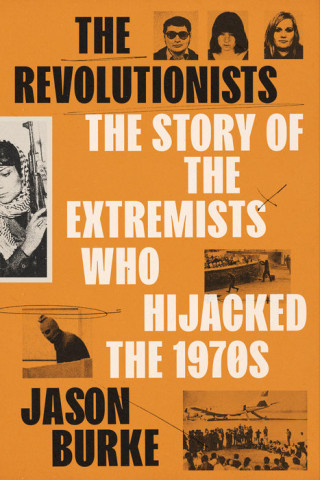
Many assume that modern Islamist extremism emerged only after the war in Afghanistan in the 1980s. In fact, it began to gather force 20 years earlier, at a time of much wider revolutionary ferment, when leftist movements were already flourishing. Leftists rejected religion entirely. Islamists reviled Communists and the Soviet Union. Their social conservatism contrasted dramatically with leftists’ values, particularly about gender.
And yet, the two movements had a surprising—and often overlooked—amount in common. Both worshipped heroic martyrs who had urged the masses to rise up, overthrow their rulers, and transform society. Both called for “armed struggle” against imperialism, capitalism, the U.S., and Israel, and included some who saw terrorist attacks as shortcuts to major change. Followers of each were often encouraged to challenge the authority of parents, professors, mainstream scholars, and governments.
That these two movements shared certain beliefs and strategies was not purely coincidental, the result of small groups trying to take on greatly superior governments. In some cases, the leftists directly influenced the Islamists. (The reverse was not true in any meaningful sense.) Qutb was steeped in the anti-colonial narratives of his time. Youthful clerics in Iran admired “freedom fighters” in Africa. In Lebanon in the 1970s, leftist instructors trained Iranian Islamists dedicated to the overthrow of the shah, passing on techniques that they had refined over a decade or more. Other Iranian Islamists closely studied Minimanual of the Urban Guerrilla, a 1969 instructional text by the Brazilian Marxist revolutionary Carlos Marighella. In the ’70s, Islamists took over embassies, and in the ’80s, they hijacked planes—both tactics popularized by secular leftist groups.
Some vocabulary crossed over from the left to the religious right, too, particularly among Iranian thinkers and groups who tried to reconcile Marxist and Islamist language and ideas. The man who established the radical clerical regime in Iran, Ruhollah Khomeini, talked about “revolution,” using the Persian term mostazafin to describe the oppressed, miserable, or exploited—which came, via a key Iranian radical thinker, from a translation of Frantz Fanon’s The Wretched of the Earth. A smaller opposition group in Iran called the Mojahedin-e Khalq also studied Fanon’s writings, along with those of Che and Lenin. Its members worked hard to meld leftist ideologies with Islamic beliefs, recasting stories familiar to Shiite Muslims as parables of “armed struggle.” A group handbook stated: “We say ‘no’ to Marxist philosophy, especially atheism. But we say ‘yes’ to Marxist social thought, particularly to its analysis of feudalism, capitalism, and imperialism.”