Consider the menstrual cup.
A repository for bodily fluid, it was first patented in 1867, a half-century before the commercial tampon arrived, and even a decade before the pad. A rubber model appeared in the 1930s, but its prevalence was curtailed by World War II, when rubber was in short supply. Enter the disposable tampon, which has dominated since.
Now a team of design curators, health care practitioners and advocates want you to reconsider the menstrual cup, remove it from the still pink-hued feminine hygiene aisle, and look at it as an object, not of private utility, but of beauty. It sure beats a wad of cotton.
Designs vary, but in its most common iteration, it is bell-shaped and elegant, flexible, durable and washable. Its history is tied to fashion: the first commercial cup was devised by Leona W. Chalmers, a onetime Broadway star who created it because she wanted to wear her costumes of white silk without fear. Chalmers was ceaseless in championing her version for “modern women,” and, it seemed, she was far ahead of her time: the cup has recently proliferated, with sales gaining momentum. Tampax introduced its own version in 2018.
“What makes it so beautiful also, it’s affordable, it’s environmentally conscious — it’s just one object that one needs, rather than a lifetime of buying pads and tampons to discard,” said Amber Winick, a design historian. Winick and Michelle Millar Fisher, a curator of contemporary decorative arts at the Museum of Fine Arts, Boston, believe that the menstrual cup is museum-worthy, along with the breast pump, the speculum and the IUD — devices that normally are not valued for their aesthetics and are often culturally invisible.
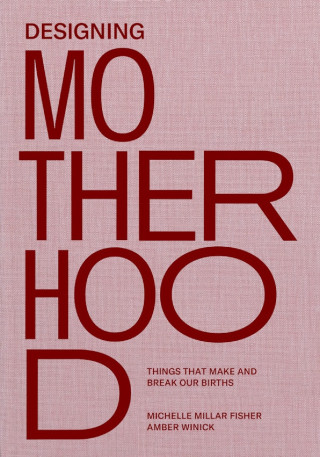
Their provocative new book and exhibition series, “Designing Motherhood: Things That Make and Break Our Births,” makes the case that there is a whole world of objects pertaining to women, mothers and pregnant people that have been overlooked from the perspective of form and function, and unstudied in terms of how their designs came to be.
“Why,” the organizers write, have these artifacts “remained so hidden, even as they define the everyday existence of so many?”
It is, in part, a problem of perspective and access, Millar Fisher added in an interview. “These objects are often used by people who have not had the power to write history, make decisions or frame material culture,” she said. “They have just not been part of the conversation, out loud, until recently.”