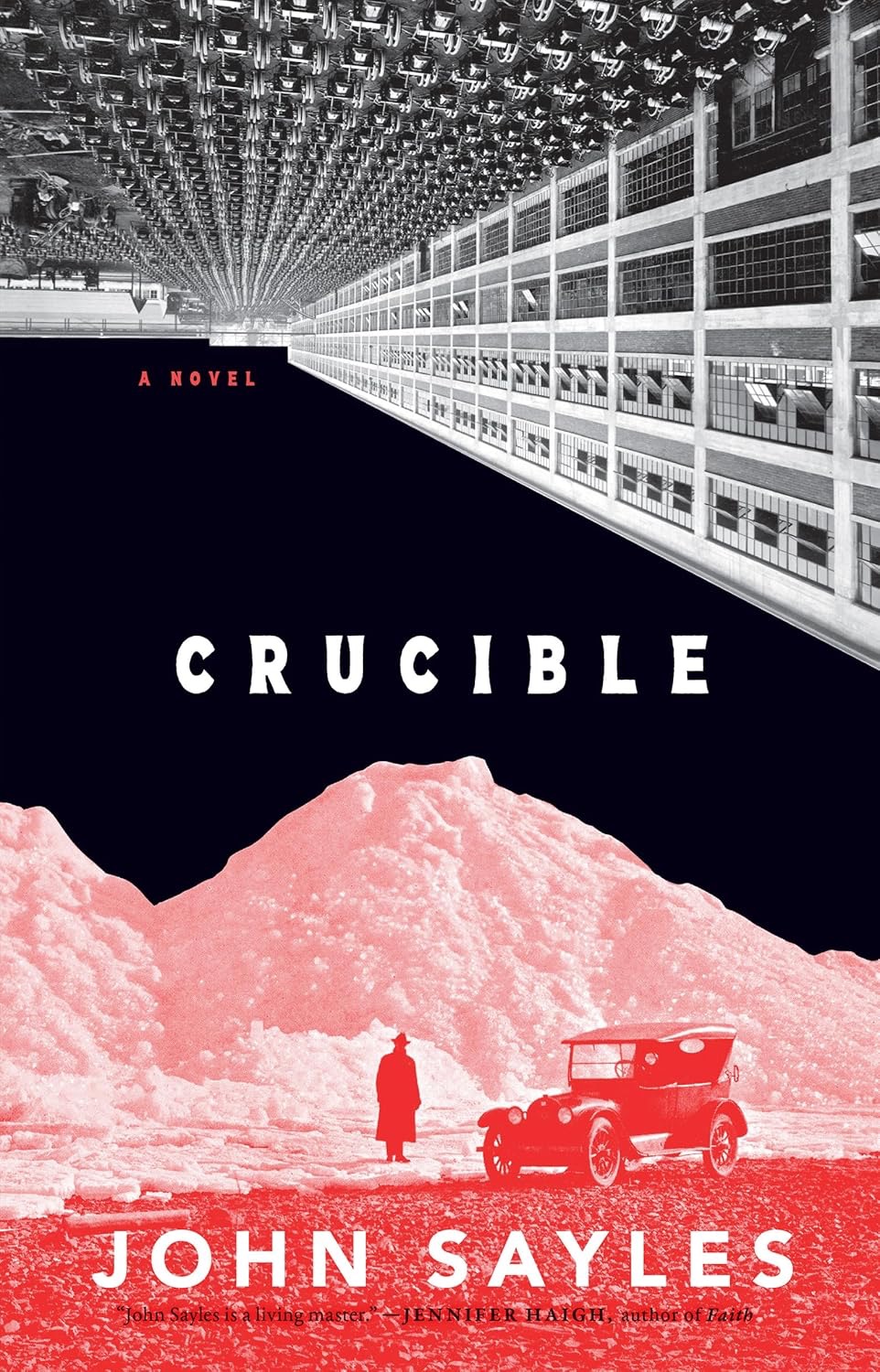
One thing that always interests me is how writers get from one project to the next. With To Save the Man you were in Carlisle, Pennsylvania exploring the horrors of Native American boarding schools. What brought you to the Ford River Rouge plant and labor and racial strife in Detroit in the 1930s?
I spent some time in Detroit when I covered the 1980 Republican National Convention, which was the one that nominated Ronald Reagan, at the Joe Louis Center in Detroit. When I got there, it was in bad shape. A lot of houses had been burned down. Only a third of the houses were still up from when it had been this incredible center of industry. At the convention, half the delegates were being housed over the bridge in Windsor, Canada. The Republicans didn’t want them to see the conditions in Detroit, so they put cardboard over the windows of the buses that they brought them in on. And just thinking about how this incredible manufacturing center and major U.S. city got to this point, I got interested in Detroit. From the research I did, it was a crucible—a crucible being not just a thing that you melt metal together in, but also just any place where different elements come together and there are big reactions to it.
I started to learn about how Detroit had been a center of activity during Prohibition because all the good stuff—the real liquor—came across the border from Canada there before it went to Chicago and other places. It was also a place where the races came together, because Henry Ford said, “I’m paying a couple dollars a day, black or white.” And the jobs aren’t just janitor jobs. If you’re on the line, you get paid what everybody on the line does and immigrants from all over the world were coming there as well. So I got interested in it as the idea of it being a crucible for all these big forces in America.
Ford’s massive failed rubber plantation in Brazil also plays a significant role in the story. How did that become part of Crucible, which is otherwise a Detroit-centric book?
[In 2009], Greg Grandin’s book, Fordlandia, came out, and some producers wanted to see if they could make that into a miniseries, and I helped pitch it to them. And that seemed like the last bit of the story that would make a good novel because in its way, it was this shadow world. It’s kind of like Henry Ford’s Vietnam. He poured money into it and he never got anything back but trouble. It’s an extension of his thinking. At one point he said, “Well, so what if the rubber isn’t working out? It’s all about the model community.”