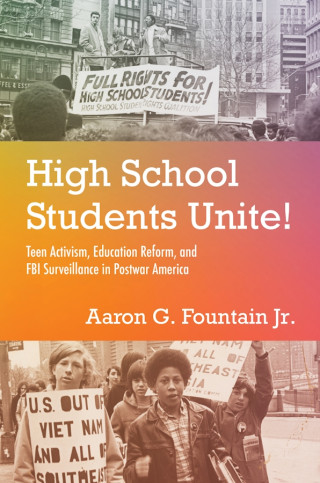
What many mistakenly believed had begun on college campuses now seemed to be seeping into the nation’s high schools. (In truth, the two movements unfolded concurrently, with some teenagers’ efforts predating those of their college-age counterparts.) “High School Unrest Rises, Alarming U.S. Educators,” the New York Times warned in May 1969. A year later, the Los Angeles Times sounded the alarm again: “High School Race Turmoil—a Frightening Growth.”
Law enforcement took notice of these teen activists. The FBI—along with local police departments and military intelligence units—orchestrated surveillance campaigns that targeted high schoolers.
At the same time, the phenomenon of youth activism captured the public imagination. It echoed through congressional hearings; filled the pages of scholarly journals, magazines and books; and even reached living rooms during prime time through the Emmy Award-winning series “Room 222,” which depicted a fictional integrated high school.
But what fascinated some terrified others. For many white, middle- and upper-middle-class Americans, high school activism represented chaos. The FBI, on the other hand, symbolized order.
As I learned while researching my forthcoming book, High School Students Unite! Teen Activism, Education Reform and FBI Surveillance in Postwar America, parents like Irwin offered their assistance to authorities or asked for help in saving their sons and daughters. Some adults wrote letters to the bureau. Others shared their fears over the phone. At least one visited an FBI field office in person.
Sometimes, parents’ correspondence alerted the bureau to groups not already on its radar. Nearly all of these adults were convinced that “outside agitators” like the national Students for a Democratic Society (SDS) were the ones pulling the strings to indoctrinate their children. Media coverage of college-age SDS members infiltrating high schools only strengthened these convictions. The reality, however, was more nuanced, with many student groups actively seeking support from older activists. “We didn’t have the resources to organize, publish newspapers or work media [on our own],” John Eklund, a former youth activist from Milwaukee, told me. “There was really nothing nefarious about this, and if anything, we welcomed being taken seriously by these adults.”
Since 2014, I have filed nearly 2,000 Freedom of Information Act (FOIA) requests seeking classified records on FBI surveillance operations targeting high school students in American cities, suburbs and rural areas. Tellingly, none of the 233 surviving records I obtained through these requests discuss nonwhite parents reaching out to the bureau. This total is unsurprising. Many communities of color had fraught relationships with law enforcement during the tumultuous 1960s. And the FBI has played a longstanding role in defending America’s status quo.