The word ‘revolution’ enjoys a special place in our political vocabulary. It is associated with events that shaped the modern world – the English Revolution of the mid-17th century, the French Revolution of 1789, the revolutions of 1848, the Russian Revolution of 1917 and the Chinese Revolution beginning in 1927. In each of these, the word refers to a sudden transformation. Above all, it signifies a radical change of regime – most commonly involving a shift from monarchy to republic. But if the word ‘revolution’ is often used in this specific sense, it has not always been confined to this single register of meaning. Two important new works both argue this case. Both exhibit impressive range and subtlety.
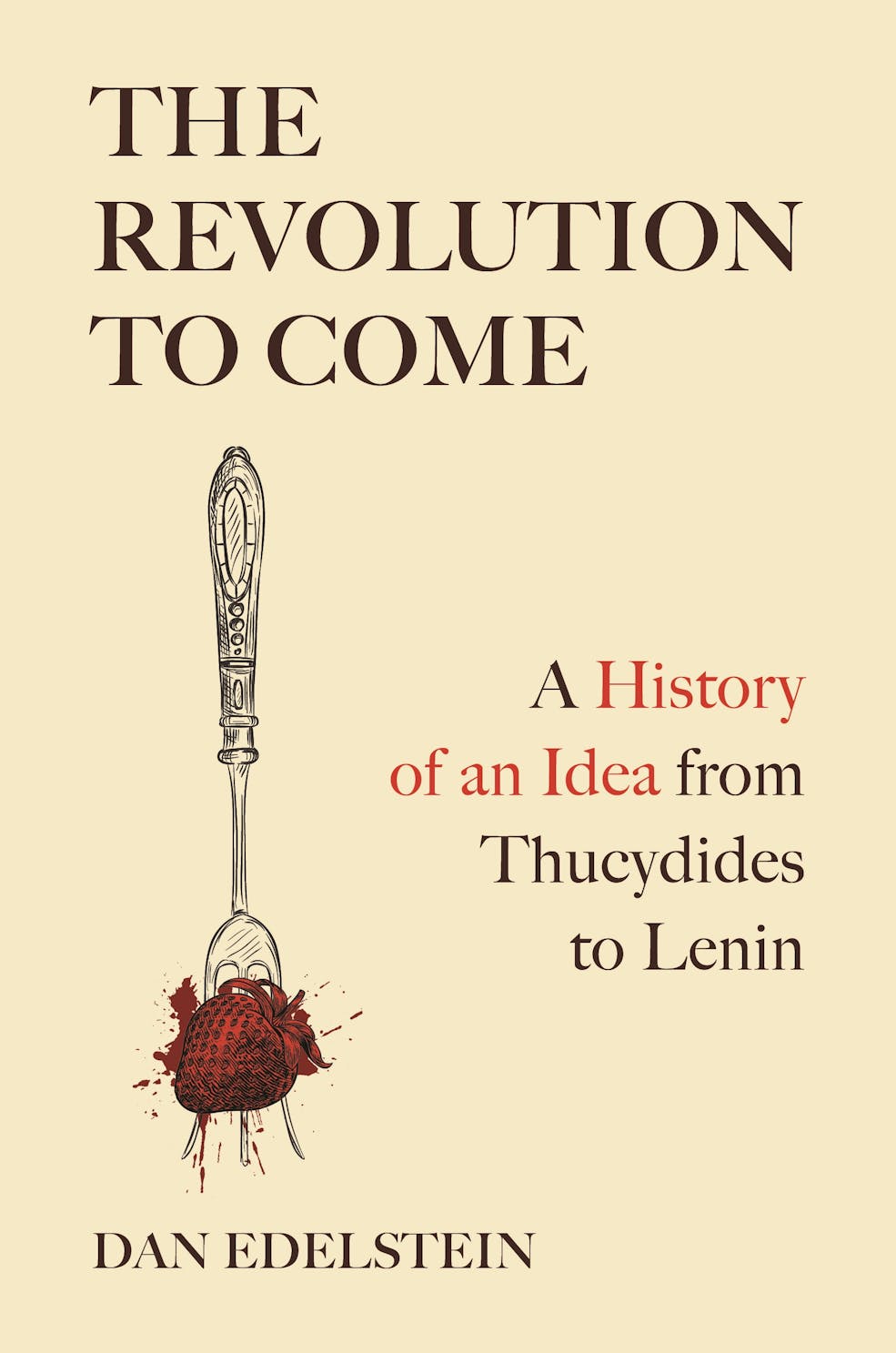
Dan Edelstein’s The Revolution to Come takes us from periods of upheaval (stasis) in ancient Greece through the French and Russian Revolutions, pointing to a dramatic shift in the understanding of revolutionary change that emerged in the 18th century. Originally denoting a destructive breakdown, the word came to stand for abundant promise. According to Edelstein, this change captures a defining difference between ancient and modern politics. From Thucydides to Machiavelli, the state was a means of preserving the common good against the threat of civil implosion. However, by the late 18th century (in the writings of the Marquis of Condorcet, for example), revolution pledged perfection in the future.
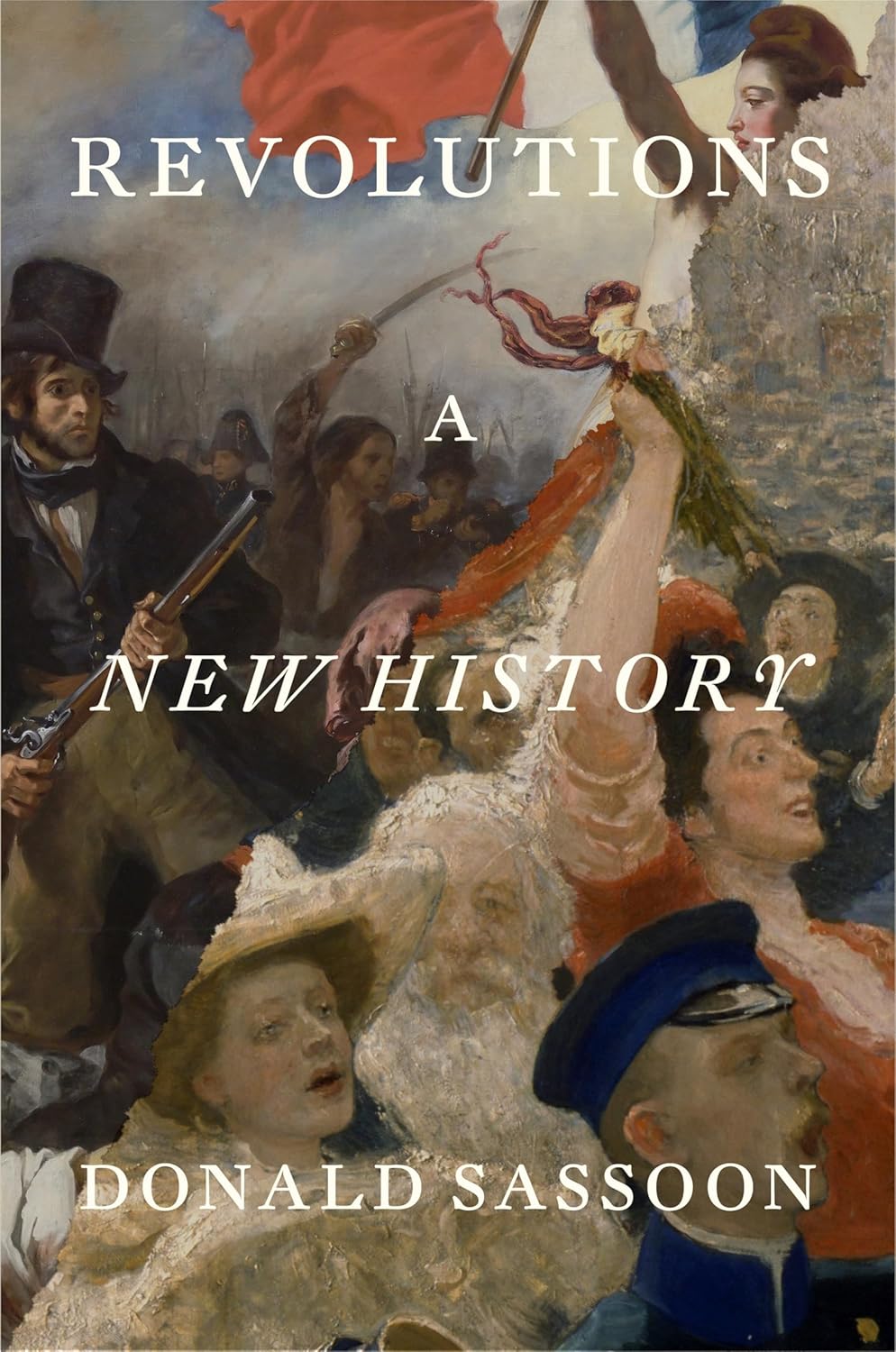
Besides political change, revolution also came to mean economic and social transformation. The ‘Industrial Revolution’ is probably the most obvious case in point. The ‘Financial Revolution’ is another, less notorious instance. But equally, many political revolutions brought with them social and economic change. Constitutional revolution in 17th-century England was paired with extensive religious conflict. The Russian Revolution likewise involved more than a change in the form of government; it transfigured the structure of society and the management of the economy. Indeed, as Donald Sassoon is at pains to point out in Revolutions, Marxist revolution intended to achieve comprehensive socioeconomic reconstruction.
Both Sassoon and Edelstein emphasise the optimism of revolution. Both also underline the scale of disappointment. They arrive at this position from different starting points. Sassoon is the leading chronicler of the history of socialism, with a string of major studies in European history, covering topics as diverse as communism, capitalism, fascism and the ‘culture’ industry. In the 1990s, Eric Hobsbawm anointed him his sole legitimate heir. Like Hobsbawm, Sassoon is a cosmopolitan bourgeois intellectual, polylingual and deeply cultured, though unlike Hobsbawm he is a product of the 1960s, not the 1930s. However, despite this massive difference in formation, Sassoon shares with Hobsbawm a paradoxical trait: although historically a committed partisan of the Left, Sassoon mercilessly exposes the shortcomings of his own tribe.