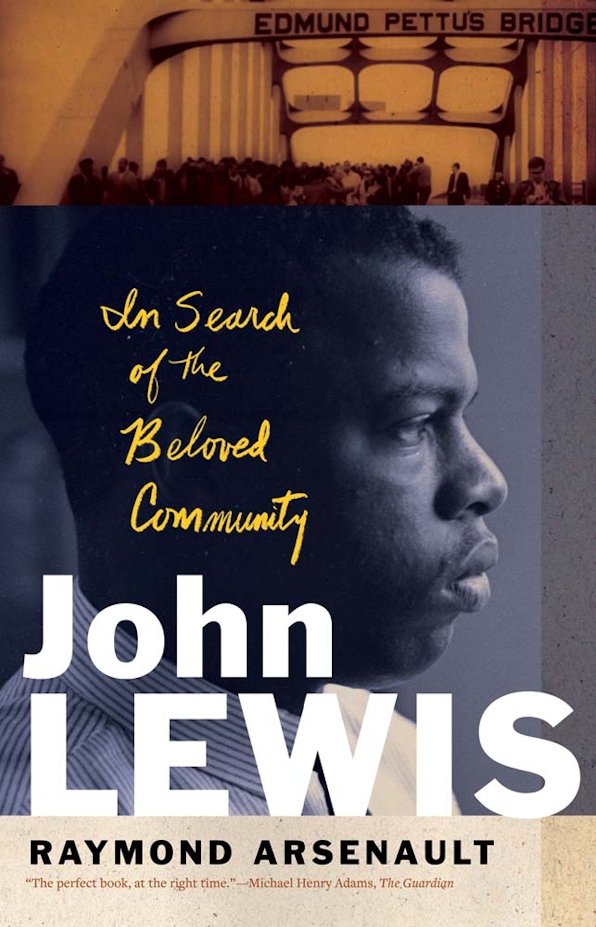

Both Arsenault and Greenberg devote many pages to Lewis’s work as a congressman. He sat in the House of Representatives for 34 years, winning re-election sixteen times, often unopposed. He was a committed liberal, a friend of organised labour and champion of a welfare system that would afford to all the minimal decencies of social life, including medical care. He opposed mass incarceration and the death penalty. When the occasion demanded, he recalled the activist instincts of his formative years: he staged a sit-in at the House of Representatives to protest against US immigration policy, and was arrested during protests outside the embassies of South Africa in the 1980s and Sudan in the 2000s. He supported gay rights, in contrast to many religiously inclined heroes of the civil rights movement (such as Reverend Fred Shuttlesworth) who resented gay activists’ comparison of their struggle to that of African Americans. His staunch support of Israel was in alignment with the mainstream of the Democratic Party, but set him against the likes of Bond and Jesse Jackson, who felt able to challenge pro-Israel politics without pandering to antisemitism.
Lewis’s response to the Million Man March in 1995 was in keeping with his characteristic posture. The march was organised by Louis Farrakhan of the Nation of Islam, a theocratic, black nationalist sect that exerted an influence out of all proportion to its numbers not least because of its famous recruits, who included Malcolm X and Muhammad Ali. Farrakhan invited African American men to Washington DC to commit themselves publicly to promoting black solidarity, undoing demeaning stereotypes and increasing political engagement within black communities. The pilgrimage would be addressed by speakers including Martin Luther King III, Jesse Jackson, Rosa Parks, Maya Angelou and Cornel West. Many black elected officials also participated, including the chair of the Congressional Black Caucus, Donald M. Payne; the mayor of Baltimore, Kurt Schmoke; and the mayor of Washington DC, Marion Barry. The name of the demonstration conveyed the organisers’ expectations as to turnout; in the event, the best estimate is that more than 800,000 people assembled in the Mall. Among them were many who did not share Farrakhan’s antisemitism and homophobia but felt compelled to attend (including a young Barack Obama). Pressure was put on Lewis to support or at least refrain from criticising the event, but in the end he declined to participate, saying that the rhetoric around the march cut against what he had worked for all his life: ‘tolerance, inclusion, integration’. Though he was an implacable foe of white supremacy, Lewis was also an unbending adversary of African American bigotries.