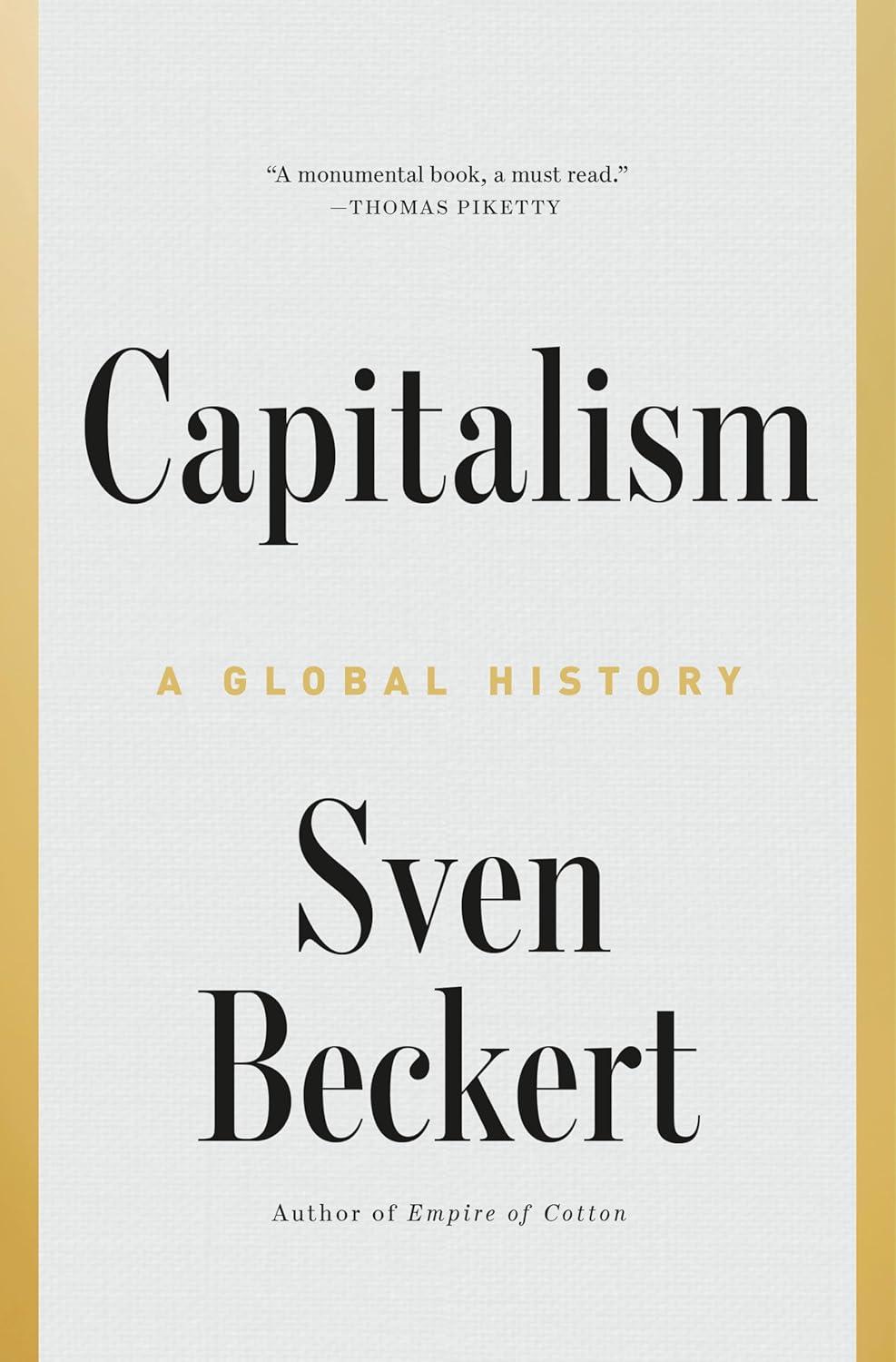
“Wherever we look,” writes Beckert, “warfare was almost the default mode of the great connecting.” He calls this an era of “war capitalism.”
Throughout the sixteenth and seventeenth centuries, the archipelago of capital metastasized as island after island — both in the literal and metaphorical sense — was added to the mercantile universe: Santo Domingo in 1516; Macau in 1557, Batavia in 1619, Manhattan in 1624, Barbados in 1627. Among these many imperial gambits, Beckert profiles two new “islands” whose revenues dwarfed anything attempted by earlier merchant endeavors.
By 1600, Potosí had become the biggest city in the Americas, more populous than London, Milan, or Seville. There, 160,000 Andean, African, and European inhabitants mined 60 percent of the world’s silver. And like virtually every other New World island of capital, Potosí could only thrive on coerced labor, a murderous form of slavery that killed thousands of miners each year, often poisoned by the mercury that was essential to the profitable processing of large amounts of low-grade ore. Because the city sustained Spanish power, Emperor Charles V labeled Potosí the “treasury of the world,” but others called it “the mountain that eats men.”
Barbados was another astounding yet brutal generator of mercantile wealth and political power. By the 1660s, the West Indian island was sending England sugar with a value twice the annual income of that nation’s government. Because the island had been virtually unpopulated, planters there had a warrant to create a productive regime unfettered by the customary obligations that retarded capitalist transformation of the countryside in the old country. There were no meddlesome feudal lords, rebellious peasants, or obstructionist states. With their emphasis on labor discipline, tight workforce organization, and a relentless focus on productivity and time control, these plantations were the first example of modern, large-scale industry.
A truly new world was therefore to be found in the West Indies, not on the eastern edge of the North American continent. More Europeans migrated to the Caribbean than English America in the years between 1630 and 1700, making Boston and the rest of New England mere subordinate links in a global supply chain, utterly dwarfed by the dynamism of these capitalist exemplars. Like an early twentieth-century assembly line relentlessly focused on churning out a single product, these monocrop plantations were the prototype for a new stage of production where labor, capital, and global trade were seamlessly intertwined.