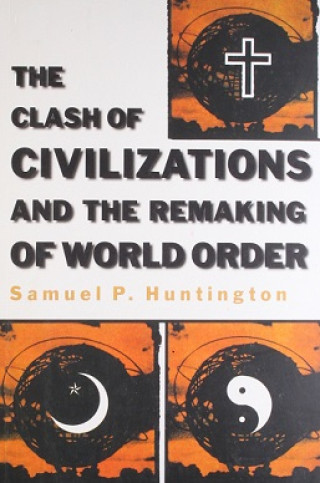
Samuel P. Huntington’s The Clash of Civilizations and the Remaking of World Order turns 30 this year. The book was a worldwide hit in the late 1990s and has been published in some 30 translations, including in Arabic, Chinese, and Bengali. After 9/11, the first part of the title practically became a household phrase. Huntington had been an eminent political scientist at Harvard, but his 1996 book made him a global celebrity. (I first met him when I was a Ph.D. student at Harvard, and we later became friends.)
The gist of Huntington’s argument: The end of the Cold War did not mark the “end of history,” as the political theorist Francis Fukuyama had argued in a widely discussed article and subsequent book imagining that the collapse of the Soviet empire would virtually end the strife among states of millennia past and that liberal democracy and market economics would now rule.
Huntington predicted that a new conflict would rage after the demise of Communism. Now not states, but the great civilizations, would clash “along the cultural fault lines” separating them, including “Western, Confucian, Japanese, Islamic, Hindu, Slavic-Orthodox, Latin American and possibly African.” In the 21st century, the altar would again be mightier than the throne. Inter-civilizational conflict would “displace the political and ideological boundaries of the Cold War as the flash points for crisis and bloodshed.”
At first blush, the predictions in Clash seem to have panned out. Russia is now propelled by not Marxism but nationalism under the two-beamed cross of Orthodoxy. The Confucians—that is, the Chinese—are challenging the West across the board. Serbs went after Muslims in the former Yugoslavia. The Orthodox in Ukraine’s east clashed with the Catholics in its west along precisely the fault line Huntington sketched.
Huntington seemed most prescient regarding Islam. This civilization, he wrote in a notorious line, has “bloody borders.” Al-Qaeda murdered nearly 3,000 Americans on 9/11. Soon after, the United States went to war with the Muslim nations of Iraq and Afghanistan. The trail of terror since is too long to lay out in all its horrifying detail—in Madrid and Munich, in Strasburg and Stockholm, and all the way to Hamas’s mass murder of Jews on October 7, 2023.
But upon closer inspection, Huntington’s predictions begin to wobble. Three decades after Clash, rivalries among the great powers, rather than a new clash among faith-based civilizations, continue to dominate the globe. During the Cold War, two heavies, the U.S. and the U.S.S.R., were the lead players. Now the conflict has been joined by China.