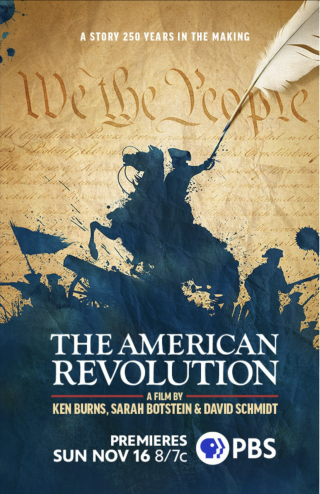
As a historical adviser to the film, what overlooked or underappreciated historical research or perspective did you encourage Ken Burns to include?
Kathleen DuVal: It was important to me for the film to represent the American Revolution in its international context—both European empires such as France and Spain and also Native nations, which were still sovereign powers on the border of the colonies. The Revolutionaries knew that was the world they had to work within, but sometimes Americans forget that.
Christopher Brown: I also stressed the importance of the global lens and I encouraged the team to keep the perspective of the British government in view. Many Americans have a limited understanding of what the American War for Independence was about from the British perspective: why taxation without representation made sense to the British government, why it seemed necessary to send redcoats to North America, why the British army failed to win the war even though they had superior resources. In a similar vein, I encouraged the team to present the loyalists as American dissenters and not merely obstacles to progress.
Finally, I encouraged Florentine Films, the production company, to embrace the complexity of African Americans’ positions in these years, to establish that Black people, like Native Americans, fought on both sides, and that the choice often had more to do with where the best chance for freedom and opportunity seemed to reside, even more than the principles of patriotism or loyalism.
Jane Kamensky: I’m a scholar of women and family in American and revolutionary history and helped the Florentine team develop those home-front parts of their stories. I also brought expertise in early American art and the visual world of early America. I brought my students into the project as well. In 2021, and then again in 2023, I had students working on a capstone project for my American Revolution undergraduate lecture course at Harvard. Teams of students researched images, maps, and newspapers for the film. Florentine Films wound up hiring one of my students, Grace Bartosh, who was an intern on the project for that class, so it's been a wonderful throughline to see a student find her great interest in documentary filmmaking through that course capstone, and then get to pursue it at the highest level with this team.
What significant aspects of the film will help reshape popular understanding of the American Revolution?
Brown: Just about everyone will learn something about the history that they did not know. Teenagers like Betsy Ambler or John Greenwood have almost never had their stories told in the way they are here, for example. More generally, I think viewers may be most struck by the importance of Native Americans and Patriot interest in Native American land. This is an aspect of the subject that many may find unfamiliar — that the nation was founded with the creation of an empire of its own in view.