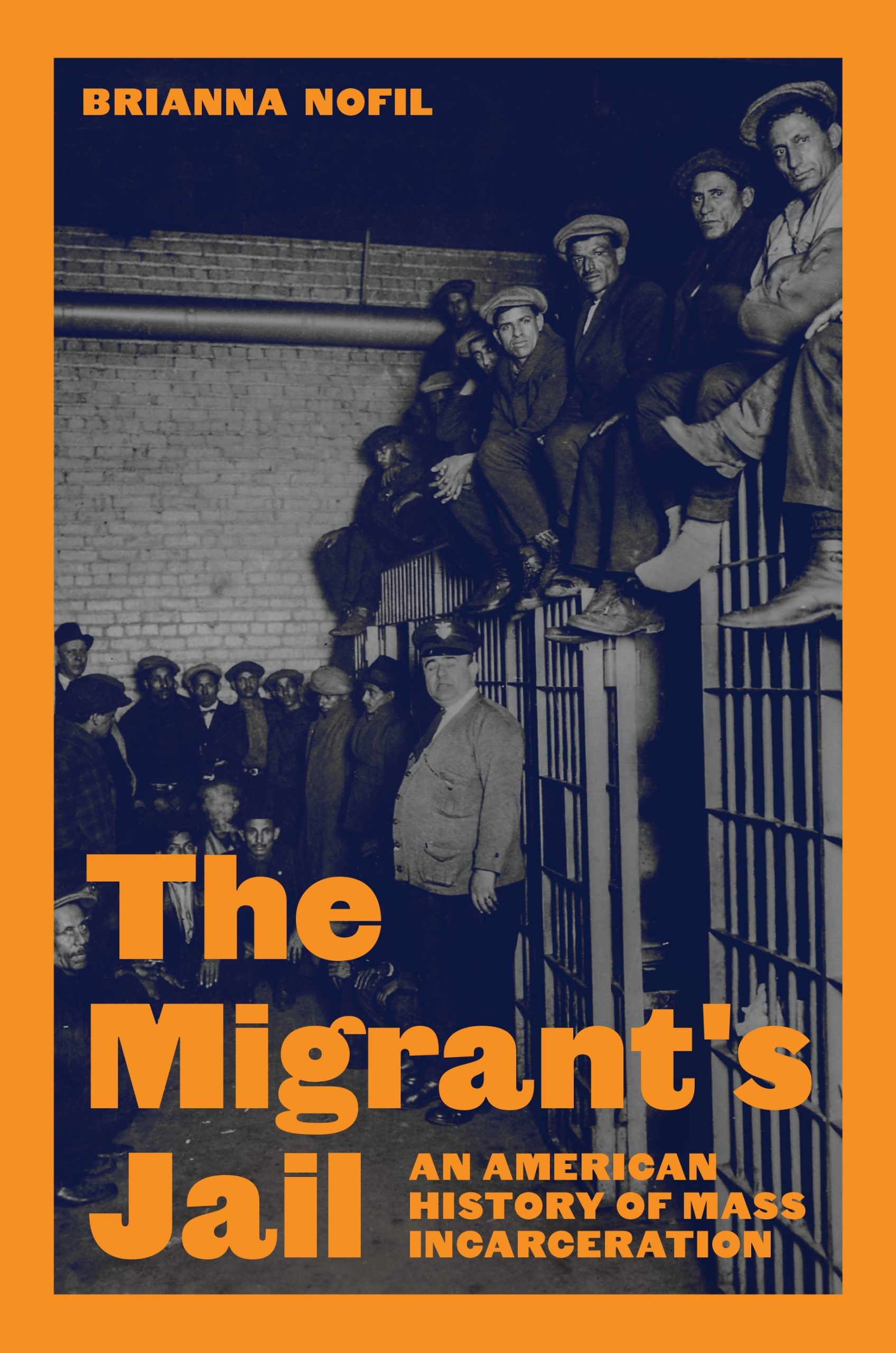


There is perhaps no better place to start in tracing the roots of this moment than The Migrant’s Jail, historian Brianna Nofil’s magisterial study of the mutual development of U.S. penal and immigration policy over more than a century. The political and institutional pillars of the system as we know it today were not put in place relatively recently, Nofil shows. On the contrary, they emerged over decades through bipartisan consensus and complex interactions between federal, state, and local authorities.
The story begins in the late 1800s, by which time U.S. courts had reached a consensus that local governments were not free to forge or execute their own immigration policies. Whether and how the federal government might coerce or cajole localities to carry out federal immigration policies remained unsettled, however. The pitched battles today between the Trump administration and certain states and municipalities over sanctuary status, detention facilities, and cooperation with ICE are being fought on this still indeterminate terrain. But such antagonism is more the historical exception than the rule, Nofil demonstrates. Over the long run, the dominant pattern has been mutually beneficial cooperation between the federal government, states, counties, and cities.
Indeed, county jails have always been “foundational to the project of federal immigration law enforcement,” Nofil explains, yet “they have operated with a staggering absence of oversight or public awareness.” Numbering nearly 3,000 for more than a century now, these facilities have functioned as a win-win in the eyes of government officials. On the one hand, they have allowed policy set in Washington to expand its reach far beyond ports and borders. On the other hand, federal contracts have served as cash cows for local communities, enabling them to expand jail space, cushion budgets, reduce taxes, and create slush funds for local officials. Working with federal authorities has thus long empowered cities and counties to bankroll carceral expansion without having to seek the tax dollars or the approval of voters. Last summer, the sheriff who oversees Butler County Jail in Ohio put it plainly: the federal government “depends on sheriffs and county jails to have bed space,” and his recently renewed ICE contract helps “pay the bills.”