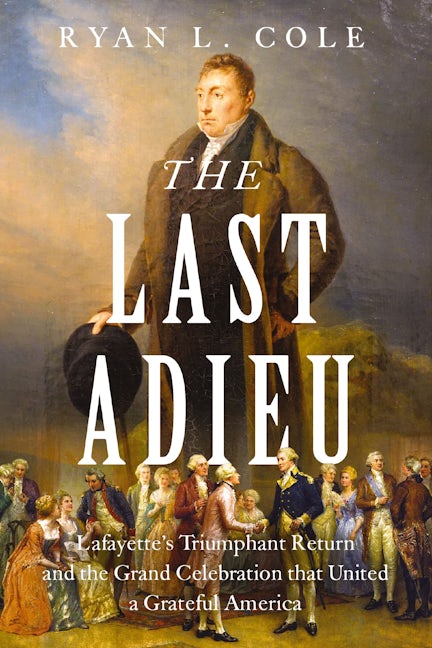
The timing was perfect. In 1824, the United States was noisy, expanding—and divided. The presidential race splintered over who would succeed James Monroe: Andrew Jackson, John Quincy Adams, Henry Clay, or William H. Crawford. The economy lurched; slavery’s westward push darkened debate; and the Revolution’s living witnesses were fading, their ideals dimmed in a more partisan, commercial age. With the Declaration of Independence’s fiftieth anniversary approaching, Americans looked backward with yearning. The Founding Fathers had become figures of near-mythic unity, even as that unity had always been fragile. Few of them remained alive—only John Adams and Thomas Jefferson still survived among the great names. In this atmosphere of nostalgia and uncertainty, one man embodied the living memory of that heroic age: the Marquis de Lafayette, the last surviving major general of the Continental Army and George Washington’s self-proclaimed “adopted son.”
President James Monroe recognized the symbolic power of inviting Lafayette to return from France for the approaching semicentennial. The results of the Tour were extraordinary. As a foreign hero above domestic factions, visiting hundreds of cities and counties, Lafayette indeed became a unifying emblem in a season of division. Cities and towns staged vast civic rituals, and political opponents stood side by side to cheer “the last general of the American Revolution.” The tour turbocharged early American celebrity culture—portraits, ribbons, crockery, songs, and endless newspaper coverage—and it catalyzed commemoration: monuments rose, Revolutionary sites were restored, and local histories flourished. In celebrating Lafayette, Americans rediscovered the Revolution itself.
As Cole explains in The Last Adieu, Monroe’s invitation arrived alongside private letters from old comrades who wished to see the marquis “before it was too late.” Lafayette needed little persuading: he longed to embrace his brothers-in-arms—and he had other reasons to come. Under the Bourbon Restoration, he was admired by some but sidelined by many, criticized from the right for his liberalism and from the left for his moderation. He longed—not unreasonably—for the public affection he had once known in America. Materially, he needed relief: years of imprisonment and confiscations during the French Revolution had damaged his fortune. The American visit promised not only honor but concrete support: Congress would ultimately vote him a substantial cash grant ($200,000) and a land grant of 24,000 acres in Florida—welcome help to a man whose finances had been battered. He also wished to see how the republic had grown since 1784. And ideologically, he hoped that his reports and writings on a thriving American experiment might rekindle liberal confidence abroad, especially in France.