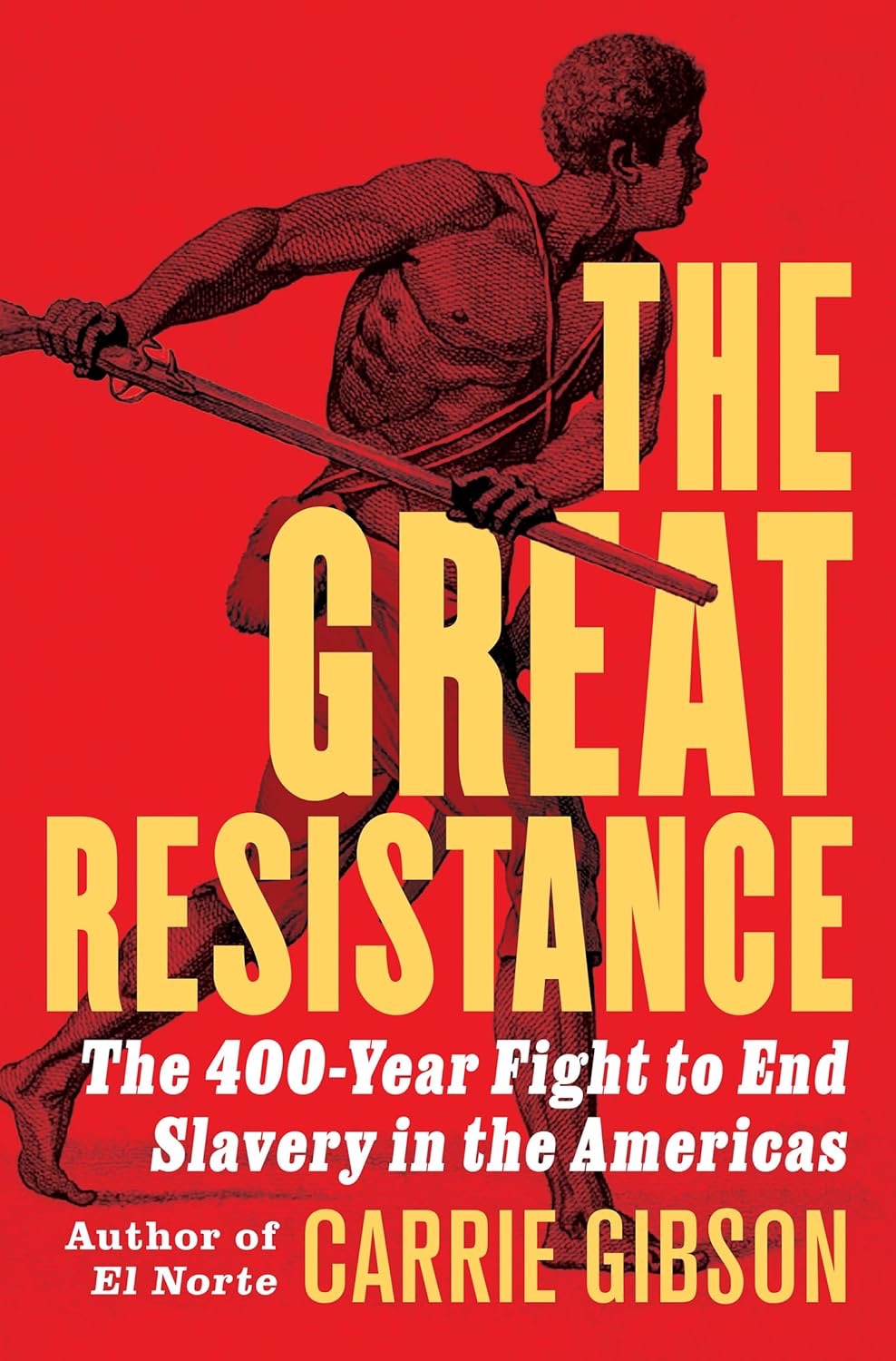
In 1812, Spanish officials in Havana, searching the house of a man named José Antonio Aponte, discovered a wooden box hidden in a clothing trunk, opened it, and were stunned by what they found inside. “It was unlike any book they had ever seen,” Carrie Gibson writes in The Great Resistance: The 400-Year Fight to End Slavery in the Americas, “filled with Biblical and historical images, with many black faces, as well as cut-out bits of paper and handwritten words.” Aponte, a freeman who had once served in the local militia, was part of a group that had sought to launch an uprising among the enslaved. The goal was to overthrow slavery and make Cuba independent, but the rebellion had been quickly suppressed.
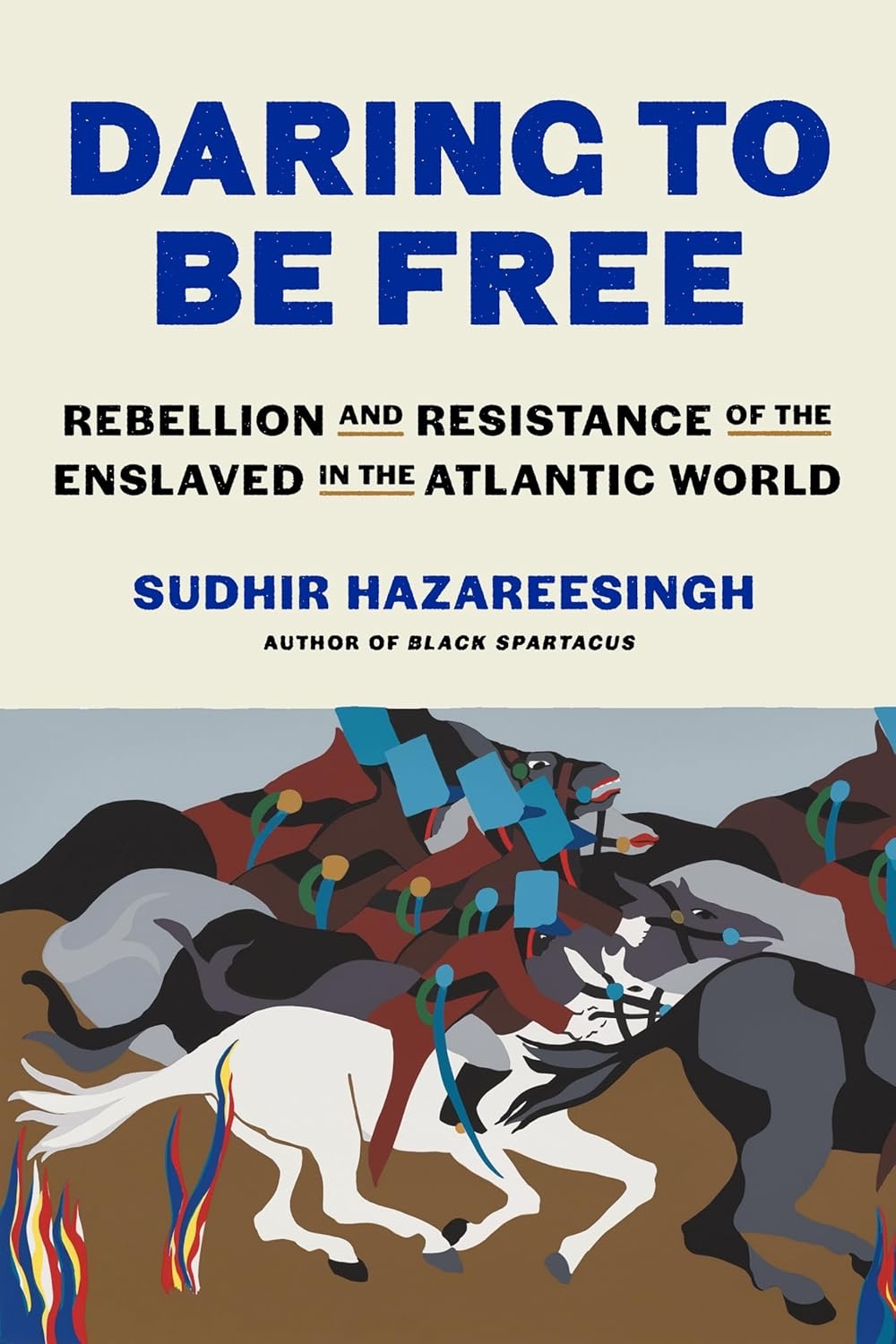
Put on trial, Aponte was questioned for three days about what his interrogators called his “book of paintings.” In Daring to Be Free: Rebellion and Resistance of the Enslaved in the Atlantic World, Sudhir Hazareesingh emphasizes the global sweep of Aponte’s portraits, among them versions of Abyssinian royalty and, as Gibson notes, the Greek philosopher Diogenes the Cynic, believed to have once been a slave himself. One element particularly alarmed the Spanish: scenes of Black soldiers vanquishing white troops, evoking the victories of Haitian revolutionaries against the French a decade earlier. During meetings at his house, Aponte had shown them to fellow insurrectionists as proof that they, too, could win a war against slavery.
When he was asked to explain why he had chosen to include what he did, his answer was simple: “For reasons of history.” Aponte was executed after his trial, and his book disappeared. All that is left are Aponte’s descriptions of the work, page by page, at his trial. But that testimony has allowed contemporary historians and artists to reconstruct his visionary awareness that, in seeking to change his world, he first had to compile his own history of what had come before.
In their ambitious histories of slave resistance, Gibson and Hazareesingh are working in the tradition of Aponte, offering a new intellectual and political perspective on the emergence of freedom in the modern world. A generation ago, foundational works on the history of antislavery movements tended to focus on political thinkers and prominent abolitionists, figures who left ample written records behind. But over the past several decades, scholars have made headway in piecing together the ideas and actions of resistance leaders such as Aponte, as well as of the enslaved themselves. This is challenging work: The system of slavery frequently barred access to literacy, and most accounts of enslaved resistance come from people who were not just hostile to the venture but actively seeking to suppress it. By gathering second- and thirdhand traces and elusive sources and data, historians have illuminated communities in the forests of the Kongo region, the deltas of West Africa, the mangroves of Cuba, and the swamps of the Carolinas.