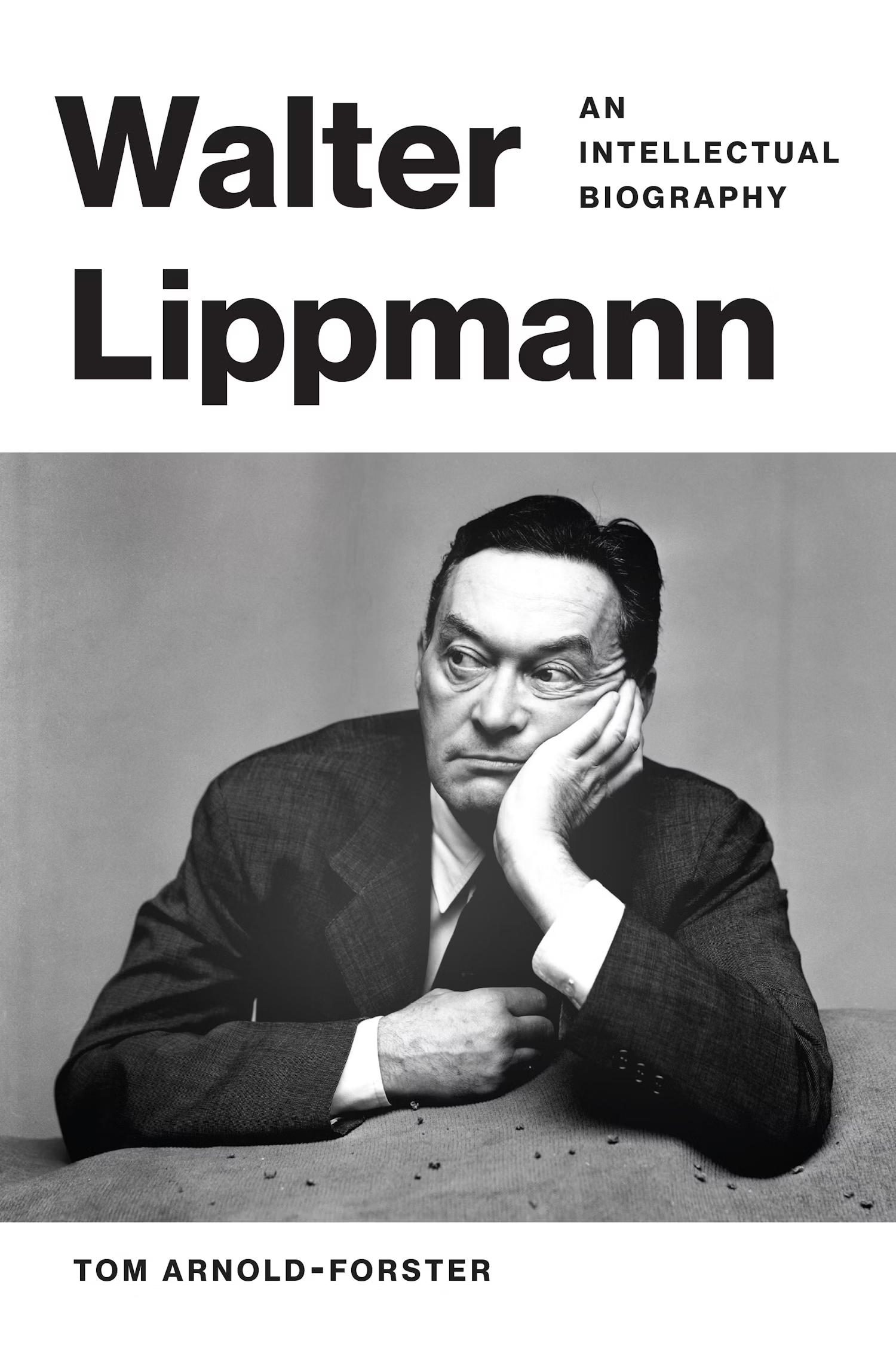
Arnold-Forster comes down hard on Lippmann for supporting Eisenhower in the 1950s. The reason, it seems, is that Eisenhower and the author’s predictable bête noire, Joe McCarthy, were in the same party. Lippmann supposedly should have followed the example of poet and political commentator Peter Viereck, who voted for Adlai Stevenson, as an anti-McCarthy “conservative.” If memory serves, Ike went after McCarthy with a vengeance after Senator Joe made accusations against the army. I’ll avoid bringing up M. Stanton Evans’s massive study of McCarthy, which meticulously proves that the notorious anti-communist was generally right in his charges, even if his public behavior was sometimes rather unseemly.
Arnold-Forster uses several pages to go after William F. Buckley and like-minded conservatives during the 1950s and 1960s for being racists as well as obsessive commie-haters. Buckley, according to this Lippmann-biographer, combined his enthusiasm for McCarthy and other expressions of “antiliberal conservatism” with “explicitly antidemocratic racism over the Civil Rights Act of 1957.” Buckley did indeed oppose that act and even expressed a preference for “the more advanced race” being left in control of political affairs in the Southern states. But despite this socially unacceptable phrasing, what Buckley clearly meant with his demur was that he didn’t want to deliver government into the hands of those who could be easily radicalized. Later, as Arnold-Forster notes, Buckley changed his position to call for laws banning the illiterate from voting. Arnold-Forster seems offended by this as well, although this was the position of that English feminist and early welfare-state democrat, John Stuart Mill, in the 1850s.
Fortunately for Lippmann’s odyssey, as told in this biography, his career ended in a way his biographer can appreciate. During the last 14 years of his mortal existence, he rallied to JFK and was a Camelot aficionado. He also opposed the Vietnam War and called for more conciliatory diplomacy in dealing with the communist powers.
But if one looks beyond its preachy political judgments, this biography clearly has its value. It is an easily accessible source of information about Lippmann’s writings and the major turning points in his life. As an intellectual biography, it also deals with philosophical matters, e.g. Lippmann’s differences with John Dewey on the nature of democracy and its compatibility with popular self-rule. Finally, this book may give us a more accurate picture of its subject’s significance than Steel’s capacious study, which, in my view, exaggerates Lippmann’s titanic stature as a public intellectual. Once a celebrity whom even presidents consulted, Steel’s subject seems to have lost his luster since his death more than 50 years ago. Reading Arnold-Forster, one can understand why.