A controversial abortion case reaches the Supreme Court, and men in black robes impose their religious views on the country. Counter to the justices’ expectation, a diverse movement rises up in protest. Civil disobedience leads to tens of thousands of arrests. It may take many years, but the decision will be reversed.
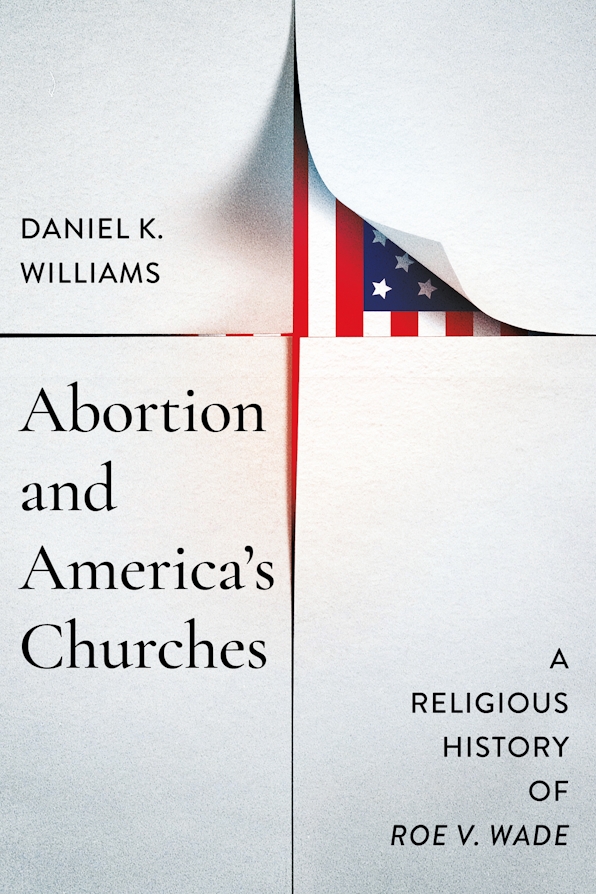
This is a description not of some future American Gilead but of the past. Daniel K. Williams’s important history of abortion politics explains how Roe v. Wade enshrined liberal Protestant assumptions in American law. Far from being a bulwark of secularism (as many on the right and the left have supposed), Roe v. Wade was the expression of a religious establishment that overestimated its legitimacy and staying power.
Religious divides over abortion emerged in the first part of the twentieth century. Up to that point there had been a broad consensus in favor of American laws, which banned abortion except when it was necessary to save the life of the mother. But under the influence of the Social Gospel, which stressed societal reform over individual salvation, many mainline leaders came to see contraception and abortion not as individual vices but as potential solutions to overpopulation and poverty. Liberal Protestants also placed a high priority on individual freedom, which they sought to respect by loosening abortion laws.
At the same time, liberal Protestants continued to believe that the unborn child possessed moral worth, which had to be balanced against the value of individual choice. In 1961, the Christian Century called for the repeal of laws that compelled “women to bear unwanted children forced upon them in criminal acts.” But it also warned that complete liberalization “leaves to the unborn no rights at all.”
This attempt to balance individual freedom, social reform, and the rights of the unborn was distinct from the Catholic position, which prioritized unborn life while drawing on natural law. It also differed from the approach of conservative Protestants. Williams puts to rest the frequently repeated claim that evangelicals did not oppose abortion until they were led to do so by the post-Roe culture wars. In fact, conservative Protestants were generally opposed to abortion—and for distinctively evangelical reasons.