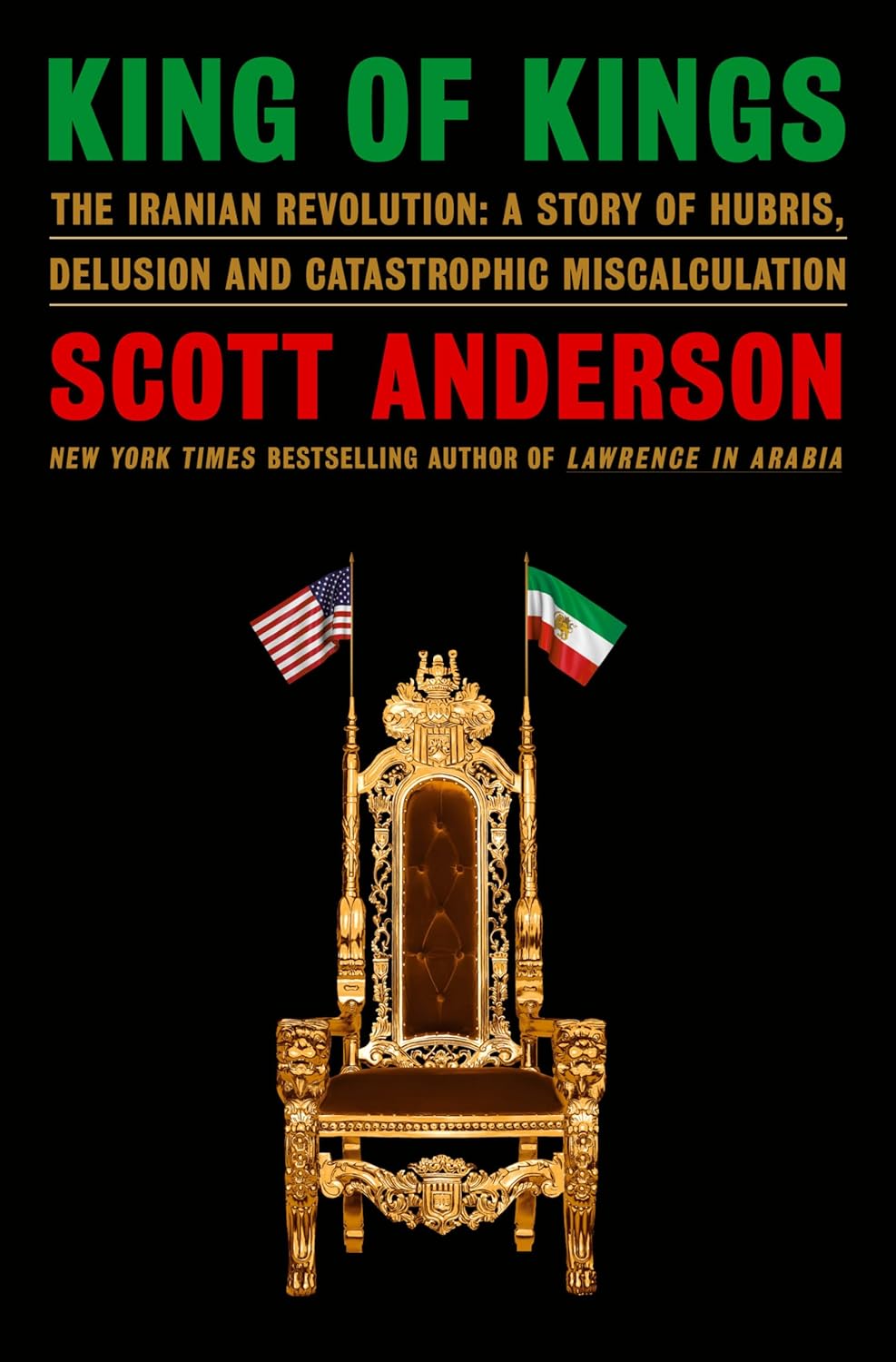
Willful Blindness
Anderson is correct in insisting that the systematic suppression of information critical of the shah’s regime led to disastrous results for US-Iran relations. Yet rather than stemming from naiveté or distractedness, Washington’s neglect of Iranian realities was the result of a Cold War mindset whereby the US political establishment and media routinely distorted facts to paint a glossy picture of life in Iran under the shah.
Misinforming the American public about Iran became official policy during the Nixon administration, solidified when former CIA chief Richard Helms arrived as ambassador to Tehran in 1973. But the US news media and academic establishment were also responsible for promoting a distorted image of the country. The New York Times, for example, practiced systematic falsification as far back as its record of covering up the CIA’s role in restoring the shah to his throne in 1953.
While receiving generous funding from the Iranian government, leading American universities such as Harvard, MIT, Princeton, Georgetown, UCLA, and Columbia bestowed honorary degrees on the shah, sponsored projects supporting his policies, and published scholarly volumes that were largely oblivious to the dark side of Iranian politics. Meanwhile, exceptional scholars, including James Bill and Thomas Ricks, wrote about repression and dictatorship in Iran and found themselves ignored by the media, academic, and political establishments.
As Anderson explains, by the mid-1970s, in the wake of the Vietnam and Watergate fiascos, the shah’s glorious image in the United States was gradually coming into question. Congress was trying to exert control over foreign policy, pushing back against the Nixon-era “imperial presidency.” The news media, too, began questioning the wisdom of unlimited arms sales to a one-man dictatorship that suppressed all dissent and tortured its opponents.
For nearly two decades, the loudest opposition to American support of the shah was voiced by thousands of young Iranians studying in the United States. Numbering around fifty thousand by the late 1970s, Iranians were the largest group of foreign students in the United States. Many were active in the Confederation of Iranian Students, the world’s most effective left-wing student organization of the 1960s and ’70s. For anyone who paid attention, years of noisy Iranian student protest offered ample evidence of how wrongheaded Washington’s support for the shah had been.
Ironically, Anderson’s preface notes that he personally witnessed one of the most spectacular Iranian student protests that took place during the shah’s visit to the Carter White House on November 15, 1977. Working as an “errand boy” at the Treasury Department in Washington, DC, the eighteen-year-old Anderson watched as about four thousand students broke through the police line to fight pitched battles with a smaller crowd of shah supporters recruited by the Iranian embassy.