My relatives were as mysterious to me as the people we learned about in social studies. By the early 1970s, they had been living in the United States for at least three decades, but they were nothing like the people I was surrounded by on the Upper West Side, Jews as well, many of them, but very much assimilated. The siblings spoke a heavily accented version of English in which w’s sounded like v’s and r’s rumbled, like someone imitating the roar of a lion. English sentences often followed the rules of Yiddish grammar. “You want I should give you some fish?” my grandmother would ask. When a word was untranslatable, they resorted to the original Yiddish.
One word I learned from these dinners was nebakh, which means something like “such a pity.” It usually came at the end of a sentence, as a kind of exclamation point: “The doctor said it would heal as good as new, but she never walked the same again. Nebakh.” Nebakh was also used to cut off a sentence midstream when the speaker felt too overwhelmed to continue.
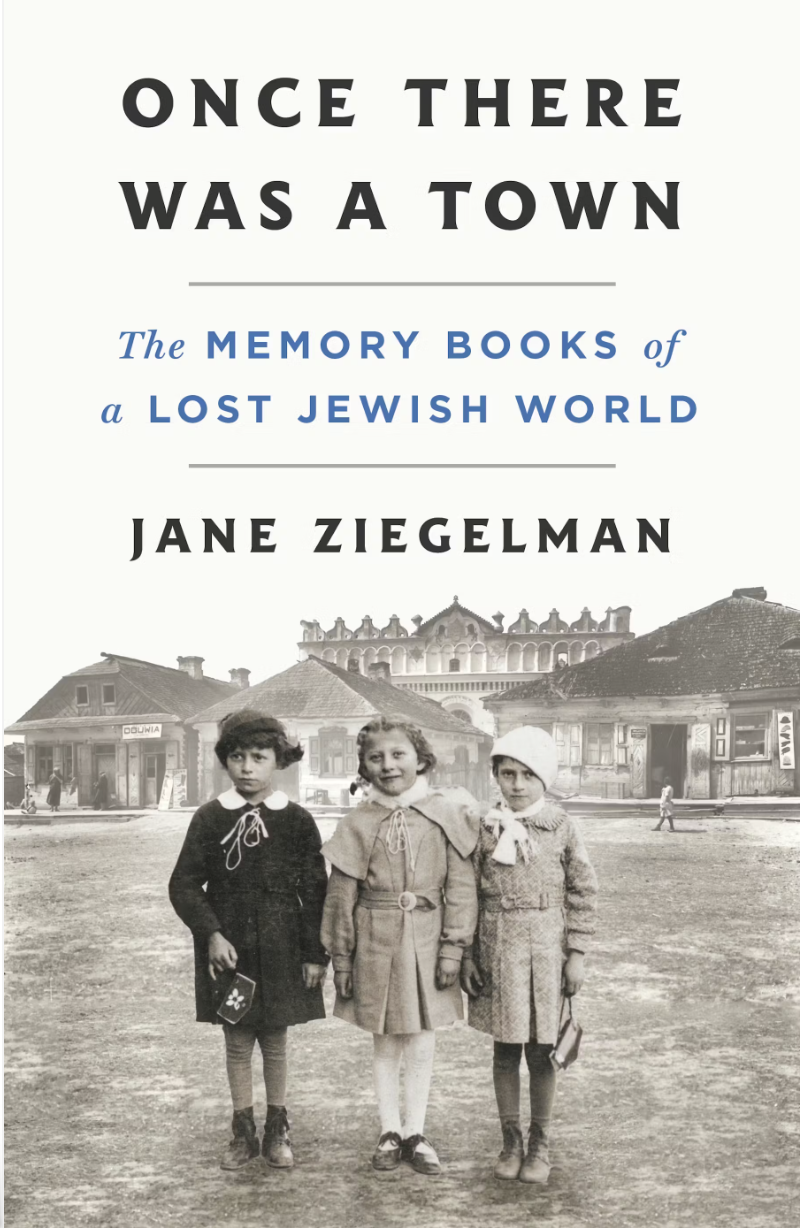
I remember once asking my grandmother about the food in Poland, what did they eat when she was a little girl. Before answering, she looked at me as if I had asked her what color the sky was in Luboml. “Eat? We were five children. We ate soup, soup with potatoes, with noodles. My mother was a very good cook. She could make a soup from anything. From weeds that grew by the road . . .” Here, she shut her eyes tight and shook her head. “Nebakh . . . nebakh,” she said, and that was the end of the conversation.
Out of all the siblings, Shloime was the most observant. Though he earned his living as a New York landlord, by vocation he was a scholar of Talmud with his own flock of disciples. Like other observant Jews, he kept his head covered as a sign of religious devotion. Shloime was never without his hat, a black fedora with a narrow brim and small red feather sticking out of the hatband.