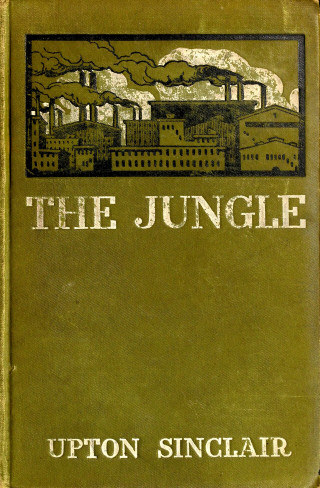
Harriet Beecher Stowe’s Uncle Tom’s Cabin, the abolitionist novel that sold millions of copies while Southern politicians floated secession, served as Sinclair’s primary inspiration. He not-so-secretly hoped his book could do for the industrial wage slave what Stowe’s book had done for the agricultural slave a half-century prior.
“I wished to frighten the country by a picture of what its industrial masters were doing to their victims; entirely by chance I had stumbled on another discovery—what they were doing to the meat-supply of the civilized world,” Sinclair explained in a 1906 article for Cosmopolitan magazine. And when his work was first compiled and published by Doubleday, Page & Company, he dedicated it “to the workingmen of America.” Although Sinclair may have dreamed too big—a decent novel unfortunately failed to kick off a socialist revolution—The Jungle did fly off the shelves.
Winston Churchill, then “just” a member of the House of Commons, and celebrated author Jack London both wrote laudatory reviews. Due to the book’s phenomenal popularity, mere months passed between The Jungle’s publication and President Theodore Roosevelt signing the Pure Food and Drug Act of 1906, the bill that established the Food and Drug Administration. But despite Sinclair’s urging, the president couldn’t be convinced to support similar legislation capable of properly addressing working conditions. Roosevelt would eventually write to Sinclair’s publisher that the socialist agitator ought to “let me run the country for a while.” Over a dozen years later, in the journalist’s tell-all The Brass Check, an embittered Sinclair would complain the public response to his earlier work had “left the wage-slaves in those huge brick packing-boxes exactly where they were before.” The Occupational Safety and Health Administration would not be created until 1970.
Still, Sinclair’s tales of capitalist cruelty and criminal negligence, easily as vivid as Dante’s depiction of Hell, have served as a ready touchstone for horrific and unsanitary conditions for the last hundred and twenty years. The stomach-churning scenes he painted of poisoned rats being swept into meat grinders right along with tubercular pork and of men falling into vats, only to be sent “out to the world as Durham’s Pure Leaf Lard,” stayed with the American public, and with the nation’s elites. In 2017, Bloomberg reporter Peter Waldman wrote that OSHA inspection reports “read like Upton Sinclair, or even Dickens.”
Late last year, whilst explaining there really isn’t all that much waste in the federal budget to begin with, one former Republican aide warned: “What are you going to cut out? The FDA’s food safety inspections? Well, I’m sure some of the big meat packers would like that, but you’d get a situation like Upton Sinclair’s The Jungle.”