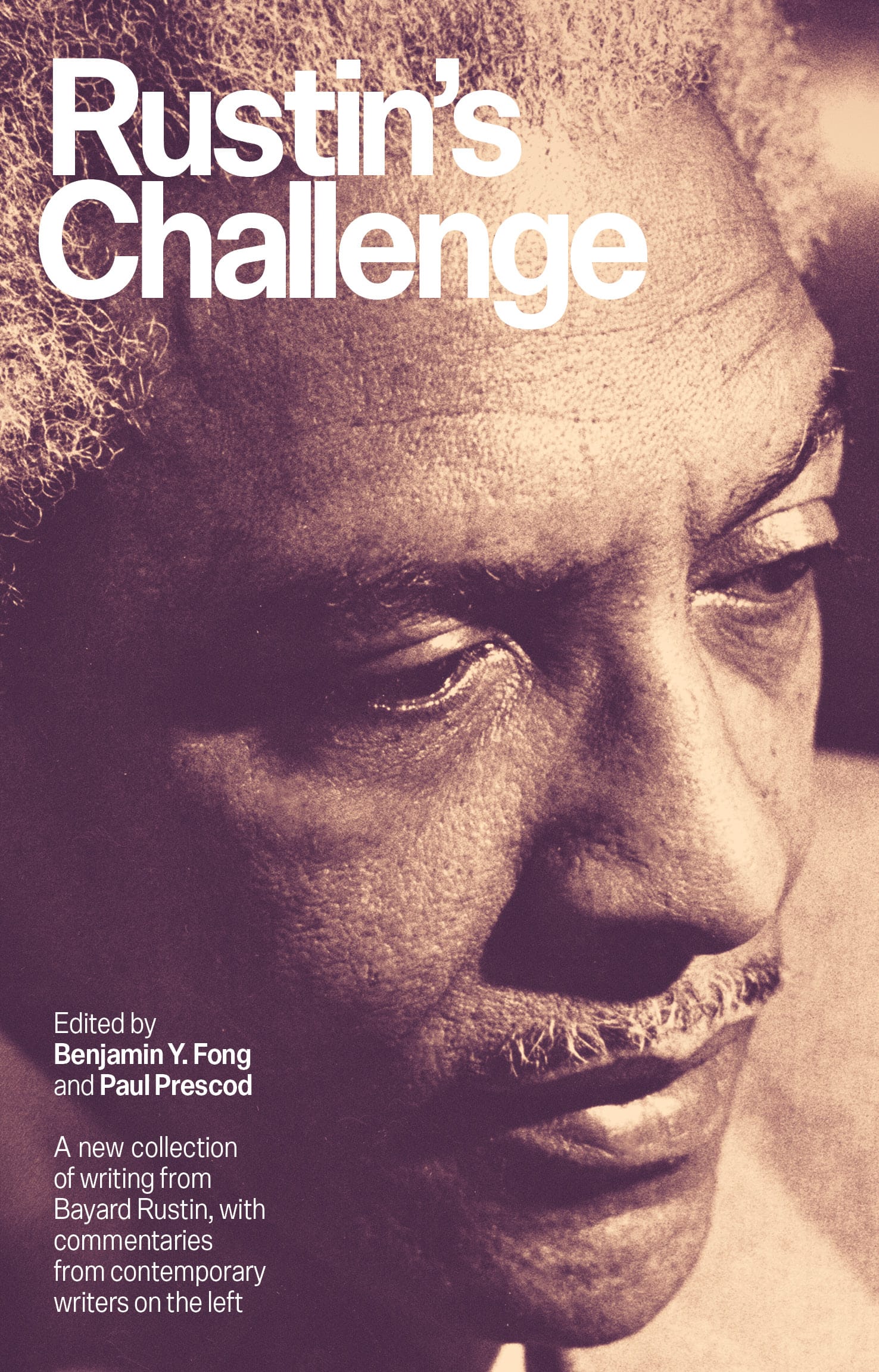
In “The Myth of the Racist Voter,” Rustin chides liberals for blaming the results of the 1972 presidential election on the “backwardness” of voters as a way of covering up their own failures. And in “Liberals and Workers,” he laments the new liberal tendency to devalue workers’ economic position, leading to identifications and problems that we today associate with identity politics. Rustin’s critique of new liberal tendencies in the late 1960s proved to be quite prescient. In a speech to the City Club of Cleveland from 1987, by which time the liberal bad habits Rustin identified in the later 1960s had settled into common sense, Rustin declared that there was only one way off the increasingly absurd road of “special privilege” that liberals had committed themselves to, and that was to re-embrace the politics of universalism. From what we’ve been able to gather, this speech, included in this volume, was Rustin’s last.
But Rustin only ever felt indirect sway over liberals, who he thought hesitant allies at best. His real object of concern from the mid-1960s on was the development of a misguided radicalism. In “Socialism or Moralism,” he laments the rapid emergence of an “obsessive moralism” on the Left, which “substitutes slogans for analysis.” In “The Kids, the Hardhats, and the Democratic Party,” he condemns the “kids” of the New Left for goading reaction on the Right and fracturing the liberal coalition. And in “The Alienated,” he attempts to make sense of where these self-defeating tendencies come from, specifically among the “alienated” youth. While Rustin disagreed fundamentally with the orientation and tactics of the new social movements, he understood where their particular form of “frustration politics” came from, and feared the consequences of not addressing the source of this frustration.
We face a situation in which, if there is not justice, and very soon, there are elements in our minorities who having rejected real progress, and acting on the basis of emotion, may well tear this society apart. As they say, if they cannot share equally in the American house, then they will burn it down.
Committed fully to the idea of a coalition between the key civil rights organizations and organized labor, and vocally opposed to the new “radical” tendencies emergent in the ‘60s, Rustin was unafraid of taking what we might consider today to be heterodox positions. They only appear “heterodox,” however, because the very alienation he warned of has become hegemonic on the Left. In “Growth, Jobs, and Racial Progress,” he criticizes the new tendency amongst environmentalists of his day to be anti-economic growth, a tendency that has only become more pronounced today on the climate Left. And in “Let’s Talk Sense About Crime,” he similarly goes after the idea that law enforcement as such is “anti-black” and urges the Left to take seriously the issue of crime that plagues poor and working-class communities.