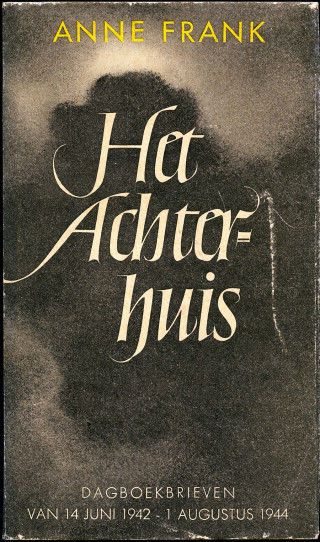
Anne Frank’s story — as told in her famed diary — is about many things: Persecution of Jews, the horrors of fascism, the perseverance of the human spirit.
But one of the main messages that many have taken from her life and death is this: It is wrong for children to be forced into hiding for any reason, and certainly on the basis of their identity.
That’s the connection that Minnesota Gov. Tim Walz drew while speaking on Monday.
“We have got children in Minnesota hiding in their houses, afraid to go outside,” he said at a press conference. “Many of us grew up reading that story of Anne Frank,” he added. Someday, he thinks, someone will write a similar story about the children of Minnesota.
Thus started one of the most vicious recent battles over what, exactly, Frank’s memory should mean. And in that battle, we can see what we risk by questioning whether it’s reasonable to draw any comparisons, ever, between those who lived in terror of the Nazis, and those who live in terror of other inhumane regimes.
The United States Holocaust Museum responded to Walz by posting on social media that “Anne Frank was targeted and murdered solely because she was Jewish. Leaders making false equivalencies to her experience for political purposes is never acceptable.”
“Despite tensions in Minneapolis,” they added, “exploiting the Holocaust is deeply offensive, especially as antisemitism surges.”
There are good reasons to be protective of Anne Frank’s story as a specifically Jewish one. The instinct to treat her experience as one of universal relevance has sometimes been taken too far, as in the case of a 2017 Dutch play about her that didn’t mention Jews or the Nazis.
But there are also good reasons to lean into the belief that Frank’s story is about humanity at large, as well as Jews, specifically. Frank’s father, Otto Frank, who edited her diary after her death during the Holocaust and pushed for its publication, was among those who said he wanted it to have universal appeal.
“I always said that Anne’s book is not a war-book,” he wrote in a letter in 1952. “War is the background. It is not a Jewish book either, though Jewish sphere, sentiment and surrounding is the background.” He wanted his daughter’s story to reach as many people as possible.
That’s the same instinct, I think, that motivated Walz to make his comparison: the drive to force people to confront the truth that children are suffering inhumanity, and to feel that truth must not be tolerated.