Filter by:

Filter by published date

Viewing 61–90 of 526 results. Go to first page
Abraham Lincoln

Was the Civil War Inevitable?

Before Lincoln turned the idea of “the Union” into a cause worth dying for, he tried other means of ending slavery in America.
Grave of John Quincy Adams.

From Son of the Revolution to Old Man Eloquent

A new Library of America edition of John Quincy Adams’s writings demonstrates the enduring appeal—and real shortcomings—of his revolutionary conservatism.
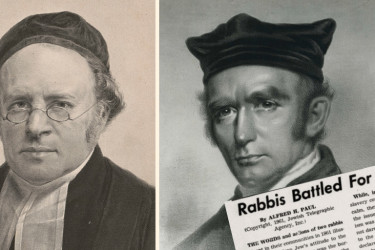
David Einhorn and Morris Raphall and a paper saying "Rabbis Battled for Abolition."

American Pharaohs

A new book doesn’t aim to skewer Jewish defenders of slavery or celebrate Jewish abolitionists, but to understand them, warts and all.
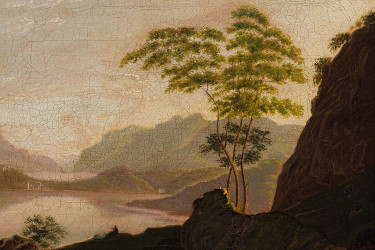
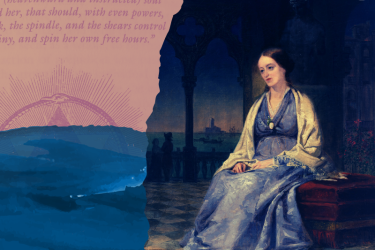
Detail of landscape painting Villa Menaggio, Lago di Como by Sophia Peabody Hawthorne.

Transcending the Glass Ceiling

Five women who made important contributions to 19th-century American philosophy finally get their due.
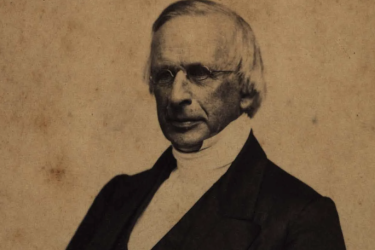
Rufus Anderson

Christ vs. Culture, Religion vs. Politics

Religious leaders hid behind the separation of church and state to uphold the institution of slavery and the forcible removal of Native Americans.
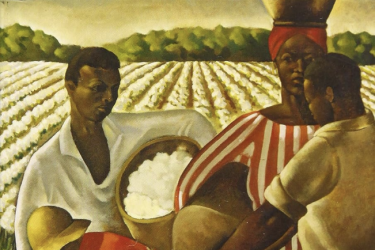
Painting by Earle Richardson titled "Employment of Negroes in Agriculture," 1934.

Uncle Tom's Cabin is the Great American Novel

Most countries take their popular novelists more seriously than America has. The term “Great American Novel” was literally invented to describe this book
Oil painting of Margaret Fuller by Thomas Hicks, 1848 (National Portrait Gallery) and frontispiece from first edition of Woman in the Nineteenth Century.

The Mind and Heart of Margaret Fuller

Margaret Fuller was a polymathic intellect and writer, simultaneously ahead of her time and deeply enmeshed in the social and political fabric of her era.
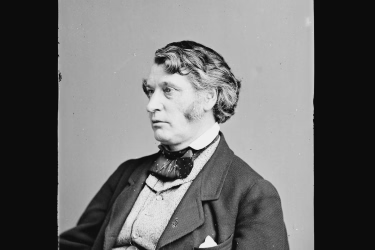
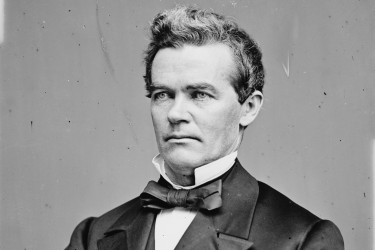
Senator John Conness.

This Dead California Senator Can Save Birthright Citizenship

In the 19th century, John Conness defended the 14th Amendment and shut down proto-Trumpians.
A crib drawn with Stars and Stripes symbolism.

Birthright Citizenship Is a Sacred Guarantee

The attack on it is a violation of the nation’s post–Civil War rebirth.
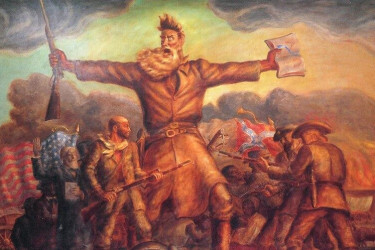
A mural depicting John Brown amid Bleeding Kansas.

John Brown, Christian Nationalist

To understand discourse around “Christian nationalism,” look no further than the abolitionist hailed by many on the left.
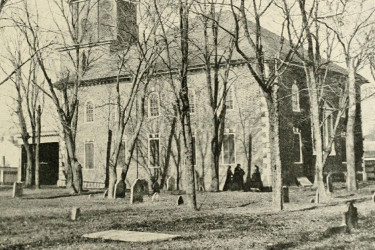
Church with graveyard.

Divided Providence

Faith’s pivotal role in the outcome of the Civil War.
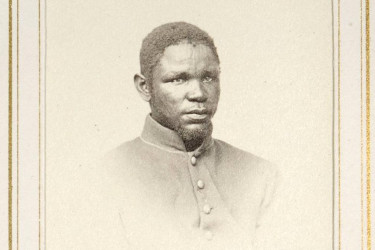
Nicholas Said, an African American Muslim in his Union Army uniform.

Fighting for Freedom: The Little-Known Story of Muslims and the Civil War

The stories of two Muslim immigrants who fought for the Union show that the American Civil War was an international fight.

The Second Abolition

Robin Blackburn’s sweeping history of slavery and freedom in the 19th century.
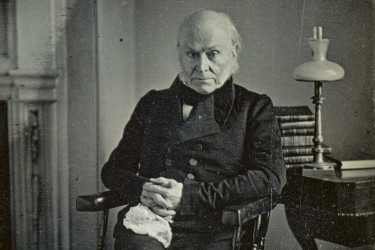
John Quincy Adams posing for a photograph.

Now Is Not the Time for Moral Flexibility: The Example of John Quincy Adams

We must stand by the principles of the open society, pluralism, freedom, and mutual toleration.
"The Underground Railroad" (1893) by Charles T. Webber depicts a fugitive slave reaching the North.

The Abolitionist Titan You’ve Never Heard Of

John Rankin, minister and fierce abolitionist, is a man worth remembering in our moment.
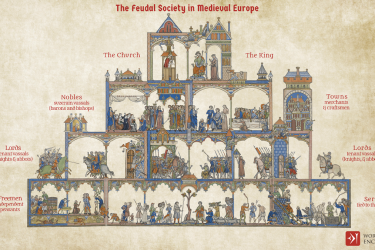
A World History Encloypedia graphic image/illustration of The Feudal Society in Medieval Europe.

American Feudalism

A liberalism that divides humanity into a master class and a slave class deserves an asterisk as “white liberalism.”
Aurora Borealis painting by Frederic Edwin Church, 1865.
partner

A Nice Metaphor for the Country

On the 1860 Republican National Convention in Chicago.
Illustration imagining Karl Marx sitting on a ranch in Texas.

Marx Goes to Texas

Drawn to communities of German socialist expatriates in the area, Marx once considered making his way to Texas.
Sheet music depicting a fugitive slave.

Against the Slave Power: the Fugitive Liberalism of Frederick Douglass

Douglass elaborated a political theory attuned to the differential character of law as it applied to slaves and other outlaws.
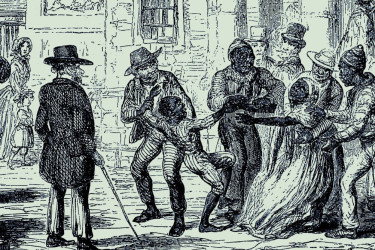
In this drawing from ‘Uncle Tom’s Cabin,’ a Black child is taken from his mother by a white man.

The Black Fugitive Who Inspired ‘Uncle Tom’s Cabin’ and the End of US Slavery

Born enslaved, John Andrew Jackson spent his life fighting for freedom as a fugitive, abolitionist, lecturer and writer.
Book cover of "The Rise and Fall of the Second American Republic: Reconstruction, 1860-1920."

Expanding the Boundaries of Reconstruction: Abolitionist Democracy from 1865-1919

Sinha enlarges the temporal boundaries students are accustomed to by covering the end of the 19th century into the Progressive era with the 19th Amendment.
Portrait of Harriet Tubman, in a field.

There Is Room for Our Black Heroes To Be Human

“Night Flyer” expands Harriet Tubman’s legacy to include her family, community and “eco-spiritual worldview.”
Harriet Tubman.

The Radical Faith of Harriet Tubman

A new book conveys in dramatic detail what America’s Moses did to help abolish slavery. Another addresses the love of God and country that helped her do so.
Ralph Waldo Emerson in 1857.

The Essential Emerson

The latest biography of the great transcendentalist captures the paradoxes of his Yankee mind.
Frederick Douglas.

What Frederick Douglass Learned from an Irish Antislavery Activist

Frederick Douglass was introduced to the idea of universal human rights after traveling to Ireland and meeting with Irish nationalist leaders.
An 1863 illustration from “Le Monde illustré” of formerly enslaved people celebrating the Emancipation Proclamation.

What If Reconstruction Didn’t End Till 1920?

Historian Manisha Sinha argues that the Second Republic lasted decades longer than most histories state and achieved wider gains.
Frozen truck on icy road

The Frozen Trucker and the Fugitive Slave

On the TransAm Trucking case, legal reasoning, and the Fugitive Slave Act.
A Ride for Liberty – The Fugitive Slaves by Eastman Johnson.

Unapologetically Free: A Personal Declaration of Independence From the Formerly Enslaved

Abolitionist and writer John Swanson Jacobs on reclaiming liberty in a land of unfreedom.
A print titled "Heroes of the Colored Race," centered on portraits of Blanche Bruce, Frederick Douglas, and Hiram Revels.

Slavery, Capitalism, and the Politics of Abolition

"The Reckoning," Robin Blackburn’s monumental history, offers a dizzying account of the politics behind slavery's rise and fall.
A drawing of a Wide Awake march.

These Torchlit Young Marchers Helped to Save American Democracy

They called themselves the Wide Awakes. They are a lesson in building a political movement.

Filter Results:

Suggested Filters:

Idea

Person