Filter by:

Filter by published date

Viewing 331–360 of 591 results. Go to first page
Sketch of tobacco cultivation at Jamestown.

The Other Founding

A review of two books exploring the importance and legacy of the founding of the English colony at Jamestown.
Salmon fisheries at Celilo Falls.

Ken Kesey Meets Lewis and Clark

Celilo Falls was the economic and spiritual center of the Indian world in the Pacific Northwest.
partner

The Truth About Thanksgiving Is that the Debunkers Are Wrong

A response to claims that the First Thanksgiving was not a "thanksgiving" as the Pilgrims understood it.

1491

Before it became the New World, the Western Hemisphere was an altogether more salubrious place to live at the time than, say, Europe.
Exhibit

Native Pasts

This exhibit showcases the cultural, political, and environmental histories of American Indians, from ancient civilizations to contemporary activism.

“The Landing of the Pilgrim Fathers,” an 1885 parody of an 1850 painting by Charles Lucy.

Thankstaking

Was the 'first Thanksgiving' merely a pretext for the bloodshed, enslavement, and displacement that would follow in later decades?
Spread from Vine Deloria, Jr.'s essay "The Bureau of Indian Affairs: My Brother’s Keeper."

The Bureau of Indian Affairs: My Brother’s Keeper

An excerpt of “My Brother’s Keeper,” the essay that chronicles the Bureau’s various crimes over two centuries.
Alcatraz Island prison sign painted over to welcome Indians to Indian land.
partner

The Art of Stealing Human Rights

Native peoples face similar struggles with the federal governments in the U.S. and in Canada.
partner

The Historians Behind Ken Burns' "The American Revolution"

Three experts discuss their behind-the-scenes experience as historical advisers to the new series.
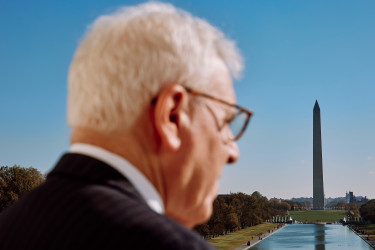
David Rubenstein looks toward the Washington Monument.

When Donald Trump Fired David Rubenstein

The private-equity billionaire spent decades building influence in the capital. Then his philanthropy collided with the president.
American colonists pulling down a statue of King George the Third.

The Incoherence of Ken Burns’s ‘The American Revolution’

Ken Burns has set himself the impossible task of retelling a national origin story that all Americans will embrace as their own.
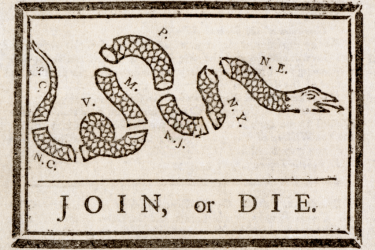
"Join, or Die" political cartoon of the snake in pieces representing colonies.

Did the Iroquois Really Influence the Birth of the Union?

For a fight at Thanksgiving, bring that one up.
Ken Burns and Sarah Botstein

“A Story We Think We Know”: Ken Burns on The American Revolution

Burns and co-director Sarah Botstein discuss their six-part, 10-year labor of love, which finally makes it to PBS on November 16.
Washington Crossing the Delaware

Why the American Revolution Was a World War in All But Name

The transnational nature of America's fight for independence.
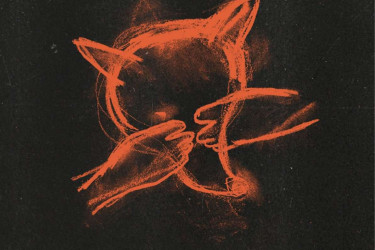
Coyote covering his eyes, as depicted on the cover of Julian Brave Noisecat's book "We Survived the Night."

Through the Eyes of Little Crow

Little Crow was one of the leaders of the Dakota Uprising of 1862, a conflict that began, as so many Indian wars did, because treaty rights were being ignored.
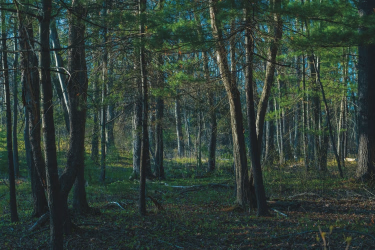
Woods along the path of the British retreat from Concord to Boston.

Why Concord?

The geological origins of the American Revolution.
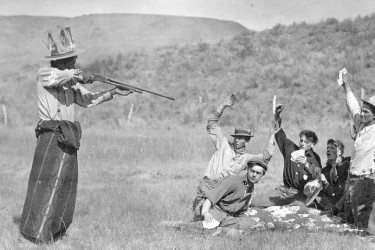
Frank Matsura photograph: a staged scene of a Native American man using a rifle to hold up men playing cards.

How Photographer Frank S. Matsura Challenged White America’s Hegemonic View of the West

On the groundbreaking work of the Japanese photographer who made Washington state his home.
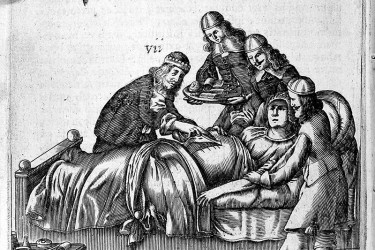
17th-century surgeon performing a c-section.
partner

Pelvic Obsessions

How the “obstetrical dilemma” and the dark history of pelvimetry met in the present.
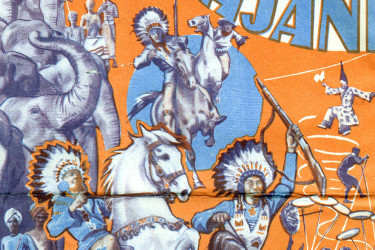
Sarrasani Program 1931 with Lakota's on horses, elephants, (circus theme).

Performing the Exotic and Lakota Resistance

How Lakota performers challenged the 'exotic othering' of their identities in the Sarrasani circus.
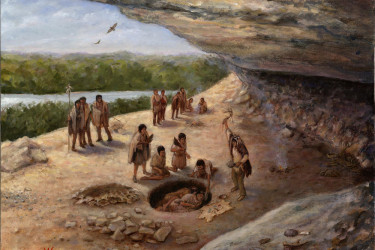
Native Americans perform a burial ceremony under a rock overhang.

Religion in the Lands That Became America

Historian Thomas A. Tweed proposes an environmental approach to the study of American religion.
A group of men in 19th-century clothing groom their beards.

The First Time America Went Beard Crazy

A sweeping new history explores facial hair as a proving ground for notions about gender, race, and rebellion.
Frederic Remington painting of cowboys galloping through the desert, firing guns over their shoulders at their pursuers.

“Lord, Teach My Hands To War, My Fingers To Fight”

The cowboy apocalypse and American gun fandom.
Mount Rushmore

On Myths and Monuments

Mount Rushmore and storytelling at America’s national parks.
Scaffolding behind the statue of the rule of law outside the Supreme Court building.

Trump Is Wrong About Birthright Citizenship. History Proves It.

Lawmakers knew the Fourteenth Amendment would apply to the children of immigrants.
Lithograph depicting General Washington leading his troops in battle against British troops.

Why George Washington Integrated the Army

The commander-in-chief initially barred black soldiers from joining the ranks, but he came to understand the value—both moral and strategic—of a diverse force.
Book cover for The Invention of Design by Maggie Gram features a phone cord snaking around text.
partner

Irrelevant at Best, or Else Complicit

The state of design in 1970.
F. D. R. looks intently across a table at Brazilian President Getulio Vargas during a meal.

Won’t You Be My Neighbor?

Christy Thornton and Greg Grandin discuss his new book, “America, América,” and the intertwined histories of the U.S. and Latin America.
A Freedmen’s Bureau office, Richmond, Virginia, 1866.

One Brief Shining Moment

Manisha Sinha’s history of Reconstruction sheds fresh light on the period that fleetingly opened a door to a different America.
Two bridges in Grand Island, New York.

Almost Zion: Remembering a Short-lived Jewish State in New York

Ararat, a settlement dreamed up in the 1800s, was meant to offer a refuge to Jews. But after an ornate ceremony, plans never got off the ground.
A photograph of Frederick Douglass imposed on the cover of The Columbian Orator by Caleb Bingham.

The Columbian Orator Taught Nineteenth-Century Americans How to Speak

For strivers like Lincoln, guides to rhetoric had a special currency in the nineteenth century.
Map of Boston in 1776.

Terrains of Independence

Why was Boston and Massachusetts the site of so much early Revolutionary activity?

Filter Results:

Suggested Filters:

Idea

Person