Menu
Excerpts
Exhibits
Collections
Originals
Categories
Map
Search
Idea
Antebellum era
142
Filter by:
Date Published
Filter by published date
Published On or After:
Published On or Before:
Filter
Cancel
Viewing 121–142 of 142 results.
Go to first page
A Brief History of Black Names, from Perlie to Latasha
A scholar disproves the long-held assumption that black names are a recent phenomenon.
by
Trevon Logan
via
The Conversation
on
January 23, 2020
'The Slaves Dread New Year's Day the Worst': The Grim History of January 1
New Year's Day used to be widely known as "Hiring Day" or "Heartbreak Day"
by
Olivia B. Waxman
via
TIME
on
December 27, 2019
An Early Case For Reparations
Two new books tell the stories of people kidnapped and sold into slavery. One of them sued successfully.
by
Eric Herschthal
via
The New Republic
on
October 16, 2019
How The 1619 Project Rehabilitates the ‘King Cotton’ Thesis
The New York Times’ series on slavery relies on bad scholarship to make an argument with an inauspicious history.
by
Phillip W. Magness
via
National Review
on
August 26, 2019
Race in Black and White
Slavery and the Civil War were central to the development of photography as both a technology and an art.
by
Alexis L. Boylan
via
Boston Review
on
June 3, 2019
Andrew Jackson: Our First Populist President
He never denounced slavery and was brutal towards American Indians, but remains a popular figure. Why?
by
Jeff Taylor
via
The American Conservative
on
February 8, 2019
partner
The Faces of Racism
A history of blackface and minstrelsy in American culture.
via
BackStory
on
February 8, 2019
partner
The Real Reason the Catholic Church Remains Plagued by Abuse Scandals
In the wake of abuse scandals, lay people, not priests, should have more power.
by
William S. Cossen
via
Made By History
on
August 23, 2018
Pushing the Dual Emancipation Thesis Beyond its Troublesome Origins
"Masterless Men" shows how poor whites benefited from slavery's end, but does not diminish the experiences of the enslaved.
by
Adrienne Petty
via
Black Perspectives
on
March 8, 2018
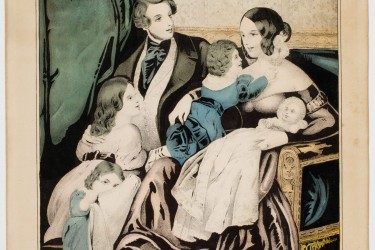
Parenting for the “Rough Places” in Antebellum America
Jane Sedgwick’s evolving ideas about her children’s natures and her ability to shape them reflected an emerging American skepticism of the perfectibility.
by
Erin Bartram
via
Commonplace
on
March 1, 2018
original
Encountering the Plantation Myth Where You'd Least Expect It
Well off Savannah's tourist trail, there's a replica of an antebellum plantation home in the middle of a public housing project.
by
Kevin M. Levin
on
January 19, 2018
The Princeton & Slavery Project
A vast, interactive collection of resources related to Princeton's involvement with the institution of slavery.
via
Princeton University
on
November 6, 2017
partner
“I Wanted to Tell the Story of How I Had Become a Racist”
An interview with historian Charles B. Dew.
by
Charles B. Dew
,
Robin Lindley
via
HNN
on
September 10, 2017
Patterns Of Death In The South Still Show The Outlines Of Slavery
Blacks continue to die younger than people in other groups in the Black Belt.
by
Anna Maria Barry-Jester
via
FiveThirtyEight
on
April 20, 2017
What America’s 19th-Century Reformers and Radicals Missed
The dangers of confusing self-improvement with institutional change.
by
Brenda Wineapple
via
The Nation
on
April 18, 2017
#FEELTHEBIRNEY
The most important third party in the history of American politics is one you may never have heard of before.
by
W. Caleb McDaniel
via
Commonplace
on
September 4, 2016
By Which Melancholy Occurrence: The Disaster Prints of Nathaniel Currier, 1835–1840
Why Americans living in uncertain times bought so many sensational images of shipwrecks and fires.
by
Genoa Shepley
via
Panorama
on
October 14, 2015
partner
Back to the Fundamentals
Apocalyptic thinking in early Christian fundamentalism.
via
BackStory
on
December 14, 2012
Cherokee Slaveholders and Radical Abolitionists
An unlikely alliance in antebellum America.
by
Natalie Joy
via
Commonplace
on
July 1, 2011
Creoles
The word "Creole" invites debate because it possesses several meanings, some of which concern the innately sensitive subjects of race and ethnicity.
by
Shane K. Bernard
via
64 Parishes
on
December 8, 2010
How Poverty Was, and Was Not, Pictured Before the Civil War
Images were important in defining the Republic between the Revolution and the Civil War and they distinctively both did and did not show Americans in need.
by
Jonathan Prude
via
Commonplace
on
April 12, 2010
Rebel Yell
The recent march in South Carolina, demanding removal of the Confederate flag from the state Capitol is the latest episode in a long-running debate over slavery's legacy.
by
Eric Foner
via
The Nation
on
January 27, 2000
Filters
Filter Results:
Search for a term by which to filter:
Suggested Filters:
Idea
slavery
abolitionism
sectionalism
slaveholders
polarization
rhetoric
Civil War, causes
legacy of slavery
political divisions
fugitive slaves
Person
Abraham Lincoln
Charles Sumner
Preston Brooks
John C. Calhoun
Stephen A. Douglas
Andrew Jackson
Lyncoya Jackson
George Moses Horton
Jared Kushner
Andrew Jackson Donelson