Filter by:

Filter by published date

Viewing 31–57 of 57 results. Go to first page
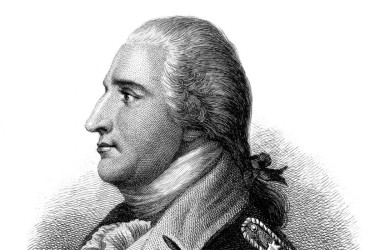
Lithograph of Benedict Arnold.
partner

How Benedict Arnold Helped Win the Revolution

Some historians think Benedict Arnold's treason may well have aided the American cause in the Revolutionary War.
Soldiers in Continental Army
partner

Rumming with the Devil

A perusal of Benjamin Franklin’s "Drinker’s Dictionary," and a chat about how the drink of choice in revolutionary America switched from cider to rum.
"Declaration of Independence" by John Trumbull

Give Me Independence: On 1776, the Pivotal Year For What Would Become America

Why 1776 became the year Americans declared themselves an independent nation.
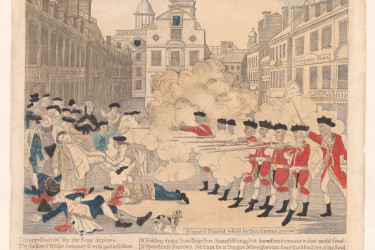
The Boston Massacre, printed by Paul Revere Jr., 1770.
partner

Deploying Federal Troops to U.S. Cities Is a Second Amendment Issue

But not because the founders wanted to see more guns in the hands of Americans.
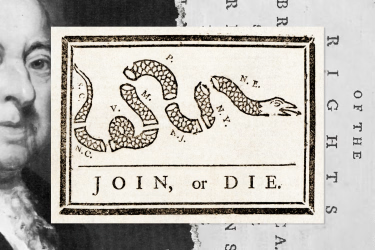
John Adams, Jefferson's pamphlet on the Rights of British America, and Franklin's "Join or Die" cartoon.

What Actually Changed in 1776

The most consequential shift that year was not one of battle lines but of ideology.
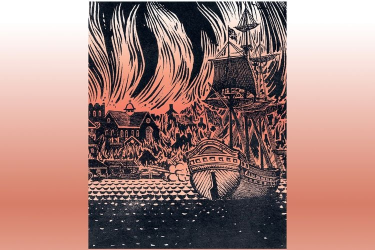
A drawing of the burning of Norfolk.

In January 1776, Norfolk Was Set Ablaze, Galvanizing the Revolution. But Who Really Lit the Match?

Blaming the British for the destruction helped persuade some colonists to back the fight for independence. But the source of the inferno was not what it seemed.
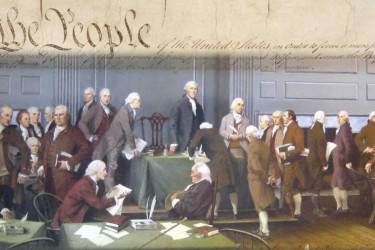
The founders at the Constitutional Convention with the "We the People" as a backdrop.

“Shall We Have a King?”

Some delegates at the Constitutional Convention wanted a strong executive, while others feared the American president might become a king.
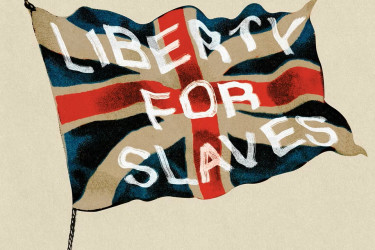
British flag with writing that says, "Liberty for Slaves."

The Black Loyalists

Thousands of African Americans fought for the British—then fled the United States to avoid a return to enslavement.
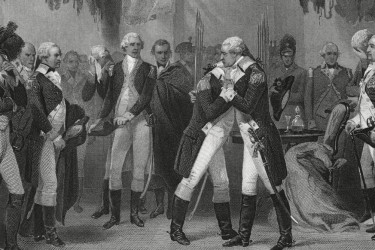
George Washington saying farewell to his officers in 1783.

Where George Washington Would Disagree with Pete Hegseth About Fitness for Command and a Warrior

Washington’s ‘warrior ethos’ was grounded in decency, temperance and the capacity to act with courage without surrendering to rage.
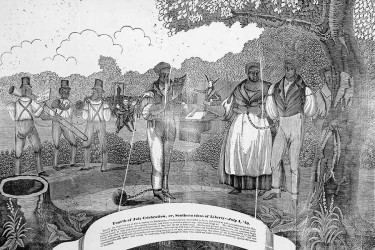
An abolitionist lithograph depicting enslaved people celebrating the Fourth of July while a white judge sits on bales of cotton with his feet on the Constitution, 1840

The Contradictory Revolution

Historians have long grappled with “the American Paradox” of Revolutionary leaders who fought for their own liberty while denying it to enslaved Black people.
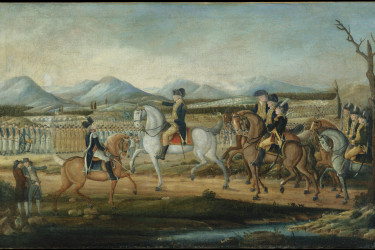
A painting of George Washington on horseback reviewing the Western Army at Fort Cumberland.
partner

Merry, Manly Militias

Levity and play — eerily combined with anxiety, terror, and deadly violence — shaped the identity and image of Early Republic militias.

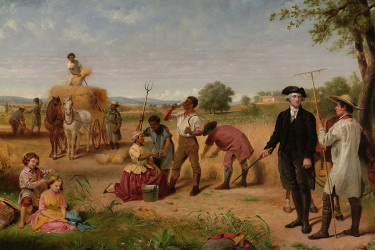
Farmer George

The connections between the first president’s commitment to agricultural innovation and his evolving attitudes toward his enslaved laborers at Mount Vernon.
The American Flag, the Declaration of Independence, the Constitution, and a Jewish Star with Hebrew words.

The Spirit of '76: A Jewish Perspective on the American Revolution

What was “exceptional” about the American Revolution wasn’t so much the creation of a single republic but the immediate opportunity it provided for action.
Book cover; painting of Founding Fathers sitting around a table

The Continental Dollar: How the American Revolution Was Financed with Paper Money

Economists and historians have been telling us the wrong story about Continental currency for two centuries.
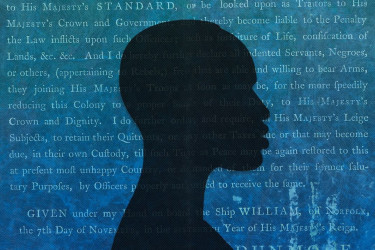
Silhouette of a Black man's head, against a background of Lord Dunmore's proclamation.

Enslaved by George Washington, This Man Escaped to Freedom—and Joined the British Army

Harry Washington fought for his enslaver's enemy during the American Revolution. Later, he migrated to Nova Scotia and Sierra Leone.
A drawing of St. Johns, Canada, beside a river.

Remember Baker

A Green Mountain Boy's controversial death and its consequences.

Was Declaring Independence Even Important?

Reflections on the latest public debate between historians about the causes of the American Revolution.
"The Washington Family," painting by Edward Savage, c. 1789–1796. (National Gallery of Art)

The Silence of Slavery in Revolutionary War Art

Artists captured and honored the intensity of the American Revolution, but the bravery and role of Black men in the war was not portrayed.
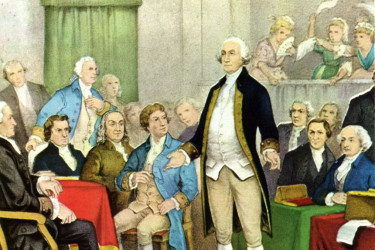
Drawing ofGeorge Washington addressing the Continental Congress.

‘George Washington’ Review: Our Founding Politician

Washington was a savvy packager of his own personal virtues. He knew that if you don’t engage in a bit of self-aggrandizement, you lose.

America's Black Soldiers

The long history behind the Army's Jim Crow forts.

6 Myths About the History of Black People in America

Six historians weigh in on the biggest misconceptions about black history, including the Tuskegee experiment and enslaved people’s finances.
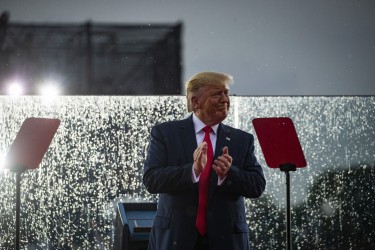
Donald Trump.
partner

How Trump’s Airport Gaffe Masked A Dangerous Misunderstanding of the Revolutionary War

America won its freedom thanks to strong alliances.
Liberty bell.

The Sounds of Independence

How was the Fourth of July celebrated during the Revolutionary War?

Revisiting the Prayer at Valley Forge

The fable of George Washington's prayer was meant to foster religious tolerance, not paint him as a pious leader.

How the American Revolution was Made on Honor and Sold on Merit

A review of "American Honor: The Creation of the Nation’s Ideals during the Revolutionary Era."
George Washington resigning his commission as commander of the Army
partner

Why George Washington Rejected a Military Parade in his Honor

Of all the precedents the first president set, this is one of his most overlooked — and most important.
George Washington

Hawks vs. Doves — Which Side Would the Founding Fathers Have Taken?

Expansionism, and sending the military into others' lands, is a critical component of American republicanism, and a factor in independence itself.

Filter Results:

Suggested Filters:

Idea

Person