Filter by:

Filter by published date

Viewing 211–240 of 355 results. Go to first page
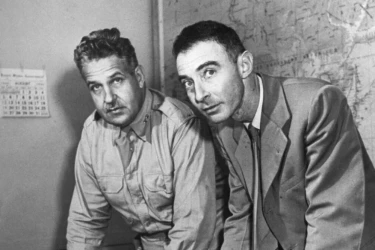
Leslie Groves and J. Robert Oppenheimer at Los Alamos in 1942.

General Groves Invented the Atomic Bomb, Not Oppenheimer

Gen. Leslie Groves promoted Oppenheimer as the atomic bomb's inventor to craft a propaganda narrative, obscuring the true creators and moral implications.
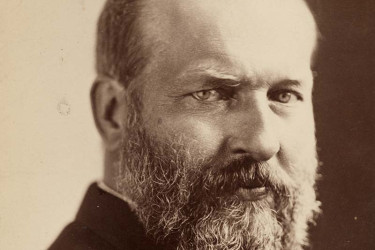
James Garfield
partner

A Mere Mass of Error

Two stories from the 19th century about government records being falsified to foment distrust of nonwhite Americans.
Lionel Trilling photographed by Walker Evans in the 1950s.

Colony, Aviary and Zoo: New York Intellectuals

A new book examines the aggressive masculinity that the editors of the Partisan Review brought to their art and literary criticism.
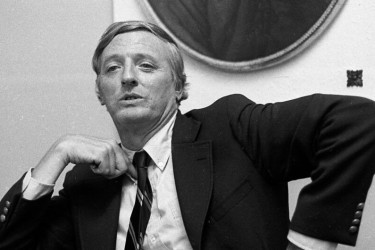
William F. Buckley during a press interview in Buenos Aires, Argentina, circa 1970s. (Alamy)

Steering Right

Sam Tanenhaus’s biography of William F. Buckley has certain limitations, but it captures the character of conservatism’s founding father.
Exhibit

Truth and Truthiness

Americans have been arguing over the role and rules of journalism since the very beginning.

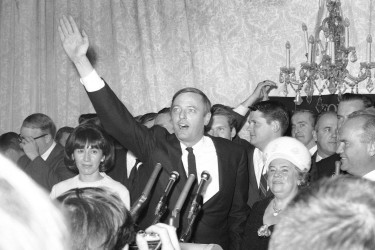
William Buckley stands behind a podium, surrounded by a throng of people, and waves.

The Real Bill Buckley

Even some liberals toasted William F. Buckley Jr. as a patrician gentleman. A long-awaited new biography corrects that record.
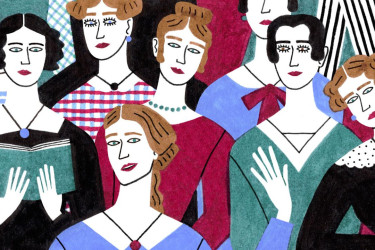
Drawings of women authors

How Margaret Fuller Set Minds on Fire

High-minded and scandal-prone, a foe of marriage who dreamed of domesticity, Fuller radiated a charisma that helped ignite the fight for women’s rights.
William F. Buckley Jr. surrounded by piles of books in his office.

What Made William F. Buckley So Unusual

The author of a new biography talks about the conservative journalist’s life and legacy.
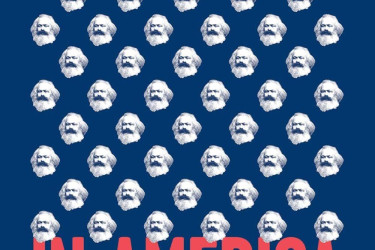
Cover of book. Red text on a blue background with stickers of Karl Marx's face arranged like the 50 stars.

Marx: The Fourth Boom

Were you to vanish Marx from every library, you’d destroy the central interlocutor around which most of capitalism is built.
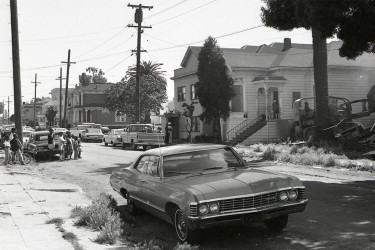
Children watch as a house is bulldozed in West Oakland

Archiving Oakland

Two scholars discuss activism from the era of the Model Cities Program to the present, and consider the preservation of “illegitimate” histories for future use.
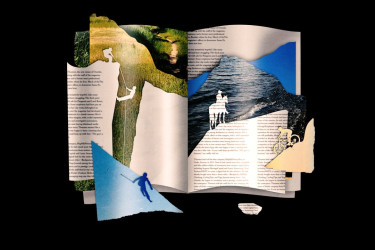
Collage of magazine text and outdoor images.

The Decline of Outside Magazine Is Also the End of a Vision of the Mountain West

After its purchase by a tech entrepreneur, the publication is now a shadow of itself.
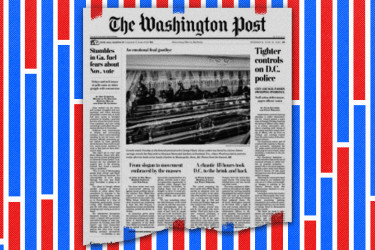
Front page of the Washington Post above the fold.

The Real Story of the Washington Post’s Editorial Independence

When the Kamala Harris endorsement was spiked, the publisher cited tradition. A closer reading of history tells a different story.
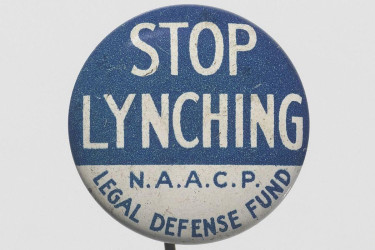
NAACP Legal Defense Fund button against lynching.
partner

“Lynch Law in America”: Annotated

Ida B. Wells-Barnett, whose January 1900 essay exposed the racist reasons given by mobs for their crimes, argued that lynch law was an American shame.
Three covers of the New Yorker, with The New Yorker's logo, a highbrow man in a tophat and monocle, super-imposed over them.

The New Yorker and the American Voice

Tales of the city and beyond.
Man holding The New Yorker magazine like a telescope.

Onward and Upward

Harold Ross founded The New Yorker as a comic weekly. A hundred years later, we’re doubling down on our commitment to the much richer publication it became.
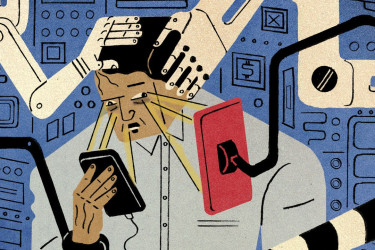
A drawing of a person staring at two different smartphones, with robotic arms holding their head in place.

What If the Attention Crisis Is All a Distraction?

From the pianoforte to the smartphone, each wave of tech has sparked fears of brain rot. But the problem isn’t our ability to focus—it’s what we’re focusing on.
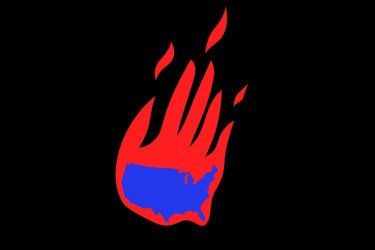
Image of the outline of the United States in red fire.

A Dark Reminder of What American Society Has Been and Could Be Again

How an obsessive hatred of immigrants and people of color and deep-seated fears about the empowerment of women led to the Klan’s rule in Indiana.
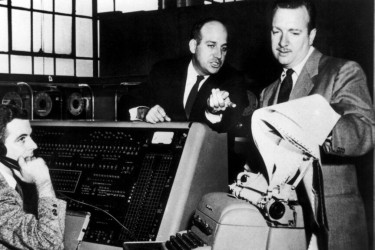
Three men using the large UNIVAC computer to predict the 1952 election, with two reading a printed readout and one using a phone.

The Year Election Night First Became a TV Event

In 1952, news stations combined two new technologies—the TV and the computer—to forever transform how voters experience election night.
Screenshot of soldiers and an explosion.

Noam Chomsky on How America Sanitizes the Horror of Its Wars

On the origins of America's hegemonic foreign policy.
Sanora Babb

The Woman Who Would Be Steinbeck

John Steinbeck beat Sanora Babb to the great American Dust Bowl novel—using her field notes. What do we owe her today?
Library card catalog.

To Preserve Their Work — and Drafts of History — Journalists Take Archiving Into Their Own Hands

From loading up the Wayback Machine to 72 hours of scraping, journalists are doing what they can to keep their clips when websites go dark.
Melinda French Gates and Bill Gates speak during the 'Gates Foundation' press conference at the Annual Meeting 2009 of the World Economic Forum in Davos, Switzerland, January 30, 2009" by Remy Steinegger.

Philanthropy’s Power Brokers

An in-depth reckoning with the Gates Foundation as a discrete actor is long overdue.
Human figures colored either blue or green.

Mortality Wars

Estimating life and death in Iraq and Gaza.
A French soldier bandaging a wounded Vietnamese comrade.

How the Vietnam War Came Between Two Friends and Diplomats

Bill Trueheart's battles with friend and fellow Foreign Service officer Fritz Nolting illustrate the American tragedy in Southeast Asia.
Misery and Fortune of Women (1930).

The Lost Abortion Plot

Power and choice in the 1930s novel.
Charles Fort.

In Praise of the Paranormal Curiosity of Charles Fort, Patron Saint of Cranks

On the porous, ever-shifting boundaries between science and speculation.
State troopers and deputies stand at the entrance to a University of Alabama building in Tuscaloosa on the day in 1963 that George Wallace, Governor of Alabama, said he would defy a Federal order making it mandatory to admit two African American students.
partner

We Must Remember Tuscaloosa's 'Bloody Tuesday'

Black citizens fought for justice and were met with violence. They persevered.
Painting of man finding woman seated at table writing
partner

A Kind of Historical Faith

On the history of literature masquerading as primary source.
Map of the Chesapeake Bay.

Our Local Monster

Whose knowledge matters in a changing region?
Cover of "The Freaks Came Out to Write"

The City in Its Grip: On Tricia Romano’s “The Freaks Came Out to Write”

Romano’s book is a vital, comprehensive piece of media scholarship about one of the most influential outlets of the last century. It’s also fun as hell to read.
Oscar Wilde

“A Nation of Lunatics.” What Oscar Wilde Thought About America

On the Irish writer’s grand tour of the Gilded Age United States.

Filter Results:

Suggested Filters:

Idea

Person