Filter by:

Filter by published date

Viewing 61–90 of 219 results. Go to first page
Children's coloring sheets of overturned police cars.

Magic Actions

Looking back on the George Floyd rebellion.
Political cartoon of a man being taken away from his family.
partner

The Role of Naval Impressment in the American Revolution

Maritime workers who were basically kidnapped into the British Royal Navy were a key force in the War of Independence.
People on the street and burning car amidst debris

Los Angeles Could Have Rebuilt a Better City After the Rodney King Violence. Here's Why It Failed.

Leading gangs in Los Angeles were making peace as the city burned. How the city failed them rewrites our understanding of that moment.
A cartoon of Boston colonists in a cage.

How Did the Colonies Unite?

The drive for American independence coalesced in only a few years of rapidly accelerating political change.
A man during the Capitol Siege holding a Confederate flag.

The Case for a Third Reconstruction

The enduring lesson of American history is that the republic is always in danger when white supremacist sedition and violence escape justice.
An illustration of an accordion being played.

The "Good Old Rebel" at the Heart of the Radical Right

How a satirical song mocking uneducated Confederates came to be embraced as an anthem of white Southern pride.
President Abraham Lincoln, bareheaded at center, giving the Gettysburg Address, Pennsylvania, 1863

The Party of Lincoln Ignores His Warning Against Mobocracy

“There is no grievance that is a fit object of redress by mob law,” declared the man who would be America’s sixteenth president.
The Battle of Fort Sumter.
partner

How the Civil War Got Its Name

From "insurrection" to "rebellion" to "Civil War," finding a name for the conflict was always political.
Members of the National Guard stand behind a fence outside of the U.S. Capitol building.

Impeachment May Not Work. Here’s the Next Best Way to Dump Trump

The 14th Amendment offers a remedy that is both simpler and likelier to work.
Person wearing pro-Trump attire in front of the U.S. Capitol.

What Should We Call the Sixth of January?

What began as a protest, rally, and march ended as something altogether different—a day of anarchy that challenges the terminology of history.
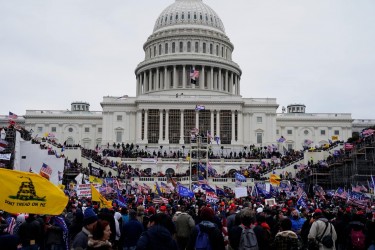
Trump supporters standing outside of the U.S. Capitol building.
partner

What Pro-Trump Insurrectionists Share — and Don’t — With the American Revolution

Some supporters of the violent mob scene at the Capitol proclaimed it was the beginning of a “Second American Revolution.”
Johnny Cash poses for a portrait for a publicity shot
partner

The Complications of “Outlaw Country”

Johnny Cash grappled with the many facets of the outlaw archetype in his feature acting debut, Five Minutes to Live.
Painting of men moving the liberty bell.

Our Chief Danger

The story of the democratic movements that the framers of the U.S. Constitution feared and sought to suppress.
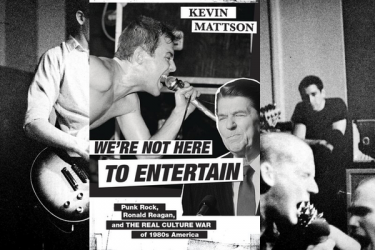
Black and white photo montage of the cover of We're Not Here to Entertain, with a punk rock singer and Ronald Reagan, superimposed on a background of Minor Threat playing on stage.
partner

Remember Punk Rock? Probably Not...: The Real Culture War of 1980's America

When most people hear the word “punk,” they think of drug addled, nasty behavior. The truth is, it was driven by a visceral hatred for the president.
Three African American protest leaders address a crowd.

True Stories About the Great Fire

A movement’s early days as told by those who rose up, those who bore witness, those who grieved, and those who hoped.

America Begins to See More Clearly Now What Its Black Citizens Always Knew

The present round of protest is different. The participants are people of every race, ethnicity, sex, age, and religion.
D.C. National Guard members stand on the steps of the Lincoln Memorial.
partner

President Trump Can Send the Military to Police Americans, but is Doing so Wise?

The history of using militarized force domestically.
Black and white photo of three African-American men with signs that state, "I am a man," as a military tank rolls through the street

Insurrection in the Eye of the Beholder

The Insurrection Act of 1807, which Trump has threatened to invoke, is the linchpin of several iconic events in African American history.

The Double Standard of the American Riot

The nationwide protests against police killings have been called un-American by critics, but rebellion has always been used to defend liberty.

The Minneapolis Uprising in Context

A proper understanding of urban rebellion depends on our ability to interpret it not as a wave of criminality, but as political violence.

Love One Another or Die

During the AIDS crisis, different contingents of the LGBTQ movement set aside their differences to prioritize mutual care.

To Be Mary MacLane

In the early twentieth century, Mary MacLane’s genre-defying books earned the scorn of critics and the adoration of readers across the nation.

Dead Kennedys in the West: The Politicized Punks of 1970s San Francisco

The new punk generation made the hippies look past their prime.

Made for Misfits: The Colorful History of the Black Leather Jacket

“Leather-laden outlaws struck fear into the hearts of civilians and cops alike, as they tore through towns with gleeful irreverence.”

The Slow Build Up to the American Revolution

American revolutionaries had a far wider range of reasons for supporting rebellion than we often assume.

Julius Scott’s Epic About Black Resistance in the Age of Revolution

"The Common Wind" covers the radical world of black mariners, rebels, and runaways banding together to realize their freedom.

Dropouts Built America

When the going gets tough, the tough start something better.
Political cartoon lampooning Thomas Paine and his beliefs

America and Other Fictions: On Radical Faith and Post-Religion

Thomas Paine, the most radical of American revolutionaries, perhaps most fully understood the millennial potential of the new Republic.
Painting of the mouth of a cave.

Down in the Hole: Outlaw Country and Outlaw Culture

Country music has often stood, as it were, with one foot in and one foot out of the cave.

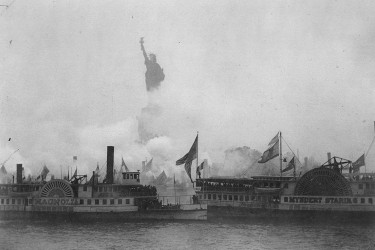
Sentinel

From the day it was inaugurated, the Statue of Liberty has symbolized the tensions between national independence and universal human rights.

Filter Results:

Suggested Filters:

Idea

Person