Filter by:

Filter by published date

Viewing 121–150 of 219 results. Go to first page

Eco-Terrorists Aren't What They Used to Be

Fifty years on, "The Monkey Wrench Gang" remains a problematic text for environmental activists, who are inclined to endorse its violent tendencies.
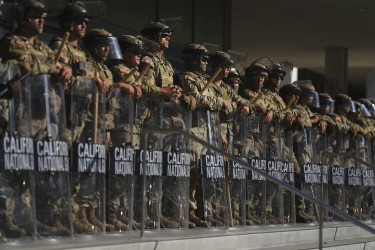
A row of California National Guardsmen stand atop a top step in riot gear.

Trump’s Deportation Frenzy Echoes the Fugitive Slave Hunts of the 1850s

Trump's crackdown on immigrants bears alarming parallels to the fugitive slave obsessions of the pre-Civil War South.
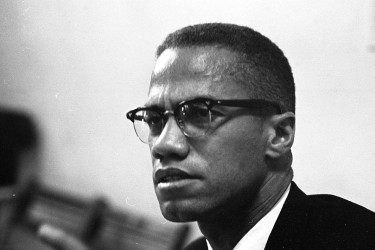
Malcolm X

What Made Malcolm X Dangerous

He challenged the violence of US power, abroad and at home. His radical internationalism, from Congo to Palestine, speaks to our moment.
Mannequins model Black fashion ranging from ethnic apparel to suits.

Turning Style Into Power: How the Black Dandy Used Clothing to Challenge Authority

At the Met, "Superfine: Tailoring Black Style" shows how clothing became a way for Black men to assert presence and push back against control.

Lincoln's Habeas Corpus Precedent

Ultimately, only a civic culture alert to and upset by abuses of power can safeguard sound republican government.
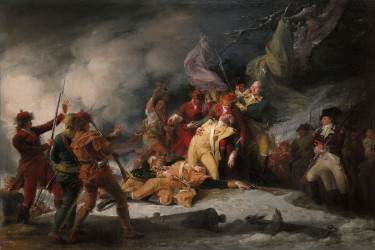
John Trumbull painting of the death of American General Richard Montgomery at the Battle of Quebec.

How the Thirteen Colonies Tried—and Failed—to Convince Canada to Side With Them In the Revolution

After peaceful attempts at alliance-building stalled, the Continental Army launched an ill-fated invasion of Quebec in June 1775.
Photograph of the author reviewing documents in the Percy collection with its curator Christopher Hunwick and owner Ralph Percy, the 12th Duke of Northumberland

Discovered: First Maps of the American Revolution 

Previously unknown, a map drawn by Lord Percy, the British commander at Lexington, sheds new light on the perilous retreat to Boston.
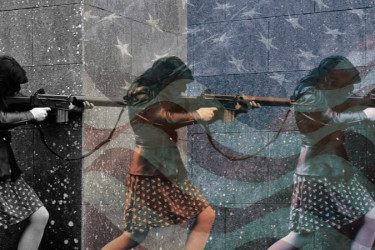
A woman with a rifle, superimposed on an American flag.

From Philly to Derry: On the Americans Who Armed the IRA During The Troubles

Vincent Conlon’s secret life in the United States as an operative and gun-running Irish rebel.
"Rip Van Winkle Awaking from His Long Sleep," painting by Henry Inman (1823).

Bewilderment as a Way of Understanding America’s Present – and Past

Circumstances in which people are feeling extreme disorientation are potent breeding grounds for people who are willing to exploit it in moments of crisis.
Bob Dylan smoking a cigarette with his arms around Mimi Farina.

Bob Dylan and the Creative Leap that Transformed Modern Music

Bob Dylan decided he wanted to subvert the expectations of his fans – and rebel against industry forces intent on pigeonholing him and his work.
Jimi Hendrix performing with his guitar.

How Jimi Hendrix Made "Flower Power" Fashionable

The resurgence of “peace and love” aesthetics in menswear today owes itself to the rebellious spirit of the 1960s and 70s, embodied by musician Jimi Hendrix.
Scene from "Smokey and the Bandit" of Burt Reynolds talking on a CB radio.

"A Long Way to Go and a Short Time to Get There"

In the 1970s, trucker films like "Smokey and the Bandit" celebrated rebellious, working-class solidarity and freedom, with complex politics at play.
Run on a bank during the Great Depression.

The Radical Past and Future of Debt Resistance

The deep roots of debt relief activism in the United States.
Donald Trump

Racism Against Haitians Didn’t Begin in Springfield, Ohio

In the early 19th century, US elites demonized the self-liberated slaves of the Haitian Revolution as dangerous practitioners of barbaric rituals.
Sheet music depicting a fugitive slave.

Against the Slave Power: the Fugitive Liberalism of Frederick Douglass

Douglass elaborated a political theory attuned to the differential character of law as it applied to slaves and other outlaws.
The flags of the USA and the USSR.

Cold War Tones

Two books that remind us that tone and timbre, musical style and sound, matter to history.
Map of West Florida.

From Subjects To Citizens

The West Florida revolt in the Age of Revolutions.
Johnny Cash and Waylon Jennings.

How Nashville Outsiders Changed Country Music Forever

An excerpt from the new book "Willie, Waylon, and the Boys."
A mob burning effigies at the Stamp Act Riots.

Illiberal Liberations

Nathan Perl-Rosenthal’s book can guide us through turbulent conversations about revolution, social change, and the founding of America.
A rendering of Buckminster Fuller and June Jordan's “Skyrise for Harlem” project published in Esquire, April 1965.

Nowhere But Up

In the wake of the 1964 Harlem riots, June Jordan and Buckminster Fuller’s plan to redesign the neighborhood suggested new possibilities for urban life.
Person in a red veil.

Connecting with Trans History, Rebellion, and Joy, in “Compton’s 22”

Transgender people's reactions to watching oral histories of the legacy of a 1966 riot in the Tenderloin that was nearly lost to history.
A line crew at work in the Manzanar camp.

A Portrait of Japanese America, in the Shadow of the Camps

An essential new volume collects accounts of Japanese incarceration by patriotic idealists, righteous firebrands, and downtrodden cynics alike.
Carbinari seal of a woman holding a liberty cap.

Lady Liberty in Restoration Italy? Crime, Counterfeit, and Carbonari Revolutionary Politics

Following Napoleon’s fall, international secret societies emerged promoting dissent from absolutist forms of power and sharing ideologies and iconographies.
Rednecks by Taylor Brown.

The Battle of Blair Mountain and Stories Untold

An interview with Taylor Brown, author of the novel "Rednecks."
Still from Say Anything (1989) with a man holding a boom box above his head.

When Do We Stop Finding New Music? A Statistical Analysis

When does our taste in music stagnate?
Painting of the Boston Tea Party.

“Boston Harbor a Tea-pot This Night!” 

The dumping of tons of tea in protest set the stage for the American Revolution and was a window on the culture and attitudes of the time.
Tom Wolfe in profile against the New York City skyline.

The Electric Kool-Aid Conservative

Tom Wolfe was no radical.
A faux Brazilian village constructed for Henry II and Catherine de’ Medici on the banks of the Seine in Rouen, France, and inhabited by fifty Tupinambá people who were forcibly brought there from Brazil, 1550.

The Discovery of Europe

A new book investigates the indigenous Americans who were brought to or traveled to Europe in the 1500s—a story central to the beginning of globalization.
partner

The Eternal Inflation of the Spotless Grade

For more than 50 years, we've been worrying about "grade inflation" at elite American universities. It's time to move on.
A turntable and records.

What’s Old is New Again (and Again): On the Cyclical Nature of Nostalgia

Retro was not the antithesis to the sub- and countercultural experiments of the 1960s, it grew directly out of them.

Filter Results:

Suggested Filters:

Idea

Person