Filter by:

Filter by published date

Viewing 181–210 of 372 results. Go to first page

Hunting Down Runaway Slaves: The Cruel Ads of Andrew Jackson and the 'Master Class'

A historian collecting runaway slave ads describes them as “the tweets of the master class.”

It’s Time for Historians of Slavery to Listen to Economists

Economic analyses of the antebellum era upend the notion that Southern whites were united in their support of slavery.

When Slaveholders Ran America

Before the Civil War, many Southern leaders hoped to expand slavery even beyond the nation's borders.

Decoder: The Slave Insurance Market

How much did slave owners pay for antebellum-era policies from Aetna, AIG, and New York Life?
lithograph of enslaved workers using a cotton gin.

To Remake the World: Slavery, Racial Capitalism, and Justice

What if we use the history of slavery as a standpoint from which to rethink our notion of justice today?
William Lloyd Garrison

What Gun Control Advocates Can Learn From Abolitionists

Slave ownership was once as entrenched in American life as gun ownership.

What Happens When Children's Books Fail to Confront the Complexity of Slavery

We need literature that wrestles with the evils of slavery while confronting its complexity – especially when it’s written for children
Enslaved people being marched from Virginia to Tennessee.

Retracing Slavery's Trail of Tears

America's forgotten migration – the journeys of a million African-Americans from the tobacco South to the cotton South.
Confederate soldiers stand among the ruins of houses.

The Slave-State Origins of Modern Gun Rights

The idea of an unfettered right to carry weapons in public originates in the antebellum South, and its culture of violence and honor.

Why America Needs a Slavery Museum

A wealthy white lawyer has spent 16 years and millions of dollars turning the Whitney Plantation into a memorial to the nation's past.

What This Cruel War Was Over

The meaning of the Confederate flag is best discerned in the words of those who bore it.

The Hidden History Of Juneteenth

The internecine conflict and the institution of slavery could not and did not end neatly at Appomattox or on Galveston Island.
A painting of U.S. Navy Lt. Stephen Decatur battling Muslim sailors, Tripoli, August 1804.

America’s Forgotten Images of Islam

Popular early U.S. tales depicted Muslims as menacing figures in faraway lands or cardboard moral paragons.
Newspaper advertisement offering enslaved young men for hire.
partner

Slaves for Hire

On the phenomenon of “hiring out” enslaved persons prior to the Civil War, and how this introduced some slaves to the world of wages.

The Weeping Time

A forgotten history of the largest slave auction ever on American soil.
Cover of "Empire of Necessity" featuring a painting of violence being wrought on enslaved men.

The Bleached Bones of the Dead

What the modern world owes slavery. (It’s more than back wages).
Side-by-side portraits of Franklin Pierce and Dorothea Dix

Dorothea Dix and Franklin Pierce: The Battle for the Mentally Ill

Dorothea Dix and Franklin Pierce were in many ways ideological soulmates, but he would not help her effort to improve conditions for the mentally ill.
Illustration of a proslavery mob raiding a post office in Charleston, South Carolina, in 1835.
partner

How Much Is Too Much?

The dramatic story of the abolitionist mail crisis of 1835.
John Ridge

Cherokee Slaveholders and Radical Abolitionists

An unlikely alliance in antebellum America.
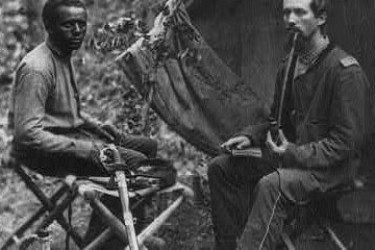
An African American man and a white soldier from the 23rd New York.
partner

Fighting for Union

One man’s struggle to pick a side of the war, his ultimate choice, and how powerful the of concepts “liberty and union” were in motivating Northern soldiers.
Sign reading "take it down" in front of Confederate flag

Rebel Yell

The recent march in South Carolina, demanding removal of the Confederate flag from the state Capitol is the latest episode in a long-running debate over slavery's legacy.
Painting of Abraham Lincoln

The Election in November

The Atlantic’s editor endorsed Abraham Lincoln for presidency in the 1860 election, correctly predicting it would prove to be “a turning-point in our history.”

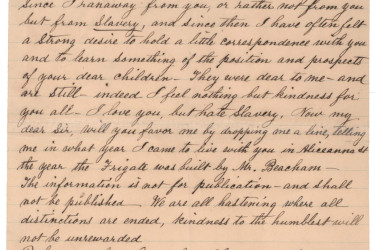
A Letter From Frederick Douglass to His Former Owner

A spotlight on a primary source.
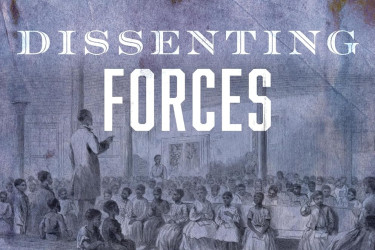
Black women at an abolitionist meeting, from the book cover of "Dissenting Forces"
partner

Disruptive to Society

In the 1830s, college students protested slavery. Many colleges and elites wanted them to stop. 
Ken Burns and Sarah Botstein

“A Story We Think We Know”: Ken Burns on The American Revolution

Burns and co-director Sarah Botstein discuss their six-part, 10-year labor of love, which finally makes it to PBS on November 16.
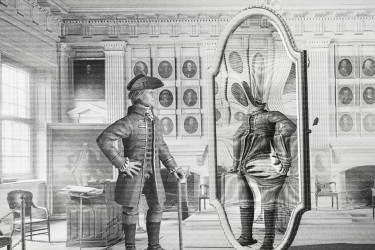
Illustration of a founding father standing in front of a distorted mirror.

What the Founders Would Say Now

They might be surprised that the republic exists at all.
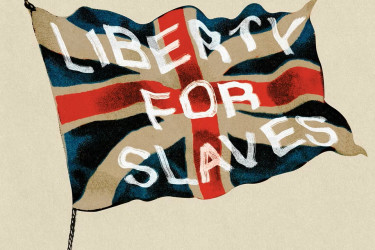
British flag with writing that says, "Liberty for Slaves."

The Black Loyalists

Thousands of African Americans fought for the British—then fled the United States to avoid a return to enslavement.
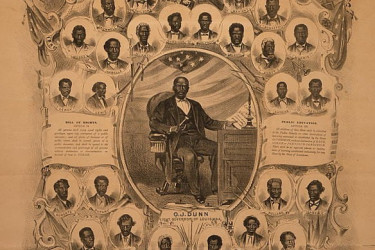
Page excerpting Louisiana's Reconstruction constitution and featuring portraits of its Black legislators.

The Long Struggle for Equality in the American South: Louisiana as a Test Case

Louisiana’s 1845 and 1852 conventions reveal partisan tensions over the economy that shaped Black struggles and opportunities for decades.
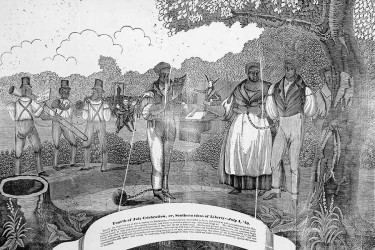
An abolitionist lithograph depicting enslaved people celebrating the Fourth of July while a white judge sits on bales of cotton with his feet on the Constitution, 1840

The Contradictory Revolution

Historians have long grappled with “the American Paradox” of Revolutionary leaders who fought for their own liberty while denying it to enslaved Black people.
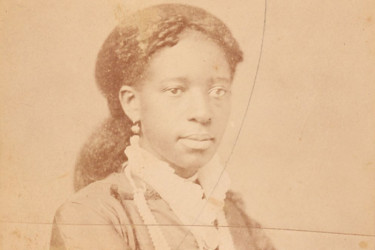
Mary Virginia Montgomery

The Montgomerys of Mississippi: How a Once Enslaved Family Bought Jefferson Davis’ Plantation House

In 1872, former slave Mary Virginia Montgomery, now a cotton plantation owner, records her life’s changes after moving from slavery to self-sufficiency.

Filter Results:

Suggested Filters:

Idea

Person