Menu
Excerpts
Exhibits
Collections
Originals
Categories
Map
Search
Person
Frederick Douglass
View on Map
Related Excerpts
Load More
Viewing 61–80 of 297
How Proslavery Was the Constitution?
A review of a book by Sean Wilentz's "No Property in Man," which argues that the document is full of anti-slavery language.
by
Nicholas Guyatt
via
New York Review of Books
on
June 2, 2019
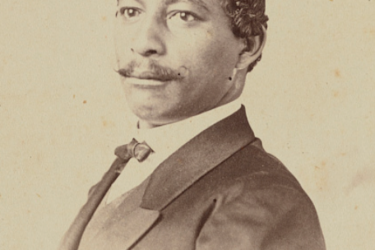
The International Vision of John Willis Menard, the First African-American Elected to Congress
Although he was denied his House seat, Menard continued his activism with the goal of uniting people across the Western Hemisphere.
by
Lorraine Boissoneault
via
Smithsonian Magazine
on
March 6, 2018
The Hidden History of Anna Murray Douglass
Although she’s often overshadowed by her husband, Anna made his work possible.
by
Lorraine Boissoneault
via
Smithsonian Magazine
on
March 5, 2018
Theorizing Race in the Americas
What are Latin American ideas about race, and how have they been formed in relation to the U.S. and vice versa?
by
Francisco Herrera
,
Juliet Hooker
via
Black Perspectives
on
September 7, 2017
America's Deadly Divide - and Why it Has Returned
Civil War historian David Blight reflects on America’s Disunion – then and now.
by
David W. Blight
via
The Guardian
on
August 20, 2017
Frederick Douglass, Real Estate Developer
Frederick Douglas had another, lesser known, impact on Baltimore.
by
Joshua Clark Davis
via
Black Perspectives
on
June 19, 2017
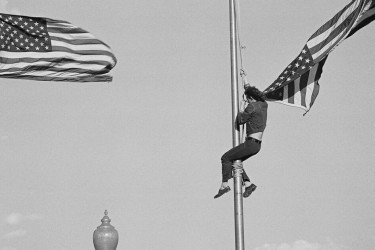
On Memorial Day, Weaponizing the American Flag
As a young woman, civil rights pioneer Pauli Murray discovered that the flag could be used as a symbol of defiance.
by
Jedediah Britton-Purdy
via
Scalawag
on
May 30, 2016
Race and the American Creed
Recovering black radicalism.
by
Aziz Rana
via
n+1
on
December 7, 2015
Struggle and Progress
On the abolitionists, Reconstruction, and winning “freedom” from the Right.
by
Eric Foner
via
Jacobin
on
August 17, 2015
Another Country: Visions of America
The rise of a violent authoritarian state under Trump unveils a deep uncertainty over what America is.
by
Adam Shatz
via
London Review of Books
on
January 26, 2026
Samuel Green Freed Himself and Others From Slavery. Then He Was Imprisoned Over Owning a Book
He covertly assisted conductors on the Underground Railroad, but it was his possession of “Uncle Tom’s Cabin” turned that him into an abolitionist hero.
by
Victor Luckerson
via
Smithsonian Magazine
on
January 14, 2026
Conservatives Want the Antebellum Constitution Back
The Fourteenth and Fifteenth Amendments are in trouble.
by
Adam Serwer
via
The Atlantic
on
December 21, 2025
U.S. Anniversary Coins Won’t Feature any Black Americans or Notable Women
For years, the U.S. Citizens Coinage Advisory Committee reviewed ideas for commemorative coins marking America’s 250th anniversary.
by
Emmanuel Felton
via
Washington Post
on
December 20, 2025
Declaration of Independence’s Promises Ring Out Today as Loudly as They Did for 249 Years
Americans have looked to the Declaration of Independence when they sought to remedy contemporary problems and create new visions for the country’s future.
by
Graeme Mack
via
The Conversation
on
December 4, 2025
Abraham Lincoln’s 1859 Lesson for Some 2028 Democrat
There are parallels between the John Brown raid and the murder of Charlie Kirk. But only one man seized the moment to start changing the course of history.
by
Sidney Blumenthal
via
The New Republic
on
October 20, 2025
The Two Section Twos
The protection against racial gerrymandering in Section 2 of the Voting Rights Act is constitutional. Just read Section 2 of the 14th Amendment.
by
Sherrilyn Ifill
via
Sherrilyn's Newsletter
on
October 15, 2025
The Lincoln Way
How he used America’s past to rescue its future.
by
Jake Lundberg
via
The Atlantic
on
October 10, 2025
What the Founders Would Say Now
They might be surprised that the republic exists at all.
by
Fintan O’Toole
via
The Atlantic
on
October 10, 2025
Whose Independence?
The question of what Jefferson meant by “all men” has defined American law and politics for too long.
by
Annette Gordon-Reed
via
The Atlantic
on
October 9, 2025
Absolute Values
Fara Dabhoiwala’s case against free speech.
by
Len Gutkin
via
The Point
on
September 10, 2025
Previous
Page
4
of 15
Next