Menu
Excerpts
Exhibits
Collections
Originals
Categories
Map
Search
Person
Henry Cabot Lodge Sr.
View on Map
Related Excerpts
Load More
Viewing 1–20 of 21
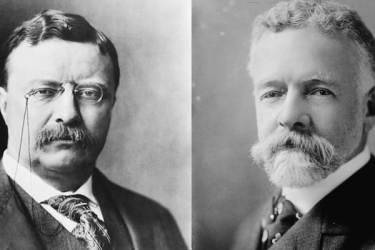
The 1912 War on Fake Photos
Fake photographs of the US president sparked calls for regulation of analog photo editing.
by
Louis Anslow
via
Pessimists Archive
on
September 24, 2024
“One of the Greatest in US History”: The Friendship Between Theodore Roosevelt and Henry Cabot Lodge
The relationship between two true believers in American exceptionalism.
by
Laurence Jurdem
via
Literary Hub
on
July 28, 2023
partner
A Post-Reconstruction Proposal That Would Have Restored Power to the People
Largely forgotten today, Albion W. Tourgée’s legislation could have prevented Moore v. Harper.
by
Brook Thomas
via
Made By History
on
December 19, 2022
The Forgotten First Voting Rights Act
How the defeat of the 1890 Lodge bill presaged today’s age of ballot-driven backlash.
by
Ed Burmila
via
The Forum
on
October 17, 2022
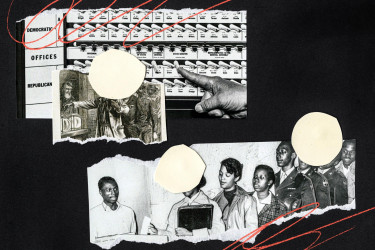
Voter Fraud Propagandists Are Recycling Jim Crow Rhetoric
The conservative plot to suppress the Black vote has relied on racist caricatures, then and now.
by
Nick Tabor
via
The New Republic
on
February 4, 2022
Echoes of 1891 in 2022
Using the congressional filibuster to prevent voting rights legislation isn't new. It has roots in the 19th century.
by
Daniel W. Crofts
via
Muster
on
January 25, 2022
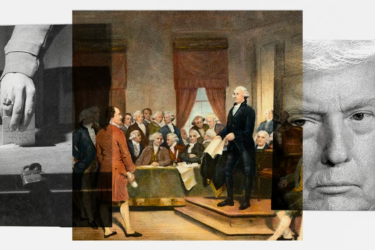
The Founders Would Have Opposed ‘Nationalizing’ Elections
The writers of the Constitution sought an approach that balanced control between the states and the federal government.
by
Jeffrey Rosen
via
The Atlantic
on
February 16, 2026
partner
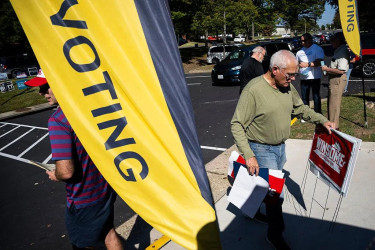
The Troubling Roots of Off-Year Gubernatorial Elections
Off-year elections were meant to insulate states from federal trends. That still matters.
by
Michael Trotti
via
Made By History
on
October 29, 2025
Trump Loves The 1890s But He’s Clueless About Them
The tariffs he keeps babbling about didn’t make that decade great. They helped usher in a depression.
by
Eric Rauchway
via
The Bulwark
on
October 23, 2024
The Poltergeist of Woodrow Wilson
We still live with the consequences of the 28th president’s fuzzy thinking.
by
Sean Durns
via
The American Conservative
on
February 9, 2024
Pathologies of a President
A new book revisits Freud’s analysis of Woodrow Wilson to ask: how much do leaders’ psychologies shape our politics?
by
Adam Hochschild
via
New Statesman
on
June 19, 2023
original
A Tour of Mount Auburn Cemetery
Two centuries of New England intellectual history through the lives and ideas of people who are memorialized there.
by
Kathryn Ostrofsky
on
September 7, 2022
The Case for Partisanship
Bipartisanship might not be dead. But it is on life support. And it’s long past time we pulled the plug.
by
Osita Nwanevu
via
The New Republic
on
September 20, 2021
All the President’s Historians
Joe Biden has met with scholars to discuss his presidency and likely legacy—but what are we to make of his special relationship with historian Jon Meacham?
by
Daniel N. Gullotta
via
The Bulwark
on
April 20, 2021
How America Keeps Adapting the Story of the Pilgrims at Plymouth to Match the Story We Need to Tell
The word “Plymouth” may conjure up visions of Pilgrims in search of religious freedom, but that vision does not reflect reality.
by
Peter C. Mancall
via
TIME
on
December 17, 2020
The Corrupt Bargain
Two new books make the case against the Electoral College.
by
Eric Foner
via
London Review of Books
on
May 21, 2020
Why We Should Remember William Monroe Trotter
A pioneering black editor, he worked closely with African-American workers to advance a liberatory black politics.
by
Keisha N. Blain
via
Jacobin
on
December 29, 2019
Treaty of Versailles and the End of World War I
A primary source set and teaching guide created by educators.
by
Albert Robertson
via
Digital Public Library of America
on
February 22, 2018
A Senator Speaks Out Against Confederate Monuments… in 1910
Alone in his stand, Weldon Heyburn despised that Robert E. Lee would be memorialized with a statue in the U.S. Capitol.
by
Cynthia R. Greenlee
via
Smithsonian Magazine
on
October 18, 2017
The Water Cure
Debating torture and counterinsurgency—a century ago.
by
Paul A. Kramer
via
The New Yorker
on
February 18, 2008
Previous
Page
1
of 2
Next