Person

Henry Ford

Related Excerpts

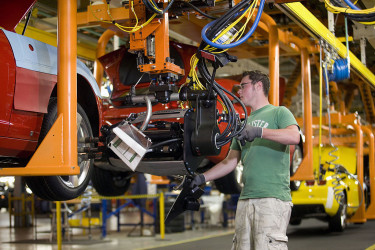
A worker assembling an automobile.

Trump Is Tearing Apart the North American Auto Industry

In the 1960s, the Auto Pact deal integrated the US and Canada’s auto sectors. Donald Trump’s trade war will all but guarantee its unraveling.
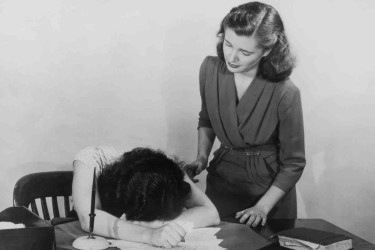
A woman comforting another woman, who has her face planted in a pile of papers.

The Bleak History of the American Work Ethic

In "Make Your Own Job," Erik Baker shows just how long Americans have scrambled to pile work on top of work—and at what cost.
A man in a suit with angel wings clipped to his back, tipping a hat with six different arms.

The Cult of the Entrepreneur

Why do Americans idealize people who found businesses?
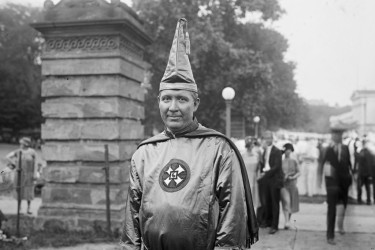
Ku Kluz Klan imperial wizard Hiram Wesley Evans.

Making Sense of the Second Ku Klux Klan

Understanding the reemergence of the Ku Klux Klan in the early twentieth century gives insight into the roots of today’s reactionary activists and policymakers.
Melinda French Gates and Bill Gates speak during the 'Gates Foundation' press conference at the Annual Meeting 2009 of the World Economic Forum in Davos, Switzerland, January 30, 2009" by Remy Steinegger.

Philanthropy’s Power Brokers

An in-depth reckoning with the Gates Foundation as a discrete actor is long overdue.
From left, Sam Warner, Harry M. Warner, Jack L. Warner, and Albert Warner.

Are Hollywood’s Jewish Founders Worth Defending?

Jews in the industry called for the Academy Museum to highlight the men who created the movie business. A voice in my head went, Uh-oh.

How America’s Rich Legacy of Fear and Hatred Fuels the Conspiracy Theories of Today

Panic about Catholics, Freemasons, and, later, Jews, is deeply woven into American history, and forms the basis of our fertile culture of conspiracy theorizing.
The Gateway Arch in St. Louis.
partner

Walt Disney Presents Manifest Destiny

On the St. Louis theme park that never made it past the drawing board.
Scene from "Schindler's List."

How 'Schindler's List' Transformed Americans' Understanding of the Holocaust

The 1993 film also inspired its director, Steven Spielberg, to establish a foundation that preserves survivors' stories.

Eight and Skate

The age of optimism that lasted in the US from the 1940s to the 1970s looked, basically, like a car.
Benjamin Franklin, circa 1785.

AI Chatbot Mimics Anyone in History — But Gets a Lot Wrong, Experts Say

A chatbot billed as an educational tool falsely portrays historical figures, including dictators and Nazis, as apologetic for their crimes.
Men in suits with briefcases walking.

The Myth of the Socially Conscious Corporation

The argument that corporations have historically been a force for good—and can be again—is wishful thinking.
Ken Burns speaking into a microphone.

Shaming Americans

Ken Burns’s "The U.S. and the Holocaust" distorts the historical record in service of a political message.
Photograph of author Mike Davis.

Mike Davis Revisits His 1986 Labor History Classic, Prisoners of the American Dream

The late socialist writer's first book was a deep exploration of how the US labor movement became so weakened.
Robert De Niro as Gen. Dillenbeck, in "Amsterdam."

Did American Business Leaders Really Try to Overthrow the President, Like in "Amsterdam"?

How David O. Russell’s movie messes around with the story of the Business Plot.
Illustration of people on different types of bicycles

Bicycles Have Evolved. Have We?

Biking innovations brought riders freedom. But in a world built for cars, life behind handlebars is both charmed and dangerous.
John D. Rockefeller Jr., right, was the country's biggest taxpayer in 1923, when public disclosure of tax payments was required by law. President Calvin Coolidge, left, pushed Congress to repeal the disclosure law in 1926. This photo was taken in 1925.

Americans’ Taxes Used To Be Public — Until the Rich Revolted

Thanks to the efforts of wealthy taxpayers, the "big reveal" of the 1920s was extremely short-lived.
Motorcycle in sideview mirror

The Invention of “Accidents”

Thousands of Americans die preventable deaths each year. Why do we consider them mishaps?
Frame from the film with Jimmy Stewart's character George Bailey receiving hugs from his wife and children.

What 'It's a Wonderful Life' Teaches Us About American History

The Christmas classic, released 75 years ago, conveys many messages beyond having faith in one another.
Construction workers, high up in a building, looking down over New York City.

Land of Capital

The history of the United States as the history of capitalism.